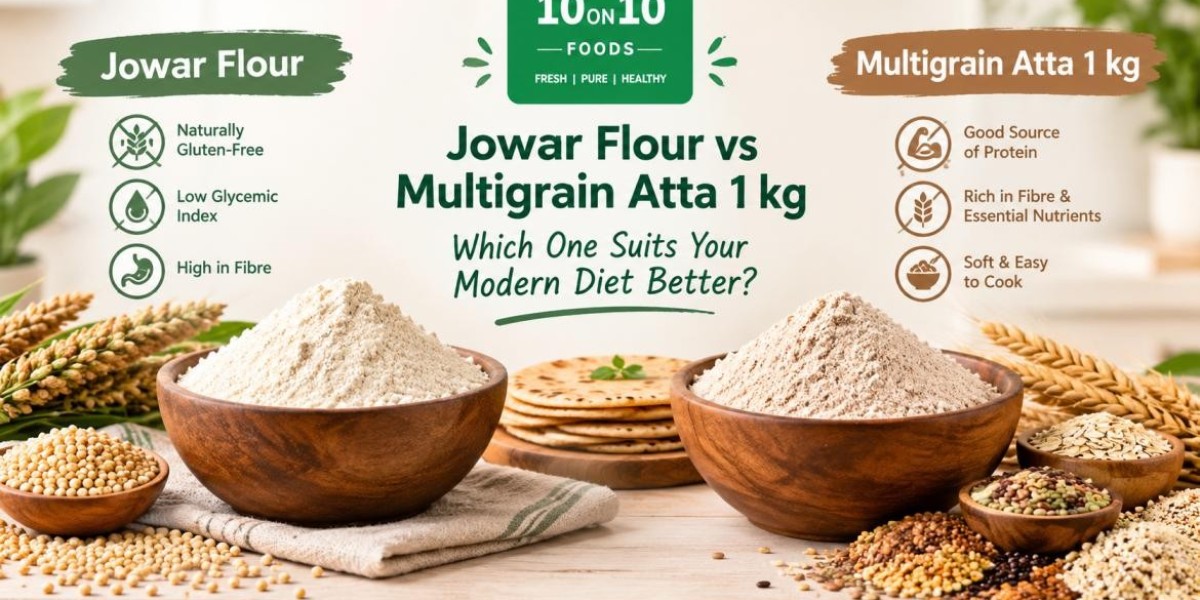

Indian kitchens are going through a quiet transformation. Refined flour is slowly making way for healthier alternatives, and two names keep popping up in this conversation: jowar flour and multigrain atta 1 kg. Both have earned a loyal following among health-conscious families, yet people often wonder which one actually deserves a permanent spot in their kitchen shelf. Instead of picking a winner, it makes more sense to understand where each one genuinely shines.
What Makes Jowar Flour and Multigrain Atta 1 kg Different
Jowar flour comes from a single grain, sorghum, and has been a staple in many Indian households for generations. It is naturally gluten-free and carries an earthy, slightly nutty flavour. Multigrain atta 1 kg, on the other hand, is a thoughtful blend of several grains and pulses, usually built around wheat, combined with millets, oats, or lentils to create a more rounded nutritional package. One offers simplicity, the other offers variety, and both approaches have their own merit depending on what your body needs.
Nutritional Value Comparison
When it comes to nutrition, this sorghum-based flour is known for its high fibre content, decent iron levels and low glycemic index, making it a favourite among people watching their blood sugar. Multigrain atta 1 kg tends to combine the protein strength of wheat with the fibre and micronutrients of other grains, offering a more balanced macro profile in a single flour. Neither is nutritionally inferior; they simply cater to slightly different dietary goals, which is exactly why comparing them fairly matters more than crowning one as the better choice.
Where Jowar Flour Shines
If you are someone dealing with gluten sensitivity or simply trying to cut down on wheat, this is where jowar flour genuinely stands out. Its gluten-free nature makes it a safe and comforting option for people with celiac concerns, while its high fibre content supports smoother digestion. Athletes and people managing diabetes also tend to prefer it because of its slow-release carbohydrates, which help maintain steady energy levels through the day without sudden sugar spikes.
Everyday Cooking and Texture
In terms of texture, its rotis have a slightly coarse, rustic bite and are best enjoyed warm, straight off the tawa. Multigrain atta, being closer to regular wheat in composition, is easier to knead and produces softer rotis that stay pliable for longer, which many families find more practical for daily meals, tiffins and travel. This is a category where convenience genuinely favours the multigrain blend, especially in households cooking for children or elderly members who prefer softer textures.
Where Multigrain Atta 1 kg Excels
For families who want variety without switching flours every week, multigrain atta 1 kg is a smart everyday solution. It brings together the goodness of oats, ragi, bajra and other grains in one pack, offering fibre, protein and essential minerals in a single roti. It suits people who are not necessarily avoiding gluten but simply want a more wholesome upgrade from plain wheat flour, without compromising on the familiar taste and softness that Indian meals are built around.
Diabetic-Friendly and Weight-Conscious Choices
Both flours support weight management and blood sugar control, though through slightly different routes. Jowar flour's naturally low glycemic index makes it a strong candidate for anyone strictly monitoring sugar levels, while multigrain atta 1 kg supports satiety through its combined fibre and protein content, helping curb unnecessary snacking. Someone recovering from a wheat-heavy diet may lean towards this option, while someone looking for a gentle, sustainable transition may find multigrain atta more approachable for daily use.
Which One Fits a Modern Diet Better?
Modern diets are rarely about eliminating one thing entirely; they are about balance, variety and listening to what the body actually needs. This sorghum flour fits beautifully into diets focused on gluten-free eating, controlled sugar levels and traditional simplicity. The multigrain blend fits diets that value variety, ease of cooking and a broader nutrient spread in one flour. Rather than replacing one with the other, many nutrition-conscious households now rotate between the two, using jowar flour a few days a week and multigrain atta on the others, giving their meals both diversity and balance.
Final Verdict: A Category Each Can Call Its Own
There is no single "better" flour here, only a better fit depending on your goals. If gluten-free eating and blood sugar control are your priority, jowar flour deserves the spotlight. If you want an everyday flour that blends multiple grains into one soft, nutritious roti, multigrain atta 1 kg is hard to beat. The smartest approach is not choosing sides but understanding what each brings to your table.
For anyone looking to explore both options without compromising on quality or freshness, 10on10Foods offers carefully sourced, naturally processed flours designed to support a genuinely modern, health-focused diet. Whether your kitchen leans towards jowar flour or multigrain atta 1 kg, the goal remains the same — nourishing meals that fit the way you live today.