
Introduction
Modern neonatal intensive care requires carefully selected equipment designed around the delicate needs of newborns and premature infants. NICU Manufacturers can provide specialized solutions for monitoring, respiratory support, thermal care, emergency management, and other critical functions. However, hospitals should evaluate more than product availability when choosing a provider. Technical specifications, pediatric suitability, safety, infrastructure compatibility, installation, training, maintenance, and after-sales support should all be considered before procurement.
Understand Neonatal Care Requirements
The first step is to identify the clinical requirements of the neonatal unit. Different hospitals may manage premature infants, newborns requiring respiratory support, critically ill neonates, or babies requiring specialized monitoring.
National Health Mission resources identify pediatric intensive-care services as requiring equipment such as pulse oximeters, multiparameter monitors, infusion pumps, CPAP systems, and ventilators.
Understanding patient requirements helps hospitals select equipment that is appropriate for their expected workload and clinical services.
Check Specialized Equipment
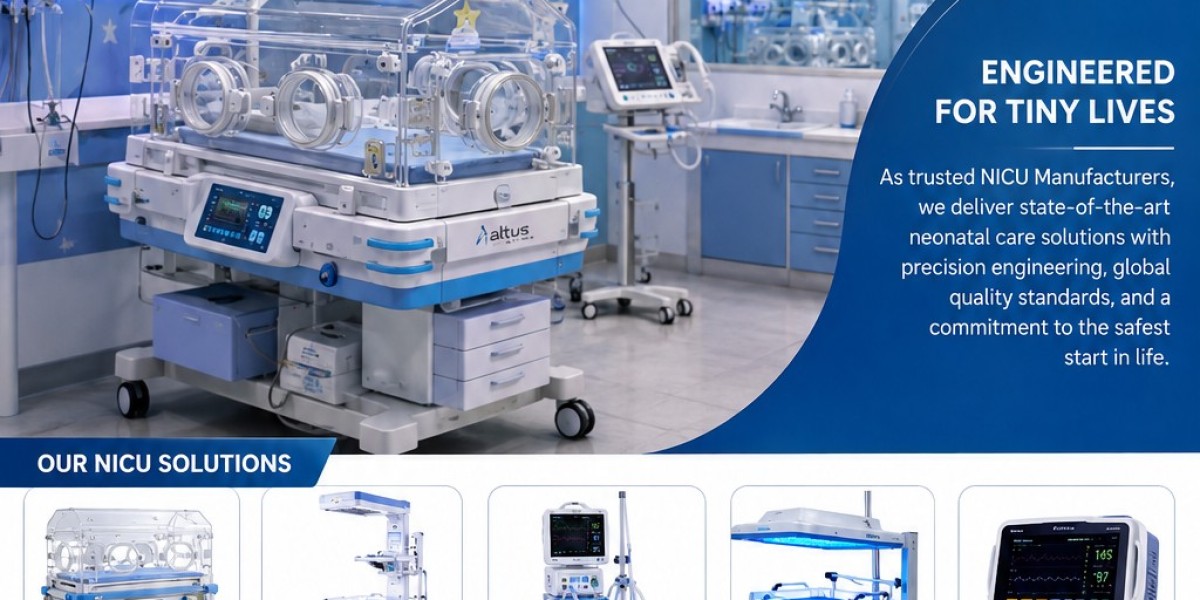
A modern neonatal unit may require several categories of specialized equipment. Depending on the facility's clinical scope, this can include neonatal ventilators, CPAP systems, radiant warmers, incubators, phototherapy systems, infusion and syringe pumps, monitors, suction equipment, and resuscitation devices.
NHSRC maintains dedicated technical specifications for medical devices used in neonatal and pediatric intensive-care units.
Hospitals should compare available equipment against their actual clinical requirements rather than selecting products solely on the basis of the number of features.
Evaluate Respiratory Support
Respiratory support is a particularly important consideration in neonatal care. Hospitals should examine whether ventilators and non-invasive respiratory systems are specifically suitable for neonatal applications.
Government technical specifications for neonatal and pediatric ventilators include invasive and non-invasive ventilation capabilities, multiple ventilation modes, monitoring parameters, and appropriate neonatal and pediatric functionality.
The hospital should also assess accessories, circuits, humidification requirements, alarms, power backup, and availability of technical support.
Assess Monitoring Capabilities
Accurate and accessible monitoring is essential in intensive neonatal care. Hospitals should evaluate equipment for parameters relevant to the clinical services being provided.
Factors to consider include display quality, alarm systems, sensors, measurement ranges, data connectivity, ease of operation, and compatibility with other bedside systems.
Indian pediatric intensive-care guidance also identifies monitoring of parameters such as ECG, respiratory rate, oxygen saturation, and non-invasive blood pressure as important components of intensive-care facilities.
Consider Thermal Management
Newborns, particularly premature infants, may require carefully controlled thermal environments. Hospitals should therefore evaluate the suitability of incubators, radiant warmers, and related equipment.
The equipment should provide appropriate controls and monitoring while allowing healthcare professionals convenient access to the infant. The physical arrangement should also support routine care without creating unnecessary obstacles around the bedside.
Review Safety Standards
Safety should be examined before any equipment is introduced into clinical use. Hospitals should review electrical safety, alarms, power requirements, backup systems, cleaning procedures, and relevant standards.
Technical specifications for neonatal and pediatric devices also address standards, safety certifications, installation requirements, and staff training.
Hospitals should request relevant documentation and ensure that equipment meets applicable procurement and regulatory requirements.
Examine Infrastructure Compatibility
Even advanced equipment may not perform effectively if the surrounding infrastructure is unsuitable. Hospitals should assess electrical capacity, medical-gas connections, suction systems, ventilation, space availability, networking, and emergency power requirements.
The NICU layout should allow adequate access around each patient station. Equipment should be arranged so that clinical staff can observe patients and access essential devices efficiently.
Check Installation and Commissioning
Installation is an important part of hospital equipment procurement. Providers should clearly explain pre-installation requirements, commissioning procedures, testing, and handover documentation.
Government technical specifications indicate that suppliers should perform installation, safety and operational checks before handover and provide training for users in operation and basic maintenance.
Proper commissioning helps ensure that equipment is ready for safe and appropriate clinical use.
Evaluate Training and Usability
Neonatal equipment may have advanced controls and multiple operating modes, making user training important. Nurses, doctors, technicians, and biomedical staff should understand the equipment before routine clinical use.
Training should cover normal operation, alarms, cleaning, routine checks, safety procedures, and basic troubleshooting. Equipment should also have controls and displays that are practical for the intended users.
Consider Maintenance and Calibration
Hospitals should evaluate maintenance requirements before selecting equipment. Preventive maintenance, calibration, testing, repairs, and replacement parts can influence the long-term availability of medical devices.
NHSRC's Biomedical Equipment Management and Maintenance Program specifically includes technical specifications for SNCU and NICU equipment along with guidelines for equipment maintenance, calibration, and testing.
A clear maintenance plan can help hospitals manage equipment more effectively throughout its operational life.
Examine After-Sales Support
Technical support should be considered alongside the initial equipment purchase. Hospitals should ask about service personnel, spare parts, troubleshooting, preventive maintenance, calibration, documentation, and response arrangements.
Reliable technical support can help reduce disruption when equipment requires servicing or develops a technical problem.
Plan for Future Requirements
Hospitals should also consider future expansion. Patient capacity, clinical services, and technology requirements may change over time.
Flexible equipment solutions and appropriately planned infrastructure can make future upgrades easier. Hospitals should consider whether additional devices can be integrated without major changes to the existing unit.
Involve Clinical and Biomedical Teams
The final selection should involve both clinical and technical professionals. Neonatologists and nurses can evaluate patient-care requirements and usability, while biomedical engineers can examine technical specifications, compatibility, maintenance, calibration, and lifecycle considerations.
A multidisciplinary evaluation provides a broader perspective and can help hospitals avoid selecting equipment that appears suitable on paper but does not work effectively within the actual clinical environment.
Conclusion
Selecting NICU Manufacturers for advanced hospital solutions requires a comprehensive evaluation of neonatal equipment, respiratory support, monitoring, thermal care, safety, infrastructure compatibility, installation, training, maintenance, and technical support. Hospitals should compare solutions against clinical requirements and involve both healthcare professionals and biomedical engineering teams in the procurement process. A carefully planned approach can help create a dependable neonatal environment that supports efficient workflows and appropriate patient care.
FAQs
1. What equipment is commonly required in a neonatal intensive-care unit?
Depending on clinical requirements, a unit may require neonatal ventilators, CPAP systems, incubators, radiant warmers, monitors, infusion pumps, phototherapy systems, suction equipment, and emergency devices.
2. Why is neonatal-specific equipment important?
Newborns have specialized clinical and physiological requirements. Equipment should therefore provide suitable operating ranges, accessories, monitoring capabilities, and configurations.
3. What should hospitals check before buying neonatal ventilators?
Hospitals should evaluate ventilation modes, neonatal suitability, monitoring parameters, alarms, humidification, accessories, power requirements, maintenance, and technical support.
4. Is staff training necessary for NICU equipment?
Yes. Training helps doctors, nurses, technicians, and biomedical staff understand equipment operation, alarms, cleaning, routine checks, and basic troubleshooting.
5. Why is maintenance important for neonatal equipment?
Regular maintenance, calibration, and testing can help support equipment reliability, safety, and availability during clinical use.
Read Our Previous Blog----------->What Should You Look for in Top ICU Manufacturers?