
For many people in Bangalore, the idea of having blood drawn at home sounds convenient in theory but raises questions in practice. Is the sample still accurate? How does it reach the lab? Who comes to collect it, and how qualified are they?
If you are considering Blood Test at Home in Bangalore for yourself, a parent, or anyone who finds it difficult to travel to a diagnostic centre, here is a clear picture of how the process works and what to expect.
Why Home Blood Collection Has Become a Standard Option
Home sample collection is not a workaround or a lesser alternative. It is a structured service that many accredited diagnostic labs now offer as part of their standard operations. A trained phlebotomist visits your location, collects the sample using the same tubes, equipment, and protocols used in the centre, and transports it to the lab under controlled conditions.
The same lab then processes your sample and generates your report — the same report you would receive had you walked in yourself.
Who Benefits Most From This Service
Elderly Patients
For older adults managing multiple conditions, travelling to a diagnostic centre for every monitoring test can be exhausting and sometimes genuinely difficult. Regular tests — HbA1c, kidney function, thyroid panels — are much easier to manage with home collection.
Patients Recovering From Illness or Surgery
Post-surgical patients often need blood tests to monitor recovery. Having a phlebotomist come to them removes the burden of a journey during a period when they should be resting.
Young Children
Getting a child's blood drawn in a clinical environment can be stressful for both the child and the parent. The familiar home setting often makes the process calmer.
People With Busy Schedules
Home collection can be scheduled for early morning slots, making it possible to have blood drawn, fast broken, and a working day begun without a visit to a lab ever being necessary.
How the Home Collection Process Works
Step 1: Booking
You book online or by phone, provide your tests and address, and select a time slot. Morning slots are recommended for fasting tests, as they allow you to fast overnight and break your fast as soon as the collection is complete.
Step 2: Phlebotomist Arrival
The phlebotomist arrives at the booked time, carrying appropriate collection tubes, needles, tourniquets, disinfectant, gauze, and a sample transport box. Confirm their identification and, if you have a request form from your doctor, hand that over at this point.
Step 3: Sample Collection
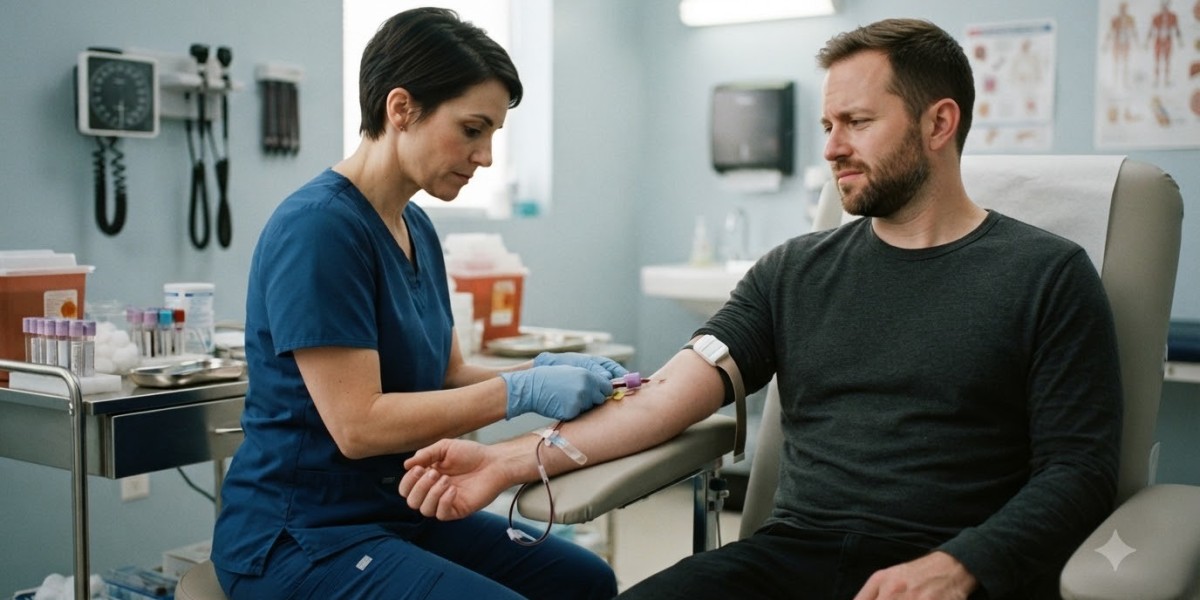
Venepuncture is performed at a comfortable location in your home — a chair or couch is ideal. The phlebotomist labels the collected tubes immediately at the point of collection. Proper labelling at the time of collection is an important quality step.
Step 4: Sample Transport
After collection, samples are placed in transport packaging that maintains appropriate conditions — temperature-controlled where required, physically protected to prevent breakage. The samples travel to the processing lab.
Step 5: Processing and Report
The lab processes your samples using the same equipment and procedures as all other patient samples. Your report is generated, reviewed, and released — typically via a digital portal where you can access it using a patient login.
What to Prepare Before the Phlebotomist Arrives
Follow your preparation instructions. If fasting is required, ensure you have fasted for the specified duration. If you were told to stop certain medications beforehand, confirm that you have done so.
Have a list of your current medications ready. Some test results need to be interpreted in the context of medication use, and the phlebotomist will note this alongside your sample.
Drink water. Being well-hydrated makes veins more prominent and collection easier. Do not restrict water during a fasting period unless your doctor specifically advised otherwise.
Choose a comfortable seat near a flat surface. A kitchen chair or dining chair near a table is ideal for the phlebotomist to set up their equipment.
Have your booking confirmation and doctor's request available. Some services require these for verification at the time of collection.
Understanding the Accuracy Question
Patients sometimes worry that home-collected samples will be less accurate than those collected at the centre. The accuracy of a result depends on the collection technique, sample handling, and processing quality — not on whether collection happened in a lab or at home.
A skilled phlebotomist using the correct tubes, following proper protocols, and transporting samples under appropriate conditions will produce samples of the same quality as those collected at the centre. The key is using a service where phlebotomists are trained, certified, and working within a quality-managed system.
When you book home collection through an accredited diagnostic provider, this quality standard applies to your home visit just as it applies to centre-based collection.
Tests That Work Well With Home Collection
Most common diagnostic blood tests are well-suited to home collection, including:
Complete Blood Count
Fasting Blood Glucose and HbA1c
Lipid Profile
Thyroid Function Panel (TSH, T3, T4)
Liver and Kidney Function Tests
Vitamin D and B12 assays
Iron studies
Hormone panels (oestrogen, testosterone, FSH, LH)
Inflammatory markers (CRP, ESR)
Urine routine and microscopy (collected at home simultaneously)
Some highly specialised tests may require samples to reach the lab within a very short window. For these, the transport time from your home to the lab is a relevant factor to confirm with your provider.
Questions to Ask When Booking Home Blood Collection
Before confirming your booking, ask:
Are your phlebotomists certified and trained in home collection protocols?
What is the expected report turnaround for my tests?
How are samples transported, and is cold-chain maintained for temperature-sensitive tests?
Is the processing lab NABL accredited?
Will I receive a digital report, and how do I access it?
Frequently Asked Questions
Is there any additional cost for home blood collection in Bangalore?
Most providers charge a small home collection fee in addition to the test costs. This is usually modest. Some providers waive it for orders above a certain value. Confirm the fee structure when booking.
Can home blood collection be booked for early morning slots?
Yes. Most home collection services in Bangalore offer early morning slots — typically starting between 6:00 and 7:00 AM — which is ideal for fasting tests. Booking the earliest available slot allows you to break your fast as soon as the phlebotomist finishes.
How do I know the sample will reach the lab safely?
Ask the service provider about their transport protocols. Reputable providers use properly sealed transport boxes, maintain appropriate temperature conditions, and have documented sample acceptance criteria at the lab. Ask specifically whether cold-chain transport is used for your test types.
What if my veins are difficult to access?
Inform the booking team when you schedule, especially if you have had difficult venipuncture experiences before. Experienced phlebotomists have techniques for managing difficult veins. Staying well-hydrated before the visit also helps.
Can I book a home collection for multiple family members in the same visit?
Many providers allow multiple patients to be included in a single home visit booking. Confirm this when booking and ensure each family member's test requirements are clearly listed so the phlebotomist brings the correct tubes for everyone.
Getting Blood Test at Home in Bangalore removes one of the most common barriers to regular health monitoring — the inconvenience of getting to a diagnostic centre, particularly for those who find travel difficult. When the service is provided by a trained phlebotomist working within an accredited system, the results you receive are every bit as reliable as those from a centre visit.