
Interest in herbal medicine has surged — and with it, the market for tinctures has expanded rapidly. Walk into any health shop or search online and you'll find dozens of options, each promising something specific. The problem isn't that tinctures don't work; the problem is that quality varies enormously, and buying the wrong product — or using the right one incorrectly — produces little to no result.
If you're exploring well-made organic herbal tinctures for the first time, or you've tried them before without much success, this article covers what actually matters when selecting and using them.
What a Tincture Is — and Why the Format Matters
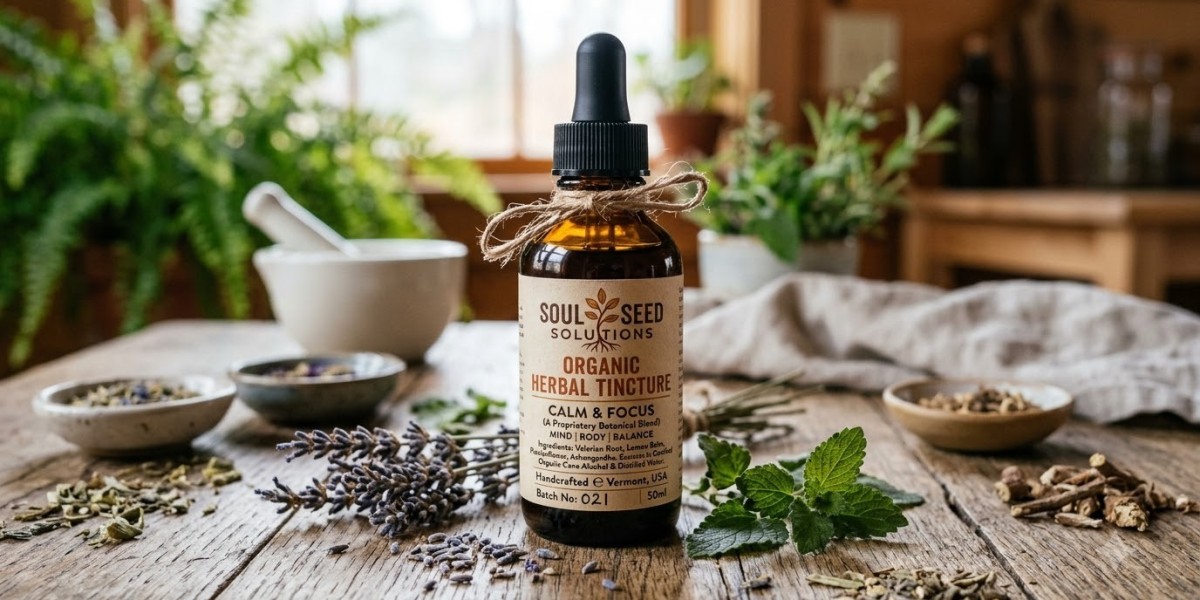
A tincture is a concentrated liquid extract made by soaking plant material — roots, leaves, flowers, bark, or seeds — in a solvent, typically alcohol, that draws out and preserves the plant's active compounds. The result is a potent, shelf-stable extract that can be taken in small doses.
The alcohol (or sometimes vegetable glycerine for alcohol-free versions) serves two purposes: it extracts compounds that water alone cannot, and it preserves the extract for months to years without degradation.
This format has real advantages over teas and capsules:
Higher bioavailability — liquid extracts begin absorbing immediately in the mouth and upper digestive tract
Faster onset — noticeable in many cases within 20–40 minutes
Greater potency — a few drops often delivers more active compounds than a cup of tea
Easier dosage adjustment — drops can be increased or decreased precisely
Why "Organic" Is Particularly Important With Tinctures
With a tincture, you're consuming a concentrated extract. Whatever was on the plant goes into the bottle in far greater quantities than you'd encounter from occasional loose-leaf consumption.
If the herbs used are conventionally grown — potentially carrying pesticide residues, synthetic fertilisers, or heavy metal contamination from compromised soil — those compounds concentrate alongside the beneficial ones.
Organic herbal tinctures start from a cleaner baseline. Certified organic herbs are grown without synthetic pesticides and in conditions that support the natural vitality of the plant. That matters especially for adaptogenic roots, medicinal mushrooms, and any plant with a longer growing cycle, as these accumulate soil-based compounds over time.
Wildcrafted Herbs as an Alternative
Some high-quality tinctures use wildcrafted herbs — plants gathered from their natural habitat rather than farmed. In many cases, wildcrafted herbs from clean regions are considered equivalent to or even superior to organically farmed herbs in terms of phytochemical richness. The best brands clearly disclose whether their herbs are certified organic, wildcrafted, or both.
How Tinctures Are Made and Why the Ratio Matters
The concentration of a tincture is described by a herb-to-liquid ratio, usually shown on the label as something like 1:3 or 1:5.
1:3 means one part herb to three parts solvent — a stronger, more concentrated extract
1:5 means one part herb to five parts solvent — a lighter extract
For the same herb, a 1:3 tincture will generally require a smaller dose than a 1:5 tincture to achieve the same effect. Understanding this ratio prevents the common mistake of comparing two products by price alone without accounting for concentration.
The alcohol percentage also matters. Different plant compounds extract most effectively at different alcohol concentrations. Resins and certain alkaloids need higher alcohol percentages; delicate volatile compounds may extract better at lower concentrations. Reputable tincture makers adjust their alcohol ratios by herb, rather than using a one-size-fits-all formula.
Choosing the Right Herb for the Right Purpose
Organic herbal tinctures work best when matched to the actual need. The herbal category is broad, and choosing based on a general idea of "something for stress" or "something for sleep" without understanding the specific properties of individual plants often leads to disappointment.
Here's a practical breakdown of commonly sought categories:
Stress and Nervous System Support
Ashwagandha — adaptogenic root that supports the body's stress response and cortisol regulation over time
Passionflower — particularly suited to anxiety with an overactive mind; supports calm without sedation
Lemon balm — gentle nervine; good for stress-related digestive upset and mild anxiety
Sleep Support
Valerian — one of the more studied herbs for sleep onset; has a strong flavour and distinctive smell
California poppy — a gentle, non-addictive option for restlessness and mild insomnia
Skullcap — particularly useful for nervous tension that keeps the mind from switching off
Immune and Vitality Support
Echinacea — best used at the onset of illness rather than as a long-term daily supplement
Elderberry — antioxidant-rich; widely used during cold and flu season
Reishi mushroom — adaptogenic; supports immune regulation and stress resilience
Digestive Health
Dandelion root — supports liver function and healthy bile flow; useful for sluggish digestion
Marshmallow root — soothing for inflamed digestive tissue; best taken in a cold-water extract for mucilage preservation
Ginger — warming and stimulating; supports nausea, digestion, and circulation
How to Take Tinctures Correctly
Dosage
Always follow the product's specific guidance, as concentration varies by brand and formula. A common standard for many tinctures is 2–4ml, one to three times daily, but this varies significantly.
Method
The most effective approach is to hold the tincture under the tongue for 30–60 seconds before swallowing. The mucous membranes absorb a portion of the active compounds directly into the bloodstream, bypassing first-pass liver metabolism and improving absorption.
For those who find the taste unpleasant — particularly with valerian or ashwagandha — adding the tincture to a small amount of water, juice, or herbal tea is acceptable, though the under-tongue effect is reduced.
Timing
Adaptogenic tinctures — ashwagandha, reishi, and similar herbs — are generally taken consistently over weeks and months. They're not for acute or on-demand use.
Fast-acting tinctures — passionflower, California poppy, valerian — can be taken 30–60 minutes before the desired effect and may be used more situationally.
Mistakes That Reduce Results
Inconsistency. Most herbal tinctures — particularly adaptogens — require daily use over four to eight weeks before their full effects become apparent. Sporadic use rarely produces meaningful change.
Too many at once. Starting with several tinctures simultaneously makes it impossible to know which is helping, which isn't, and which might be causing a reaction. Introduce one at a time.
Ignoring contraindications. Herbal compounds interact with medications and medical conditions. Echinacea, valerian, St John's Wort, and several other common herbs have documented interactions with prescription drugs. This isn't theoretical — it's worth checking.
Expecting pharmaceutical-speed results. Organic herbal tinctures work with the body's systems over time, not against symptoms with brute force. Managing this expectation from the start creates a much more productive relationship with herbal medicine.
Frequently Asked Questions
Can I take organic herbal tinctures alongside my prescribed medication?
Some herbal compounds interact with medications — particularly blood thinners, antidepressants, thyroid medication, and immunosuppressants. Always disclose herbal use to your prescribing doctor and check interactions before combining tinctures with prescription drugs.
How long do tinctures last once opened?
Alcohol-based tinctures typically have a shelf life of three to five years when stored correctly — away from heat, light, and moisture. Glycerine-based tinctures have a shorter shelf life of one to two years.
Are alcohol-free tinctures as effective?
Glycerine-based tinctures avoid alcohol but extract fewer types of compounds. Some plant constituents — certain resins, alkaloids, and volatile oils — don't extract well in glycerine. For herbs where those constituents are important, alcohol-based tinctures are generally more complete.
Can children take herbal tinctures?
Some herbs are safe for children at appropriately reduced doses. Glycerine-based tinctures are often preferred for younger users due to taste and alcohol avoidance. However, herbal use in children should always be guided by a qualified herbalist or healthcare provider.
How do I know if a tincture is working?
Track changes in the specific symptom or area you're supporting — sleep quality, stress response, digestion, energy — using simple notes. Subtle improvements are easy to miss without reference points. Give it at least four to six weeks of consistent use before drawing conclusions.
Organic herbal tinctures occupy a meaningful space in natural health — not as a replacement for evidence-based medicine, but as a well-researched, time-tested complement to it. Choosing quality products, matching the herb to the genuine need, and using them consistently transforms the experience from guesswork into something genuinely useful.