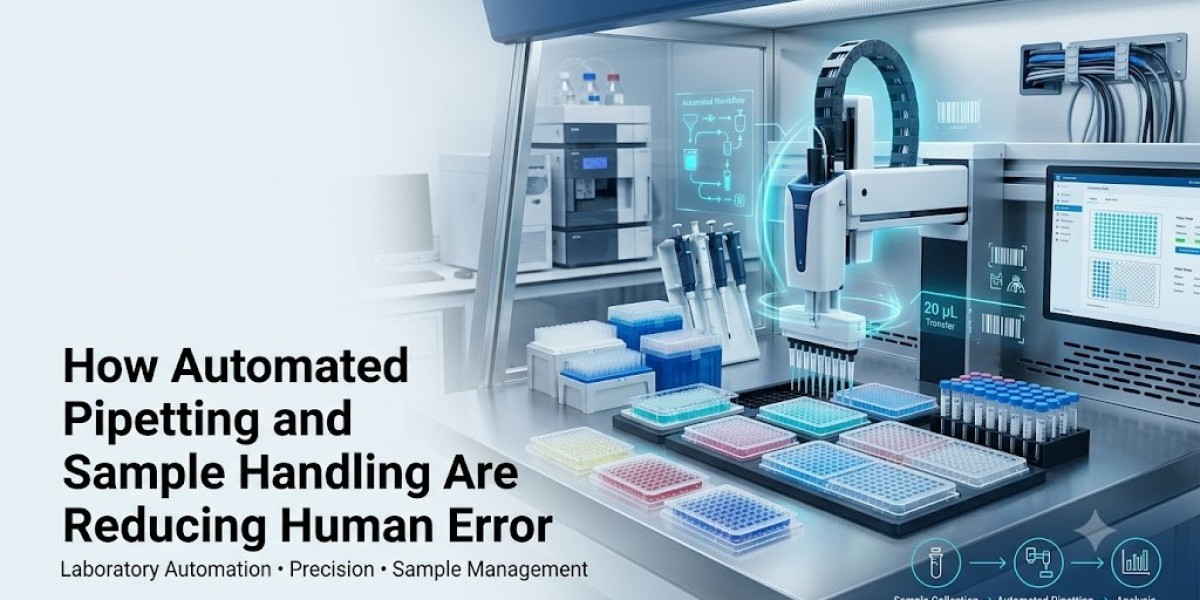

Laboratory work depends on accuracy, consistency, and careful sample management. Even a small handling mistake can affect test results, waste valuable samples, or require a procedure to be repeated.
Automated pipetting and sample handling systems are helping laboratories reduce these risks. By using robotics, precise liquid handling, barcode tracking, and software-controlled workflows, modern laboratories can perform repetitive tasks with greater consistency.
This shift is also changing how laboratories present their services online. A professional WordPress theme for laboratories can help diagnostic centers, research facilities, biotechnology companies, and laboratory equipment providers explain their technology and services clearly.
Automated Pipetting Improves Liquid Handling Accuracy
Automated pipetting systems improve consistency by controlling liquid movement through programmed equipment rather than relying entirely on manual operation.
Manual pipetting requires technicians to control several variables. These include pipette angle, aspiration speed, dispensing technique, volume selection, and timing. Repeating these actions across hundreds of samples can increase the chance of variation.
Automated liquid handling platforms use programmed instructions to control these steps. Depending on the system, they can handle different volumes and work with multiple samples in a single run.
Common applications include:
- Sample preparation
- Reagent dispensing
- DNA and RNA workflows
- PCR preparation
- ELISA procedures
- Cell-based assays
- Drug discovery research
- Clinical laboratory processes
Automation does not remove the need for trained professionals. Instead, it helps technicians spend less time on repetitive liquid-handling tasks.
Automation Reduces Repetitive Human Errors
Automated workflows can reduce errors caused by repetitive manual actions and inconsistent handling.
Technicians may become fatigued when performing the same pipetting operation for long periods. Errors can include selecting the wrong volume, skipping a sample, adding a reagent to the wrong well, or repeating a step incorrectly.
Automated systems follow programmed sequences and can perform the same operation repeatedly. This improves process consistency when the equipment has been correctly configured and validated.
However, automation does not make a laboratory completely error-free. Incorrect programming, poor maintenance, unsuitable consumables, or incorrect setup can still cause problems.
That is why laboratories need proper validation, quality control, training, and monitoring alongside automation.
Automated Sample Handling Improves Workflow Control
Automated sample handling helps laboratories move specimens through defined processing steps with less manual intervention.
Modern systems can perform tasks such as sorting, labeling, transferring, tracking, and preparing samples. Some platforms can also connect with laboratory information management systems, commonly known as LIMS.
Barcode identification provides another layer of control. A sample can be scanned and matched with its associated information before the next processing step.
This helps laboratories maintain sample identity throughout complex workflows. It can also make it easier to identify where a sample is within the laboratory process.
Robotics Can Increase Laboratory Throughput
Laboratory automation allows facilities to process more samples without increasing every manual task at the same rate.
A robotic liquid handler can work through a programmed batch while laboratory staff focus on other responsibilities. This can be particularly useful in high-throughput environments where hundreds or thousands of samples may require similar processing.
Automation can also help laboratories standardize workflows. Once a validated process is established, the same sequence can be repeated across multiple batches.
The actual productivity gain depends on the equipment, workflow design, sample volume, and laboratory environment. Automation should therefore be selected according to a specific operational need.
Standardized Processes Support Better Quality Control
Automation can make laboratory procedures more consistent by applying predefined operating instructions.
A standardized workflow can control factors such as liquid volumes, pipetting sequences, incubation timing, sample positions, and reagent distribution. This creates a repeatable process that can be monitored and documented.
Quality control remains essential. Laboratories still need to verify equipment performance and confirm that automated procedures produce reliable results.
Important quality practices may include:
- Equipment calibration
- Routine maintenance
- Process validation
- Quality control samples
- Staff training
- Software verification
- Error monitoring
- Preventive maintenance
Automation works best when it becomes part of a complete quality management system.
Digital Tracking Helps Protect Sample Identity
Barcode and software-based tracking can reduce the risk of sample identification mistakes.
In manual workflows, technicians may need to enter sample information or move containers between different processing areas. Each additional manual step creates an opportunity for an identification error.
Automated systems can scan barcodes and connect sample information with the laboratory workflow. This creates a digital record that can help staff track samples through different stages.
For laboratories handling sensitive clinical or research material, traceability is an important part of operational control.
Automation Can Reduce Physical Workload
Automated sample handling can reduce the amount of repetitive physical work performed by laboratory staff.
Repeated pipetting, plate movement, tube transfers, and sample sorting can require significant hand and arm movement. Over long periods, these tasks can contribute to physical strain.
Robotic systems can take over selected repetitive operations. Staff can then focus more attention on tasks that require judgment, analysis, troubleshooting, and scientific decision-making.
This does not mean automation replaces laboratory professionals. Instead, it changes how their time is used within the workflow.
Data Integration Makes Automation More Useful
Modern laboratory automation becomes more powerful when equipment can communicate with laboratory software.
Integration with LIMS, electronic laboratory notebooks, analytical software, and other systems can help create a connected workflow. Information can move between different stages without requiring repeated manual entry.
This can support:
- Sample traceability
- Workflow monitoring
- Result management
- Audit trails
- Inventory tracking
- Process documentation
- Equipment monitoring
Data integration also helps laboratories identify bottlenecks and review workflow performance.
Laboratory Websites Need to Explain Automation Clearly
A professional laboratory website should explain complex technology in language that patients, researchers, partners, and potential customers can understand.
A form maker plugin WordPress can provide a useful foundation for creating pages about diagnostic services, research capabilities, laboratory equipment, testing procedures, and automation technologies.
Useful website sections can include:
- Laboratory services
- Research facilities
- Automated testing
- Equipment and technology
- Quality standards
- Industry applications
- Research articles
- Laboratory news
- Contact and inquiry forms
Clear navigation helps visitors find relevant information without searching through technical pages.
SEO Helps Laboratories Reach the Right Audience
Laboratory websites can use SEO to reach people searching for specific testing, research, and laboratory technology information.
Useful content may target topics such as automated pipetting, laboratory automation, sample handling systems, liquid handling automation, and laboratory equipment.
However, effective SEO requires more than repeating keywords. Pages should answer real questions, explain processes accurately, and provide useful information for the intended audience.
A responsive Laboratory WordPress Theme can support a strong technical foundation with mobile-friendly layouts, organized content, customizable page structures, and clean navigation.
The theme itself does not guarantee search rankings. Content quality, technical SEO, website performance, authority, and user experience also influence organic visibility.
Choosing the Right Automation System
The right automation system depends on the laboratory's workflow, sample volume, accuracy requirements, and available resources.
Before selecting equipment, laboratories should consider:
- Required sample throughput
- Pipetting volume range
- Number of processing steps
- Compatible labware
- Integration requirements
- Available laboratory space
- Software capabilities
- Maintenance requirements
- Validation requirements
- Staff training needs
A system should solve a defined workflow problem rather than being selected only because it offers advanced features.
The Future of Laboratory Automation
Laboratory automation is moving toward more connected, traceable, and flexible workflows.
Advances in robotics, machine vision, software integration, artificial intelligence, and digital tracking are creating new possibilities for laboratory operations. Future systems may handle increasingly complex workflows while providing better process monitoring and data visibility.
Still, technology works best when combined with skilled laboratory professionals and strong quality procedures. Human oversight remains important for validation, troubleshooting, interpretation, and decision-making.
For laboratories and technology providers, this evolution also creates a need for better digital communication. A well-designed Laboratory WordPress Theme can help organizations explain their capabilities, publish educational content, and present complex laboratory technology in a clear format.
Automated pipetting and sample handling are not simply about replacing manual work. They are about creating more consistent workflows, improving traceability, reducing repetitive tasks, and allowing laboratory professionals to focus on higher-value activities. When automation is properly selected, validated, and maintained, it can become an important part of a modern laboratory workflow.