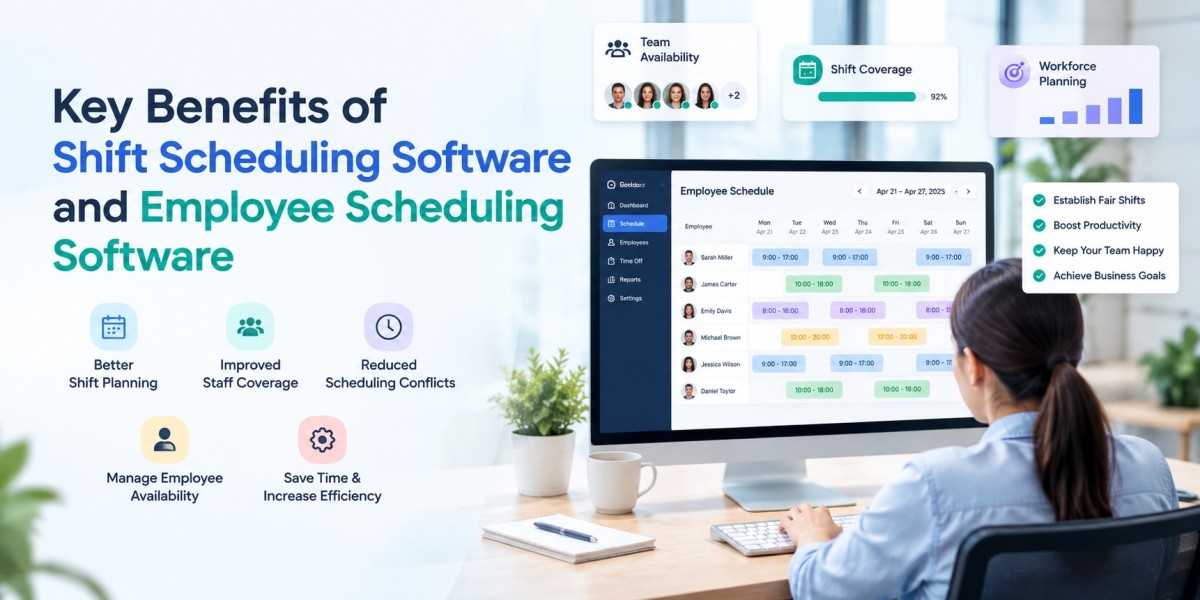

Managing employees effectively is an important part of running a successful business. As companies grow, creating schedules becomes more complicated because managers need to consider employee availability, working hours, time-off requests, shift coverage, business demand, and last-minute changes.
Manual scheduling methods such as spreadsheets, paper timetables, and messaging apps can work for small teams, but they often become difficult to manage as the workforce expands. Errors can result in overlapping shifts, understaffing, unnecessary overtime, and communication problems.
Modern scheduling technology gives businesses a more organized way to manage their workforce. Employee Scheduling software can help managers create and maintain employee schedules, while Shift scheduling software can help businesses assign employees to specific shifts and maintain appropriate coverage.
When these capabilities are used effectively, businesses can improve scheduling accuracy, communication, workforce visibility, and operational efficiency.
What Is Workforce Scheduling?
Workforce scheduling is the process of determining when employees will work and assigning people to the shifts or hours required by the business.
A manager may need to consider several factors before creating a schedule, including:
Employee availability
Contracted working hours
Skills and job roles
Business operating hours
Expected customer demand
Time-off requests
Shift requirements
Employee preferences
Location requirements
Managing all these factors manually can take considerable time. A digital scheduling system can bring important information together, making it easier for managers to create practical schedules.
1. Saves Managers Time
One of the most noticeable benefits of scheduling technology is the reduction in administrative work.
Creating schedules manually may require managers to check multiple spreadsheets, messages, calendars, and employee availability records. When changes occur, they may need to update several documents and notify employees individually.
A centralized scheduling platform can simplify this process. Managers can create schedules, make adjustments, and communicate updates from one place.
The time saved can then be used for other management responsibilities, such as employee support, customer service, operational planning, and business development.
2. Improves Scheduling Accuracy
Scheduling errors can create problems for both employees and businesses. An employee may accidentally be assigned to two shifts at the same time, scheduled when unavailable, or left out of an important shift.
Digital scheduling tools can make these issues easier to identify during the planning process.
Managers can review employee availability, working hours, and shift assignments before publishing schedules. Depending on the platform, automated alerts may also help identify potential conflicts.
Improved accuracy can create more reliable schedules and reduce the amount of time spent correcting mistakes.
3. Provides Better Shift Coverage
Businesses need the right number of employees available at the right time. Understaffing can increase pressure on employees, while excessive staffing can increase labour costs.
Scheduling technology can give managers a clearer overview of open and filled shifts. This makes it easier to identify potential coverage gaps before a shift begins.
For example, a restaurant can review staffing requirements for busy periods, while a retail business can ensure enough employees are scheduled during weekends or promotional events.
Better visibility can help businesses respond to staffing requirements more effectively.
4. Makes Employee Availability Easier to Manage
Employees may have different availability depending on personal commitments, education, family responsibilities, or other factors.
Collecting availability through emails or messages can become difficult when a business manages a large team.
Scheduling software can provide a central place for employees to provide or update their availability. Managers can then use this information when creating schedules.
Keeping availability information organized can reduce unnecessary communication and make schedule planning more efficient.
5. Simplifies Time-Off Management
Holiday requests, sick leave, personal leave, and other absences can affect workforce schedules.
When time-off requests are handled manually, managers may need to check several records before approving a request. They must also determine whether enough employees will remain available for the affected shifts.
A digital scheduling system can provide greater visibility into time-off requests and existing schedules. Managers can review potential staffing impacts before approving changes.
This can make leave management more structured and reduce unexpected coverage problems.
6. Improves Employee Communication
Communication is an essential part of workforce scheduling. Employees need to know when they are working and whether their schedules have changed.
A centralized scheduling platform can give employees direct access to their current schedules. Depending on the system, notifications can also alert employees when changes are made.
This can reduce reliance on paper schedules, individual messages, or outdated spreadsheets.
When employees can easily access current scheduling information, there is less uncertainty about working hours and upcoming shifts.
7. Supports Shift Swapping
Employees may occasionally need to exchange shifts because of personal commitments or unexpected events.
Managing shift swaps manually can create additional work for managers. They may need to confirm employee availability, check whether the replacement is suitable, and update the schedule.
Some scheduling platforms allow employees to request or manage shift swaps through the system, subject to manager approval or business rules.
This can make schedule changes more organized while giving employees greater flexibility.
8. Helps Control Labour Costs
Labour costs can have a significant impact on business profitability. Poor scheduling may lead to unnecessary overtime, excessive staffing, or inefficient allocation of employee hours.
Scheduling technology provides managers with better visibility into planned working hours. This can help them compare staffing requirements with available labour.
Managers can identify patterns such as repeated overtime or periods where staffing levels are consistently higher than necessary.
The objective is not simply to reduce employee hours but to allocate working hours according to operational requirements.
9. Supports Multi-Location Businesses
Managing schedules becomes more complex when a business operates across several locations.
Managers may need to coordinate employees across stores, branches, offices, warehouses, or customer sites. Without a centralized system, it can become difficult to understand staffing levels across different locations.
Modern scheduling solutions can organize employees and schedules by location. This can give managers a broader view of workforce allocation while allowing them to focus on individual teams when necessary.
This feature can be particularly useful for growing businesses with multiple sites.
10. Improves Workforce Visibility
Managers need accurate information to make effective workforce decisions.
Scheduling systems can provide a clearer view of employee assignments, planned hours, open shifts, availability, and schedule changes.
This visibility allows managers to identify potential problems earlier. For example, they may notice that a particular shift regularly lacks sufficient coverage or that certain periods require additional staffing.
Better visibility can support more informed workforce planning.
11. Supports Better Employee Experience
Employees generally benefit when schedules are clear, accessible, and communicated consistently.
Unpredictable scheduling or frequent last-minute changes can make it difficult for employees to organize their personal time. A structured scheduling process can provide greater clarity around working hours.
Employee Scheduling software can give employees a centralized place to view their schedules and stay informed about changes.
When employees understand their schedules and have appropriate visibility into working hours, communication between employees and managers can become more efficient.
12. Helps Businesses Plan for Demand
Workforce requirements can change depending on customer demand, seasonal activity, events, promotions, or business operations.
Managers can use historical scheduling information and operational knowledge to plan staffing levels for different periods.
Shift scheduling software can support this process by helping managers create shifts around expected workforce requirements.
For example, a retailer may schedule additional employees during busy shopping periods, while a hospitality business may increase staffing during weekends or seasonal events.
13. Reduces Administrative Errors
Manual processes can create small mistakes that become larger operational problems.
A wrong shift time, missed schedule update, or incorrect employee assignment can cause confusion and potentially affect service delivery.
Digital scheduling tools can reduce reliance on manual data entry and provide a central source of scheduling information.
Although technology does not eliminate every scheduling issue, it can create a more consistent process for managing employee schedules.
How Businesses Can Get the Most From Scheduling Software
Simply implementing scheduling technology is not enough. Businesses should establish clear processes for using the system.
Managers should keep employee information and availability up to date. Scheduling policies should explain how employees request time off, swap shifts, and communicate availability changes.
Schedules should also be published with reasonable notice whenever possible. Managers should regularly review workforce data to identify recurring staffing issues and opportunities for improvement.
Training employees and managers on the scheduling system can also help ensure that everyone understands how to use its features effectively.
Conclusion
Effective workforce scheduling is essential for businesses that depend on employees working different hours, shifts, and locations. As teams grow, manual scheduling methods can become time-consuming and more difficult to maintain.
Modern scheduling solutions can help businesses save time, improve scheduling accuracy, strengthen communication, manage employee availability, support shift coverage, and improve workforce visibility.
The right scheduling system should match the organization's size, operating model, workforce structure, and scheduling requirements. When combined with clear workforce policies and consistent management processes, scheduling technology can help businesses create a more organized and efficient approach to workforce management.