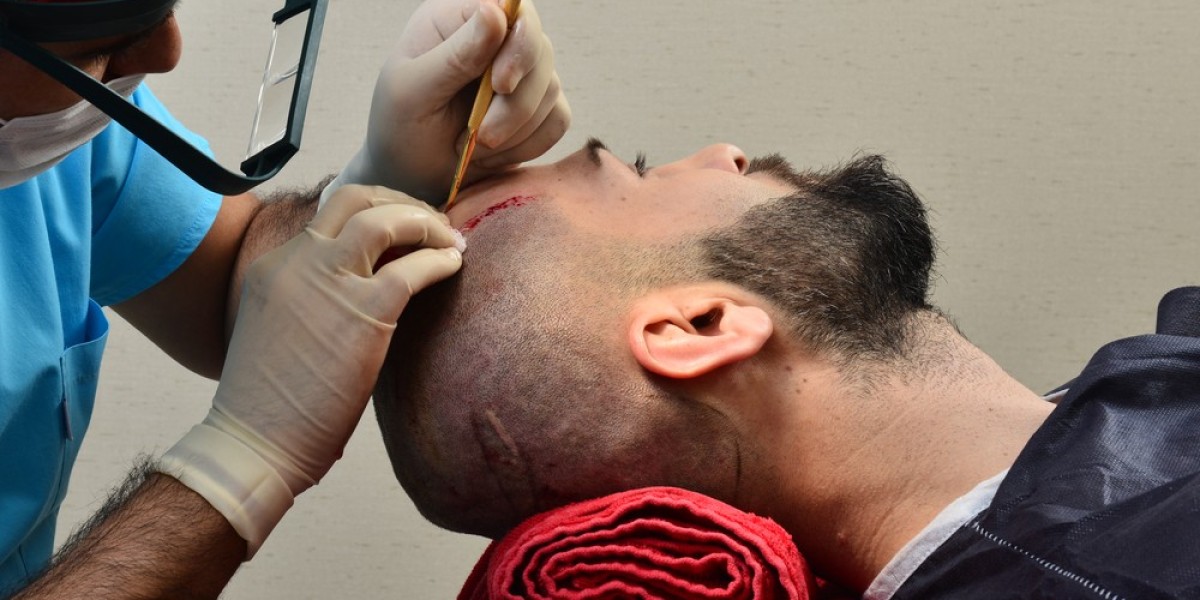

A receding hairline can gradually change the way the forehead and hairstyle appear. At first, the change may be subtle, with only the corners becoming less dense. Over time, recession can extend further across the frontal region and make the scalp more noticeable.
For suitable candidates, a carefully planned hair transplant may help restore coverage in selected areas of a receding hairline. If you are researching hair transplant in islamabad, understanding the planning process can help you approach restoration with realistic expectations.
What Does a Receding Hairline Look Like?
Hairline recession does not always follow the same pattern. Some people experience more noticeable changes around the corners, while others lose density across a broader frontal area.
Common changes can include:
- Increased forehead exposure
- Thinning around the frontal corners
- Reduced density along the hairline
- Greater visibility of the temples
- Difficulty maintaining previous hairstyles
The progression can be gradual, which is why comparing current photographs with older ones may sometimes reveal changes that are difficult to notice day to day.
Can a Hair Transplant Restore Receded Areas?
For suitable candidates, transplanted follicles can be placed into selected areas where the hairline has receded.
The surgeon may consider the current position of the hairline, the amount of existing hair, donor supply, and the possibility of future changes.
The aim is not simply to place hair as low as possible. Instead, the new coverage should be planned around the person's natural characteristics and long-term restoration needs.
Why Is Hairline Design Important?
The hairline is highly visible, so its shape and density can influence the overall appearance of the transplant.
A natural-looking design generally needs to account for:
- Irregularity and natural variation
- Hair direction
- Temple position
- Existing frontal hair
- Facial proportions
- Future hair-loss patterns
Creating an overly straight or uniform line may not reflect the way natural hair grows.
What Happens to the Existing Hair?
Many people considering transplantation still have hair throughout the receding region. This existing hair needs to be considered during planning.
The surgeon may evaluate whether native follicles remain healthy and how additional grafts could be placed around them.
Preserving the relationship between native and transplanted hair can help create a gradual transition rather than an obvious division.
Can the Temples Be Included?
The temples can be an important part of the overall frontal appearance. When they recede, the hairline may look wider even if the central frontal region retains some density.
If appropriate, temple areas can be considered during restoration planning. However, the direction and angle of hair in this region require careful attention.
The goal should be to complement the natural side profile rather than create an artificial shape.
Does Donor Density Affect the Treatment?
Yes. The donor region determines how many suitable follicles are available for transplantation.
A person with a strong donor supply may have different treatment possibilities from someone with limited donor density. The extent of recession also affects how grafts need to be distributed.
Because donor follicles are limited, they should be used strategically rather than focusing only on the immediate appearance of the hairline.
What About Future Recession?
Future hair loss is an important consideration when planning frontal restoration. Transplanted follicles may remain in the treated area, while native hair around them can continue to change.
For this reason, the surgeon may assess the wider scalp before designing the new hairline.
A long-term approach can help avoid creating a restored frontal area that does not correspond with the surrounding native hair later.
Can a Receding Hairline Affect Styling?
It can. As the hairline moves backward, some people change how they wear their hair to make the forehead or temples less noticeable.
They may:
- Wear longer frontal hair
- Change their part
- Brush hair forward
- Avoid certain short hairstyles
- Use styling products for additional coverage
For suitable candidates, restoration may provide additional flexibility, although the amount of improvement varies according to individual circumstances.
How Should Expectations Be Managed?
A hair transplant can provide additional follicles, but the result is influenced by many factors.
These include:
- Donor hair quality
- Existing hair density
- Extent of recession
- Recipient-area characteristics
- Graft distribution
- Natural hair direction
- Future native hair changes
A consultation should therefore focus on what is realistically achievable rather than promising a particular density or outcome.
Why Consider Hair Transplant in Islamabad?
For people considering hair transplant in islamabad, personalized planning can be particularly important when treating a receding hairline. The surgeon needs to consider both the visible recession and the broader pattern of hair loss.
At enfield royal clinic in islamabad, patients can discuss frontal recession and restoration goals with dr adnan bashir, the hair surgeon. A consultation can assess the hairline, temples, donor area, existing hair, and potential long-term considerations.
Those interested in learning more can explore Enfield Royal Clinic Islamabad and arrange a professional consultation.
Final Thoughts
A receding hairline can gradually change both scalp coverage and styling options. For suitable candidates, a carefully planned hair transplant may help restore selected areas while maintaining a natural relationship between the frontal hairline, temples, and surrounding hair.