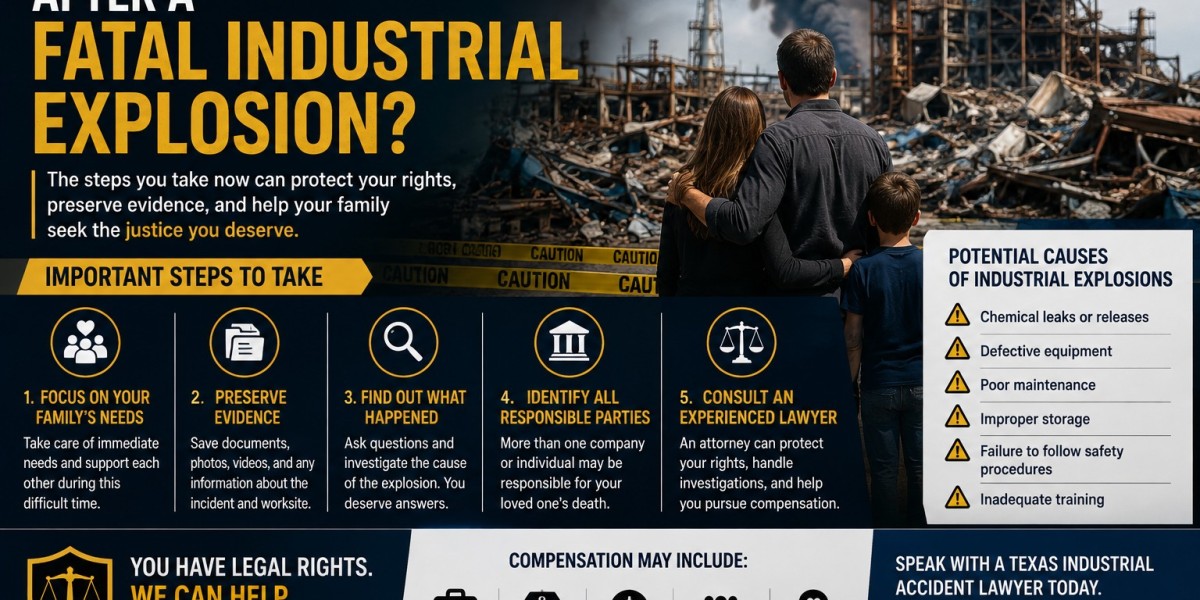

Losing a loved one in an industrial explosion can leave a family facing grief, unanswered questions, and significant financial uncertainty. While nothing can undo the loss, families may have legal options when an explosion was caused by unsafe conditions, inadequate training, defective equipment, improper maintenance, or other negligence. An experienced industrial accident lawyer can investigate what happened, identify potentially responsible parties, and help a family understand its options.
Industrial explosions can involve complex investigations because multiple companies, contractors, equipment manufacturers, property owners, and other parties may have played a role. Harrison Davis Morrison Jones has extensive experience handling industrial accidents, fire and explosion cases, and wrongful death claims throughout Texas.
What Causes Fatal Industrial Explosions?
Industrial explosions can happen in many settings, including refineries, chemical plants, fertilizer facilities, manufacturing plants, oil and gas operations, and other industrial workplaces.
Potential causes can include:
Improper storage of combustible materials
Chemical leaks or releases
Faulty electrical wiring
Defective machinery
Inadequate equipment maintenance
Improperly installed gas or propane lines
Failure to follow safety procedures
Inadequate employee training
Missing or defective safety equipment
Failure to identify known hazards
OSHA or other safety violations
Poor emergency response procedures
The cause is not always immediately apparent. A detailed investigation may be necessary to determine whether the explosion resulted from one negligent act or a combination of failures.
Harrison Davis notes that fire and explosion cases can involve oil and gas companies, manufacturers, utility providers, contractors, and others whose conduct may have contributed to unsafe conditions.
1. Focus on Your Family's Immediate Needs
After a fatal workplace explosion, the family's immediate priority should be taking care of urgent personal and financial needs.
This may include arranging funeral and burial services, obtaining necessary medical or death records, notifying employers and insurance companies when appropriate, and making arrangements for household expenses.
Families should avoid making rushed decisions about a potential settlement simply because they are facing immediate financial pressure. The full financial and personal impact of a wrongful death may not be clear immediately.
2. Preserve Important Documents and Evidence
Evidence can be critical in an industrial explosion investigation.
Families should preserve documents and information related to the deceased person's employment and the incident, including:
Employment records
Pay statements
Benefits information
Medical records
Death certificate
Accident reports
Photographs and videos
Correspondence from the employer
Insurance documents
Safety-related communications
Information about the worksite and equipment
If family members have photographs, videos, text messages, emails, or other information concerning the workplace or explosion, they should preserve the original files.
Industrial accident investigations can involve large amounts of technical evidence, including maintenance records, inspection documents, safety policies, training records, equipment specifications, and communications between companies.
3. Do Not Assume the Employer Is the Only Responsible Party
A fatal industrial explosion may involve several potentially responsible parties.
Depending on the circumstances, an investigation may examine the conduct of:
Employers
Property owners
Contractors
Subcontractors
Equipment manufacturers
Equipment suppliers
Chemical companies
Maintenance companies
Engineering firms
Other businesses involved in the operation
For example, if defective industrial equipment contributed to an explosion, product liability issues could become relevant. Harrison Davis handles product liability cases involving dangerous and defective machinery and industrial equipment.
Identifying every potentially responsible party can be important because different parties may have different insurance coverage, resources, and legal responsibilities.
4. Find Out What Caused the Explosion
Families deserve answers about what happened.
A serious industrial explosion investigation may examine:
The source of the explosion
Chemical or fuel storage
Equipment condition
Maintenance records
Safety procedures
Employee training
Inspection records
OSHA compliance
Previous safety complaints
Warning systems
Emergency response procedures
Company communications
Similar incidents at the facility
Harrison Davis explains that its industrial accident cases can require extensive investigation, numerous experts, and significant document discovery.
Because industrial facilities can contain complex machinery and hazardous substances, expert analysis may be necessary to reconstruct the sequence of events.
5. Consider Whether a Wrongful Death Claim May Apply
When negligence or another legally actionable failure causes a person's death, surviving family members may have a potential wrongful death claim.
A wrongful death case can examine both the circumstances that caused the death and the losses suffered by the surviving family.
Depending on the circumstances and applicable Texas law, damages may potentially include:
Lost income
Loss of financial support
Medical expenses related to the final injury
Funeral and burial expenses
Loss of companionship
Loss of household services
Mental and emotional suffering
The specific damages available depend on the facts of the case and applicable law.
Harrison Davis represents families in wrongful death matters arising from catastrophic accidents and explosions. The firm's experience includes representing families affected by the West Fertilizer Plant explosion in West, Texas.
6. Understand the Importance of the West Fertilizer Plant Explosion
Harrison Davis Morrison Jones has direct experience with one of the most devastating industrial explosions in Texas history.
On April 17, 2013, an explosion at the West Fertilizer plant killed 15 people, injured approximately 260 others, and damaged hundreds of homes and buildings. Harrison Davis represented approximately 100 people affected by the blast, including families who lost loved ones and individuals and businesses that suffered injuries or property damage.
The firm's attorneys also represented multiple families who lost loved ones in the West explosion and were involved in developing the liability case against defendants.
This experience illustrates why large industrial explosion cases can require substantial resources, technical investigation, and coordination among multiple experts and legal professionals.
7. Be Careful When Speaking With Insurance Companies
After a fatal workplace accident, insurance companies or representatives for potentially responsible businesses may contact the family.
Families should be careful about providing statements or signing documents without understanding what they mean.
A settlement offer may not account for all potential losses, particularly when the family has not yet determined the full economic and personal impact of the death.
Before accepting a settlement or signing a release, consider having the proposed agreement reviewed by an experienced attorney.
8. Act Quickly to Preserve Evidence
Time can be especially important after an industrial explosion.
Evidence can be lost, damaged, altered, or destroyed. Equipment may be repaired or removed. Surveillance footage may be overwritten. Employees and witnesses may forget important details.
Companies may also begin conducting their own internal investigations shortly after an explosion.
A prompt legal investigation can help identify relevant evidence and determine which experts may be needed to evaluate the accident.
Harrison Davis emphasizes immediate investigation in complex industrial and catastrophic accident cases and has the resources to pursue cases involving extensive document discovery and expert testimony.
9. Speak With an Experienced Industrial Explosion Attorney
Fatal industrial explosion cases can be significantly more complicated than ordinary personal injury claims.
An attorney may need to investigate multiple companies, review technical records, work with engineers and accident reconstruction experts, examine safety regulations, and determine whether defective equipment or unsafe practices contributed to the incident.
Harrison Davis Morrison Jones handles industrial accidents throughout Texas, including cases involving machinery, toxic substances, industrial vehicles, OSHA violations, refinery accidents, and other catastrophic workplace incidents.
The firm also states that it offers free consultations and, in most cases, can begin qualifying cases without upfront costs to the family.
What Should Families Do After a Fatal Industrial Explosion?
Families should focus first on their immediate needs, preserve important documents and evidence, avoid rushing into a settlement, and seek answers about what caused the explosion.
A thorough investigation can determine whether unsafe working conditions, inadequate training, defective equipment, improper maintenance, chemical hazards, regulatory violations, or the actions of another company contributed to the death.
If another party may be legally responsible, the family may have a potential wrongful death claim. Because these cases can involve complex evidence and multiple defendants, obtaining legal guidance early can help protect the family's interests.
Frequently Asked Questions
1. Can a family sue after a fatal industrial explosion?
Potentially. If negligence, defective equipment, unsafe conditions, or another legally actionable factor contributed to a person's death, eligible family members may have a potential wrongful death or other claim. The specific facts and applicable Texas law determine what claims may be available.
2. Who can be responsible for a fatal industrial explosion?
Potentially responsible parties may include an employer, property owner, contractor, subcontractor, equipment manufacturer, supplier, maintenance company, or another business involved in the facility's operations. A thorough investigation is necessary to determine who may have contributed to the explosion.
3. What evidence is important after an industrial explosion?
Important evidence may include photographs, videos, employment records, safety policies, training records, inspection reports, maintenance records, equipment information, communications, witness statements, accident reports, and OSHA-related records.
4. What compensation can families seek after a fatal workplace explosion?
Depending on the circumstances, a wrongful death claim may involve losses such as funeral expenses, medical expenses, lost income and financial support, loss of companionship, and other damages recognized under applicable law.
5. How soon should a family contact an industrial accident lawyer?
Families should consider obtaining legal advice as soon as reasonably possible. Industrial explosion cases can involve evidence that may disappear or change over time, including equipment, electronic records, surveillance footage, and witness recollections. Legal deadlines may also affect potential claims.