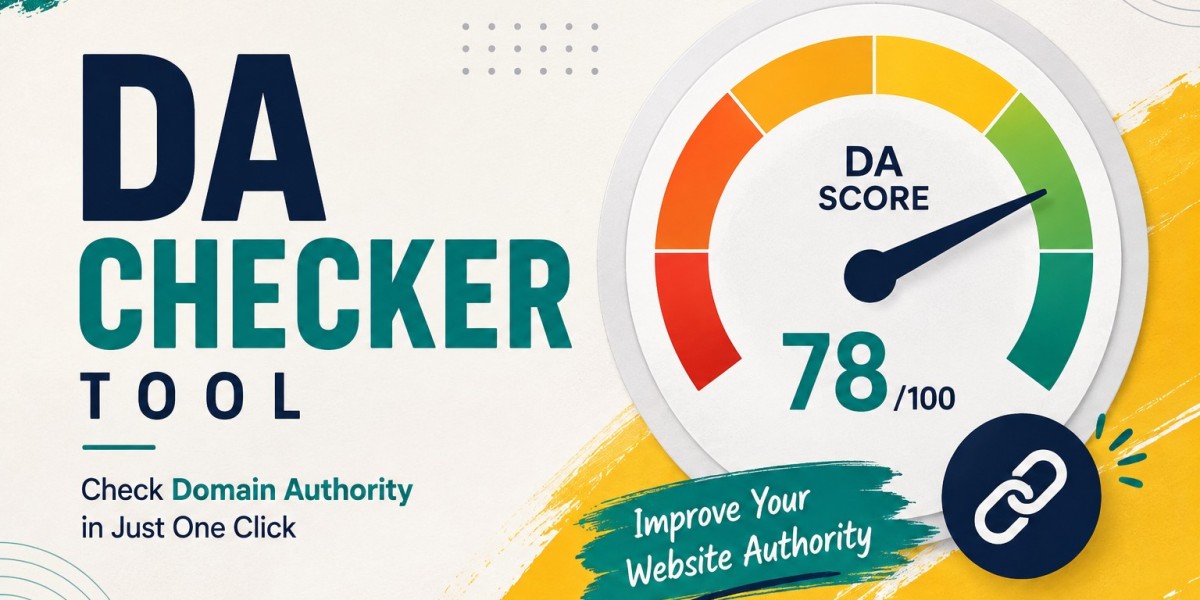

Understanding the strength of a website can be helpful when planning SEO, researching competitors, or evaluating potential backlink opportunities. While Domain Authority is not a Google ranking factor, it can still be used as a useful comparison metric when reviewing different domains.
A DA Checker Tool provides a quick way to check the Domain Authority of a website and use that information alongside other SEO data. The key is to understand what the score means and avoid treating it as the only measure of website performance.
What Is Domain Authority
Domain Authority or DA is a metric created by Moz to estimate how likely a domain is to perform in search results compared with other websites.
The score ranges from 1 to 100. Generally, a higher score indicates a stronger backlink profile, although the score itself does not guarantee higher Google rankings.
It is important to remember that DA is not a metric created or used by Google. It should therefore be treated as a third party SEO measurement rather than an official search ranking score.
Why Check Domain Authority
A DA Checker Tool can be useful when you want to compare websites within the same industry.
For example, imagine your website has a DA of 30 and similar competitors have scores of 35, 41, and 47. This difference can encourage you to investigate their backlink profiles, referring domains, content, and overall SEO strategy.
The score gives you a starting point for research rather than a final answer.
Compare Relevant Competitors
Competitor comparison is one of the practical uses of a DA checker.
Start with websites that rank for keywords relevant to your business. Check their domain authority and then review other factors such as keyword rankings, organic visibility, referring domains, content quality, and backlinks.
A competitor with a higher DA is not automatically better for every search query. A smaller website with highly relevant content can still rank well for specific topics.
This is why relevance and search intent should remain important parts of your analysis.
Look at Backlinks Too
Backlinks are closely connected to authority analysis. When reviewing a domain, do not focus only on the number of links it has.
Look at the quality and relevance of the websites linking to the domain. A few relevant links from trusted websites may provide more useful insight than a large collection of unrelated links.
Tools such as Ahrefs, Semrush, Moz, and Ubersuggest can help you investigate backlinks and referring domains in greater detail.
DA Is Only One Metric
A common SEO mistake is treating DA as the complete measure of a website's strength.
Search performance depends on many factors, including content relevance, technical SEO, backlinks, search intent, internal linking, page experience, and competition.
For example, a website with a moderate DA can rank strongly when its page provides a more useful and relevant answer than competing results.
Therefore, use DA together with keyword rankings, organic traffic, content quality, backlink data, and technical SEO information.
Use Google Tools for More Context
A DA Checker Tool can provide a useful comparison score, but first party Google tools can provide additional information about your own website.
Google Search Console shows search queries, impressions, clicks, average positions, and indexing information. Google Analytics can help you understand traffic and visitor behavior.
Combining these sources gives you a more complete picture of website performance.
Use DA During Link Research
DA can also be considered when researching potential backlink websites.
However, do not choose a website simply because it has a high DA. Check whether it is relevant to your industry, publishes useful content, has a genuine audience, and provides a reasonable context for your link.
A relevant website with a moderate DA may be more useful than a high scoring website that has no connection to your subject.
Final Thoughts
A DA Checker Tool can help you quickly compare Domain Authority and support competitor and backlink research. It is useful as a reference point when evaluating domains, but it should never be treated as a guarantee of search rankings.
For better SEO decisions, combine DA with backlink quality, referring domains, keyword performance, organic traffic, content relevance, technical SEO, and user experience. The long term goal should be building a useful and trustworthy website rather than simply increasing an authority score.