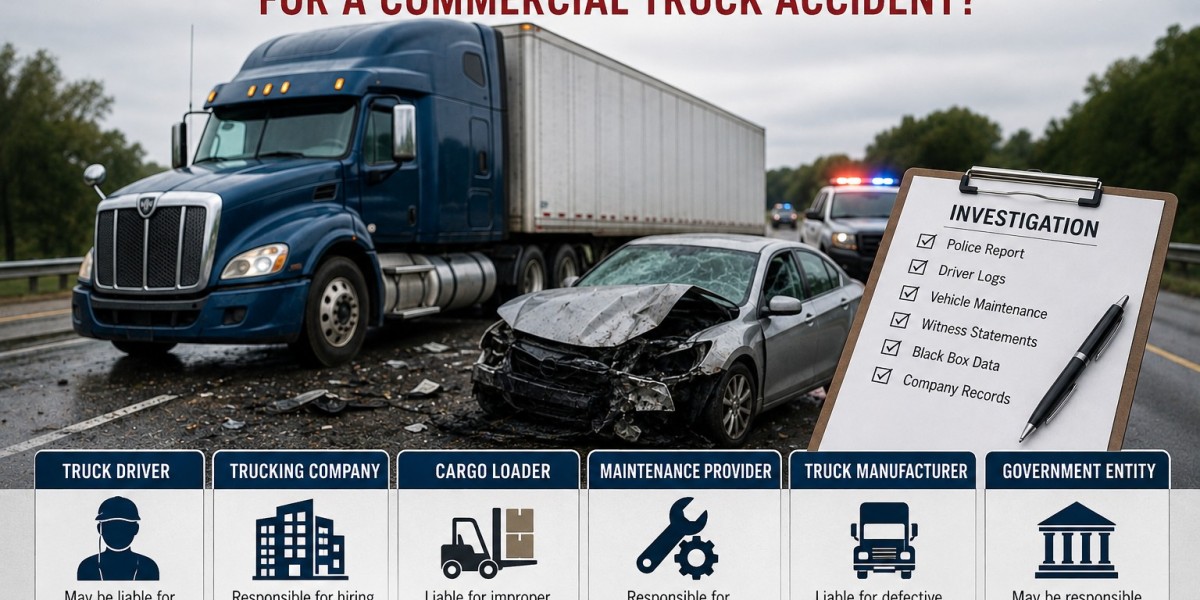

Determining responsibility after a commercial truck crash is rarely as simple as blaming the driver. A serious commercial truck accident may involve the truck driver, trucking company, vehicle owner, maintenance provider, cargo loader, manufacturer, or other parties. If you or a loved one has been injured, speaking with an experienced commercial truck accident lawyer can help identify potentially responsible parties and investigate the evidence surrounding the crash.
Why Can Commercial Truck Accident Liability Be Complicated?
Commercial trucks and 18-wheelers operate differently from passenger vehicles and are subject to additional safety requirements. Federal Motor Carrier Safety Administration (FMCSA) rules address areas such as driver requirements, vehicle maintenance, hours of service, and cargo security.
For example, FMCSA states that motor carriers must routinely inspect, repair, and maintain commercial motor vehicles under their control.
This means an investigation may need to look beyond the driver's actions to determine whether another person or company contributed to the accident.
Can the Truck Driver Be Responsible?
Yes. A truck driver may be responsible when negligent or unsafe driving causes a collision.
Examples of potentially negligent truck driver behavior include:
Speeding
Distracted driving
Aggressive or reckless driving
Driving while fatigued
Following too closely
Unsafe lane changes
Failure to check blind spots
Driving under the influence
Violating applicable trucking regulations
For example, if a driver fails to check a blind spot before changing lanes and strikes a nearby vehicle, the driver's conduct may be an important part of the liability investigation.
However, identifying driver negligence does not necessarily end the investigation. The trucking company and other parties may also need to be examined.
Can the Trucking Company Be Held Responsible?
A trucking company may potentially be liable depending on the driver's relationship with the company and the circumstances of the crash.
An investigation may examine whether the company:
Hired an unqualified driver
Failed to properly train or supervise the driver
Ignored a driver's safety history
Allowed excessive driving hours
Failed to maintain the truck
Pressured a driver to meet an unsafe schedule
Failed to follow required safety procedures
In some cases, company records can reveal whether management knew about safety problems before the accident.
Because commercial trucking involves extensive operational records, determining company responsibility may require a deeper investigation than a typical passenger-vehicle collision.
Can a Truck Owner Be Responsible?
The truck owner may be different from the trucking company or driver.
For example, a company may lease a tractor or trailer from another business or individual. If the vehicle's condition contributed to the accident, investigators may need to determine who owned the equipment, who controlled it, and who was responsible for inspection and maintenance.
The specific contractual relationships between the parties can therefore become important when determining liability.
Can a Maintenance Company Be Responsible?
Mechanical failures can cause devastating truck crashes. Brake problems, tire failures, steering defects, suspension issues, and other equipment problems may affect a truck's ability to operate safely.
FMCSA rules require motor carriers to systematically inspect, repair, and maintain commercial motor vehicles under their control.
If a third-party maintenance provider performed repairs or inspections and a maintenance-related failure contributed to the crash, that company may also need to be investigated.
Relevant evidence may include:
Inspection reports
Repair invoices
Maintenance schedules
Brake inspection records
Tire records
Work orders
Previous repair requests
Who Is Responsible for Improperly Loaded Cargo?
Cargo can create serious safety risks when it is improperly distributed or secured.
Federal cargo-securement requirements are designed to prevent cargo from shifting, leaking, spilling, blowing, or falling from commercial vehicles.
If an improperly secured load causes a rollover, jackknife, falling-object collision, or another accident, investigators may need to determine who loaded and secured the cargo.
Potentially relevant parties can include:
The trucking company
The driver
A loading company
A shipper
A warehouse or distribution facility
Other parties involved in preparing the shipment
The exact responsibility depends on the facts and applicable legal requirements.
Can a Truck Manufacturer Be Responsible?
Sometimes a defective truck component may contribute to an accident.
Potentially relevant defects can involve:
Brakes
Tires
Steering components
Suspension
Coupling systems
Safety equipment
Other mechanical components
If a defective component caused or contributed to the crash, the manufacturer, distributor, repair provider, or another party could potentially become part of the liability investigation.
A product-related claim generally requires evidence connecting the alleged defect to the accident and resulting injuries.
Can a Freight Broker or Logistics Company Be Responsible?
Some commercial shipments involve multiple businesses, including freight brokers, logistics companies, carriers, shippers, and contractors.
Whether one of these parties can be held responsible depends heavily on its role and conduct.
For example, if a company was involved in selecting a carrier or coordinating transportation, investigators may need to examine the contractual relationships and the actions of each party. Simply being involved in a shipment does not automatically make a company legally responsible for a crash.
What About Hours-of-Service Violations?
Truck driver fatigue is another factor that may affect liability.
Hours-of-service requirements establish limits on driving and on-duty time and require certain rest periods. If a driver exceeds applicable limits and fatigue contributes to a collision, records concerning the driver's schedule may become important evidence.
Investigators may review:
Electronic logging device records
Driver duty records
Dispatch communications
Delivery schedules
GPS information
Fuel receipts
Toll records
An hours-of-service violation does not automatically establish liability for an accident. The evidence must be evaluated to determine whether the violation and fatigue contributed to the crash.
What Evidence Can Help Identify Responsible Parties?
A commercial truck accident investigation may involve substantially more evidence than a typical car accident.
Important evidence can include:
Accident Scene Evidence
Photographs, vehicle damage, road conditions, debris, skid marks, traffic signals, and witness statements can help reconstruct the collision.
Electronic Data
Electronic logging devices, GPS records, vehicle data, and other electronic information may help establish what the truck was doing before the accident.
Trucking Company Records
Driver qualification files, training documents, safety records, maintenance records, dispatch communications, and delivery information may reveal potential negligence.
Cargo Documentation
Bills of lading, cargo manifests, loading records, weight information, and securement documentation can help determine whether improperly loaded cargo contributed to the crash.
Medical and Financial Records
Medical records and financial documentation can establish the injuries and losses caused by the accident.
Can More Than One Party Be Responsible?
Yes. A commercial truck accident may involve multiple potentially liable parties.
Consider a crash where the driver was fatigued, the trucking company failed to properly monitor driving hours, and the truck also had a known mechanical problem. More than one party may need to be investigated.
This is one reason commercial truck accident claims can be more complicated than ordinary car accident cases. An investigation should consider all factors that contributed to the collision rather than automatically focusing on one person.
Why Is a Prompt Truck Accident Investigation Important?
Evidence can become harder to obtain over time. Electronic information may have retention periods, surveillance footage can be overwritten, vehicles may be repaired, and physical evidence may disappear.
A prompt investigation can help identify potentially responsible parties and preserve records relevant to the crash.
For victims of serious 18-wheeler and commercial truck accidents, this can be especially important when catastrophic injuries, permanent disabilities, or wrongful death are involved.
What Damages May Be Available?
If another party is legally responsible, an injured person may potentially seek compensation for qualifying losses.
Depending on the circumstances, damages may include:
Medical expenses
Future medical treatment
Rehabilitation costs
Lost wages
Reduced earning capacity
Physical pain
Mental anguish
Physical impairment
Disfigurement
Other accident-related losses
When a commercial truck crash results in death, eligible family members may also have potential wrongful death claims.
The availability and value of damages depend on the specific facts, applicable Texas law, and evidence establishing liability and losses.
Frequently Asked Questions
1. Who is usually responsible for a commercial truck accident?
Responsibility depends on the cause of the crash. Potentially responsible parties may include the truck driver, trucking company, truck owner, maintenance provider, cargo loader, manufacturer, or other parties.
2. Can a trucking company be sued if its driver causes an accident?
Potentially. The facts may support claims involving negligent hiring, training, supervision, maintenance, scheduling, or other company conduct. The specific circumstances determine whether the company can be held legally responsible.
3. Can improper cargo loading cause a truck accident claim?
Yes. If improperly loaded or secured cargo contributes to a collision, the parties responsible for loading, securing, transporting, or managing the cargo may need to be investigated.
4. Can poor truck maintenance make someone liable for an accident?
Potentially. If defective or poorly maintained equipment contributed to the crash, the responsible carrier, maintenance provider, manufacturer, or another party may potentially face liability.
5. Why should I hire a commercial truck accident lawyer?
Commercial truck cases can involve multiple parties, commercial insurance, federal regulations, electronic records, maintenance documents, and complex evidence. A lawyer can investigate the crash and help identify potentially responsible parties and available legal options.