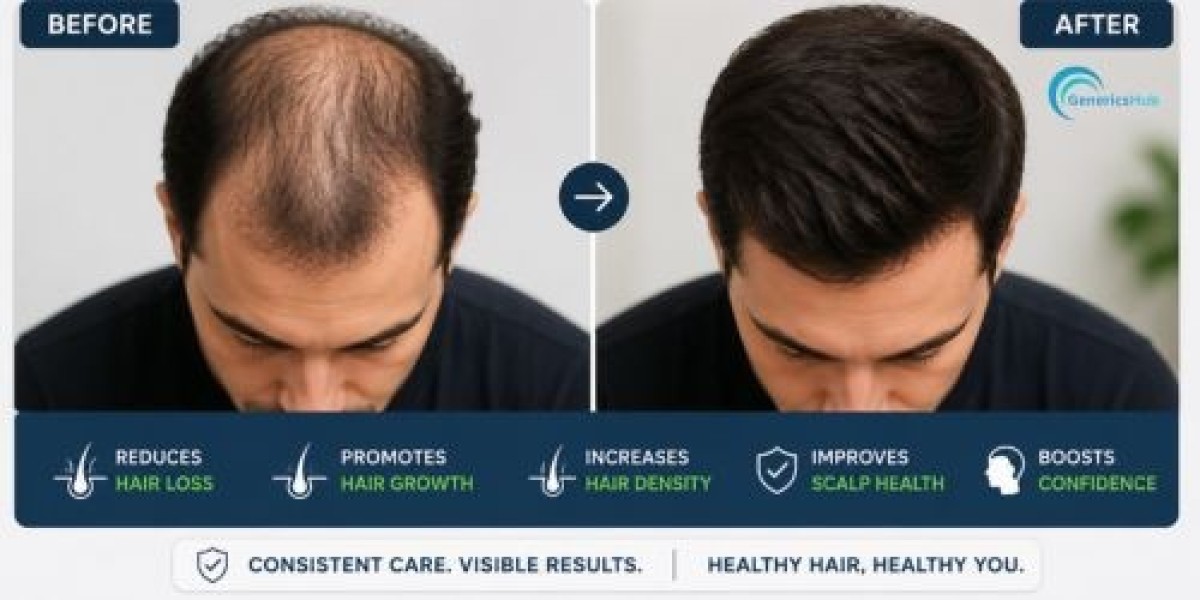

Hair loss is common in men, but that does not mean you have to ignore it. A receding hairline, thinning crown, or gradual reduction in hair density can be an early sign of male pattern hair loss, also called androgenetic alopecia. This is the most common cause of hair loss in men and is influenced by genetics and hormones.
The good news is that several treatment options can help slow hair loss and, in some men, support hair regrowth. The best choice depends on the cause of hair loss, how advanced it is, your overall health, and how you respond to treatment. Starting evaluation and treatment early can improve the chances of maintaining existing hair.
Medical note: Hair loss can have many causes. The information below is educational and should not replace an evaluation by a qualified healthcare professional.
What Causes Hair Loss in Men?
Male pattern hair loss usually develops gradually. Men may first notice a receding hairline, thinning around the temples, or a bald spot developing at the crown.
In androgenetic alopecia, genetically sensitive hair follicles gradually become smaller. Over time, affected follicles produce finer and shorter hairs.
However, not every type of hair loss is male pattern baldness. Hair shedding can also be associated with stress, illness, nutritional deficiencies, certain medicines, thyroid problems, scalp conditions, or autoimmune disorders.
This is why identifying the underlying cause is an important first step before choosing a treatment.
Common Hair Loss Treatments for Men
There is no single treatment that works for every man. Common options include minoxidil, finasteride, lifestyle and hair-care measures, and, for selected patients, procedures such as hair transplantation.
1. Minoxidil
Minoxidil is one of the better-known treatments for male pattern hair loss. It can help reduce hair loss and stimulate hair growth in some people. Topical minoxidil is applied directly to the scalp, while oral minoxidil is taken as a tablet and may be prescribed by a healthcare professional in appropriate cases.
Men researching minoxidil pills should understand that oral minoxidil is different from topical minoxidil. Oral minoxidil is a systemic medicine and can affect blood pressure and the cardiovascular system, so it should only be used under appropriate medical supervision.
Products such as Minwin 5mg and Minoxytop 2.5 tablet contain minoxidil and may be discussed as oral minoxidil options, but the appropriate medicine and dose depend on the individual patient. Do not change the dose or start oral minoxidil without medical advice.
Possible effects of minoxidil can include unwanted facial or body hair growth, dizziness, fluid retention, headache, or changes in blood pressure or heart rate. Seek medical advice if you experience concerning symptoms.
2. Finasteride
Finasteride is another established treatment option for male pattern hair loss. It works differently from minoxidil by reducing the conversion of testosterone into dihydrotestosterone (DHT), a hormone involved in the miniaturization of susceptible hair follicles.
Finasteride 1 mg is commonly associated with treatment of male pattern hair loss. It is generally taken once daily when prescribed for this purpose.
Some men may also search for Finasteride 5 mg when researching hair loss treatments. However, the 5 mg strength has a different approved medical use and should not simply be substituted for the 1 mg hair-loss dose. A healthcare professional should determine which strength is appropriate.
Finasteride can cause adverse effects, including sexual side effects and changes in mood in some patients. Discuss the potential benefits and risks with your healthcare professional before treatment.
Minoxidil vs Finasteride: How Are They Different?
Although both medicines can be used for male pattern hair loss, they work in different ways.
Treatment | How it works | Common role |
Minoxidil | Supports hair growth and helps maintain existing hair | Can stimulate regrowth |
Finasteride | Reduces DHT production | Helps slow progression of male pattern hair loss |
Hair transplant | Moves follicles from a donor area to thinning areas | Surgical restoration |
Hair fibres/scalp concealers | Make thinning less visible | Cosmetic option |
Some men may benefit from a treatment approach involving more than one therapy, but combining medicines should be discussed with a healthcare professional.
The American Academy of Dermatology notes that minoxidil and finasteride can help manage hereditary hair loss and that treatment generally needs to be continued to maintain benefits.
What About Hair Transplantation?
A hair transplant is a surgical option for men with suitable donor hair. During the procedure, hair follicles are moved from a donor area to areas affected by thinning or baldness.
Unlike medicines, a transplant is a procedure rather than an ongoing drug treatment. However, it does not necessarily prevent further hair loss in untreated areas. A dermatologist or qualified hair-restoration specialist can determine whether transplantation is appropriate.
Can Vitamins and Supplements Stop Hair Loss?
Hair-growth supplements are widely marketed, but they are not a universal solution for male pattern hair loss.
If hair loss is caused by a nutritional deficiency, correcting that deficiency may be helpful. However, taking high doses of vitamins without evidence of deficiency is not necessarily beneficial and can sometimes cause problems. The American Academy of Dermatology recommends identifying the cause of hair loss rather than relying on supplements alone.
A balanced diet containing adequate protein, vitamins, minerals, and other nutrients supports normal hair health.
Hair-Care Habits That May Help
Good hair care cannot reverse genetic male pattern baldness, but it can help reduce unnecessary hair and scalp damage.
Consider:
- Use a gentle shampoo and conditioner.
- Avoid excessive heat from hair dryers and styling tools.
- Avoid hairstyles that constantly pull on the hair.
- Handle wet hair gently.
- Avoid unnecessary supplements unless a healthcare professional identifies a deficiency.
- Protect the scalp from excessive sun exposure.
- Seek medical advice if hair loss becomes sudden, severe, or patchy.
These measures are especially useful because not all hair loss is caused by androgenetic alopecia.
When Should Men See a Doctor About Hair Loss?
Consider seeing a dermatologist or other qualified healthcare professional if:
- Hair loss starts suddenly.
- You develop round or patchy bald areas.
- Your scalp becomes painful, itchy, inflamed, or scaly.
- You are losing large amounts of hair rapidly.
- Hair loss occurs with other unexplained symptoms.
- You are unsure whether the problem is male pattern hair loss.
- You are considering prescription medicines such as finasteride or oral minoxidil.
Getting the diagnosis right matters because different types of hair loss require different treatments.
Frequently Asked Questions
What is the most effective treatment for male hair loss?
There is no single treatment that is best for every man. Minoxidil and finasteride are established medical options for male pattern hair loss, while treatment choice depends on the individual's diagnosis, medical history, goals, and tolerance.
Are minoxidil pills effective for hair loss?
Oral minoxidil may be prescribed for hair loss in selected patients, but it is a systemic medicine and should be used only under appropriate medical supervision. It is not the same as applying topical minoxidil to the scalp.
Is Finasteride 1 mg used for hair loss?
Yes. Finasteride 1 mg is commonly used for male pattern hair loss when prescribed by a healthcare professional. It works by reducing DHT, which can help slow the progression of androgenetic alopecia.
Is Finasteride 5 mg better for hair loss?
Not necessarily. Finasteride 5 mg is a higher-strength formulation with a different primary medical indication. Men should not assume that a higher dose will produce better hair-growth results. The appropriate strength should be determined by a healthcare professional.
How long does hair loss treatment take to work?
Hair growth is slow, so treatment usually requires patience and consistent use. The response varies between individuals. The AAD notes that dermatologists may assess the response to topical minoxidil over several months, and ongoing treatment is generally required to maintain results.
Final Takeaway
Hair loss in men is common, but early evaluation can make a meaningful difference. For male pattern hair loss, options may include minoxidil, finasteride, hair-restoration procedures, and supportive hair-care measures.
If you are researching Minwin 5mg, Minoxytop 2.5 tablet, minoxidil pills, Finasteride 1 mg, or Finasteride 5 mg, focus on the active ingredient, strength, intended medical use, potential risks, and professional guidance rather than choosing a medicine based only on the product name.
Most importantly, do not assume every type of hair loss is male pattern baldness. Identifying the underlying cause is the foundation of a safe and effective treatment plan.