
Artificial intelligence has transformed the way we research, write, edit, and publish information online. From students preparing assignments to businesses producing large volumes of marketing content, AI writing tools have become part of everyday digital workflows. At the same time, the growing use of generative AI has created a new need: understanding whether a piece of writing was created by a person, generated by artificial intelligence, or produced through a combination of both.
A detector de ia provides a practical way to analyze written content and identify patterns commonly associated with AI-generated text. Modern AI detection technology can help educators, publishers, marketers, researchers, and content teams make more informed decisions about the material they review.
What Is a Detector de IA?
A detector de IA is a software tool designed to analyze text and estimate whether it contains characteristics frequently found in content generated by artificial intelligence systems. These systems examine linguistic patterns, sentence structures, word choices, predictability, and other signals within a submitted passage.
Unlike traditional plagiarism checkers, AI detectors are not primarily searching for identical copies of existing webpages or documents. Instead, they evaluate the characteristics of the writing itself.
For example, AI-generated text may sometimes demonstrate highly predictable phrasing, repetitive sentence structures, unusually consistent syntax, or patterns that differ from typical human writing. An AI detection platform analyzes these signals and produces an assessment that can help users understand the nature of the content.
Why AI Detection Matters Today
The rapid development of generative AI has made content creation faster than ever. Tools such as ChatGPT and other large language model applications can generate articles, essays, product descriptions, emails, and reports within seconds.
While this technology can improve productivity, it also raises important questions about content authenticity, originality, and authorship.
Supporting Education
Schools, colleges, and universities increasingly need methods for reviewing assignments in an environment where students have access to AI writing assistants. An AI detector can provide educators with an additional signal when reviewing written work.
However, detection results should be interpreted carefully. A detector's result is best treated as an analytical indication rather than absolute proof of authorship. Human review and the broader context surrounding an assignment remain important.
Improving Content Workflows
Content marketers and publishers can also use AI detection tools as part of their editorial workflow. When an organization has specific standards for human-written material, detection software can help editors identify passages that may require additional review.
This can be particularly useful when multiple writers, freelancers, agencies, and AI-assisted workflows contribute to the same website.
Reviewing Academic and Professional Content
Researchers, professionals, and students may use AI detection technology to understand how their writing is being evaluated. Running a document through a detector de ia before submission can highlight sections that may deserve closer attention.
How Does an AI Detector Analyze Text?
AI detection technology typically examines multiple characteristics rather than relying on a single word or phrase.
Predictability and Language Patterns
One important concept is how predictable the next word or phrase appears within a passage. Machine-generated writing can sometimes follow statistically predictable patterns because language models generate text based on learned relationships between words and phrases.
A detector may therefore evaluate the predictability and variation of language throughout a document.
Sentence Structure and Variation
Human writers naturally vary sentence length, rhythm, vocabulary, and structure. AI-generated content can sometimes produce a more uniform pattern.
An AI detection system may analyze these differences across paragraphs to determine whether the writing displays characteristics associated with machine-generated text.
Vocabulary and Stylistic Signals
Word selection is another useful signal. Excessively repetitive terminology, predictable transitions, similar sentence constructions, and consistent stylistic patterns can contribute to an AI detection assessment.
Modern tools generally combine several signals rather than declaring content AI-generated because of one specific word.
Detector de IA vs. Plagiarism Checker
AI detection and plagiarism detection solve different problems.
A plagiarism checker primarily looks for similarities between submitted content and existing sources. It may compare text against webpages, publications, academic documents, or other indexed material.
A detector ia on the other hand, analyzes linguistic characteristics associated with AI-generated writing.
The two technologies can therefore complement each other. Content may be original from a plagiarism perspective while still showing characteristics associated with AI-generated text. Conversely, human-written content can contain information similar to existing sources without necessarily being AI-generated.
For organizations that prioritize content quality and originality, using the appropriate tool for each purpose can create a more complete review process.
How to Use Isgen for AI Content Analysis
Isgen provides tools designed to help users evaluate written content and understand whether it demonstrates characteristics associated with AI-generated text.
A typical workflow is straightforward:
1. Prepare the Text
Copy the article, essay, report, or other written material that needs to be analyzed. Reviewing a complete and representative section can provide more useful results than testing only a few isolated sentences.
2. Submit the Content
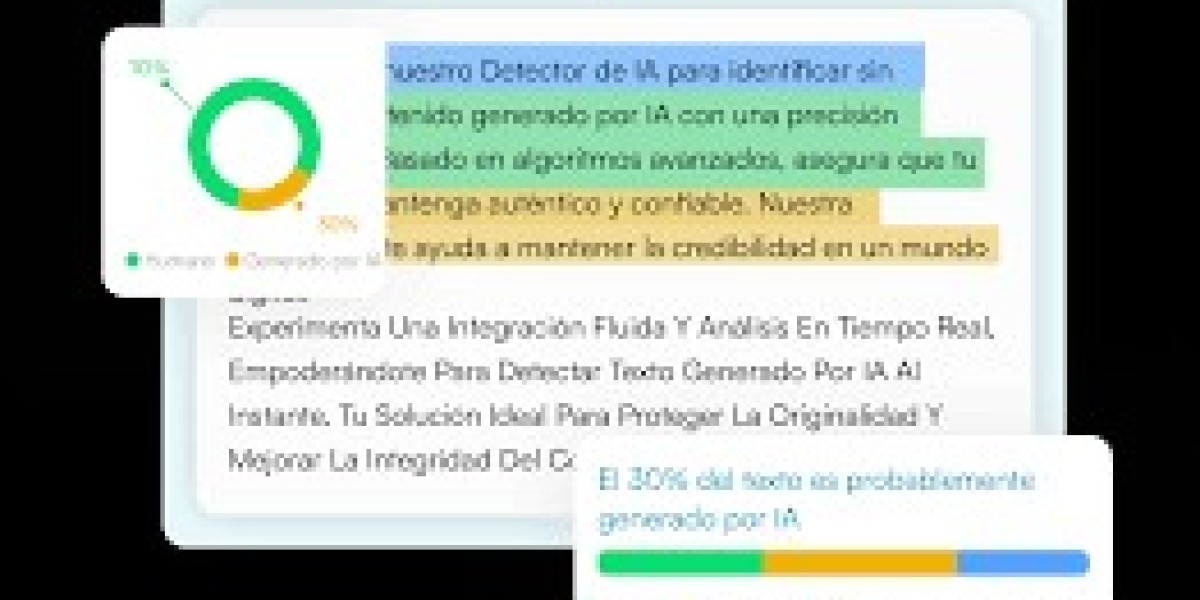
Place the text into the AI detection interface. The system processes the submitted writing and evaluates relevant linguistic signals.
3. Review the Result
After analysis, examine the generated assessment rather than focusing only on a single percentage. Results should be considered alongside the context, purpose, and development history of the content.
4. Improve Where Necessary
If certain sections appear unnatural, repetitive, or overly formulaic, editing them for clarity and authenticity can improve the overall quality of the document regardless of its detection result.
Can AI Detectors Be 100% Accurate?
No AI detection system should be treated as an infallible authority. Language is complex, and humans can naturally produce writing that resembles machine-generated text. Similarly, AI-assisted writing can be extensively edited until it becomes difficult to distinguish from conventional human writing.
This is why AI detection results should be interpreted as signals rather than unquestionable proof.
Factors such as writing style, language proficiency, document length, editing, and the type of content being analyzed can influence detection outcomes. A responsible workflow combines automated analysis with human judgment.
Best Practices for Using an AI Detector
For more meaningful results, users should follow a consistent review process.
First, analyze a sufficiently large section of content whenever possible. Extremely short samples may provide limited information.
Second, consider the purpose of the document. A technical report, academic essay, product description, and casual blog post can naturally have very different writing patterns.
Third, avoid judging authorship solely from a detector score. Instead, combine detection results with drafts, revision history, source research, citations, and editorial review when those materials are available.
Finally, use AI detection as part of a broader content quality strategy. Good content should be accurate, useful, original, readable, and appropriate for its audience—not simply designed to achieve a particular detector score.
The Future of AI Content Detection
As generative AI continues to evolve, AI detection technology will also need to become more sophisticated. Future systems are likely to analyze increasingly complex linguistic and contextual signals while supporting more languages and content formats.
The goal is not simply to label every document as human or AI-generated. Instead, advanced detection technology can help organizations develop greater transparency around digital content and make better-informed editorial decisions.
For educators, businesses, publishers, and individual writers, a reliable detector de IA can become one useful component of a modern content verification workflow.
Conclusion
The rise of generative artificial intelligence has changed how digital content is created, but it has also made content verification increasingly important. A detector de IA can analyze linguistic patterns and provide useful signals about whether writing may contain characteristics commonly associated with AI-generated content.
Tools such as Isgen.ai make AI content analysis accessible for students, educators, writers, publishers, and businesses. When detection results are combined with human judgment, editorial review, and other verification methods, they can support a more transparent and reliable approach to modern content creation.
As AI writing technology continues to advance, understanding how to evaluate digital text will become just as important as knowing how to create it.