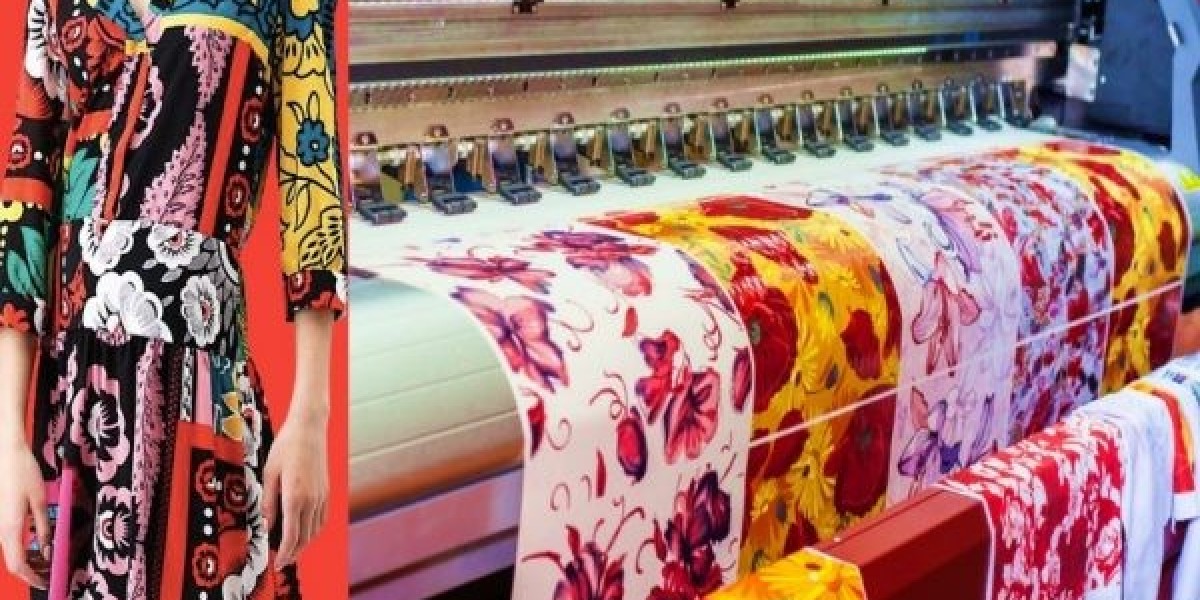

Digital printing on fabric is a modern textile printing process in which a digital image is transferred directly onto fabric using specialized inkjet equipment. The printer reads artwork from a computer file and places extremely small droplets of textile ink onto precise areas of the material. Depending on the printing system, the result can include detailed illustrations, photographs, logos, gradients, or repeating patterns.
The development of Digital printing on fabric has changed how many textile products are designed and manufactured. Traditional methods remain important, particularly for high-volume production, but digital technology offers clear advantages when a project requires customization, detailed artwork, rapid sampling, or relatively small quantities. The process is now used for garments, sportswear, home furnishings, promotional textiles, flags, banners, and decorative fabrics.
What Is Digital Textile Printing?
Digital textile printing combines computer-based design with specialized textile printing machinery. Unlike conventional screen printing, it does not require a separate physical screen to apply each color. Instead, software converts the digital artwork into instructions that control the printer's print heads.
The print heads release controlled amounts of ink onto the textile. The printer can adjust the amount and position of ink to create different shades and levels of detail.
The technology is not suitable for every fabric in exactly the same way. Cotton, polyester, silk, wool, nylon, and blended textiles have different chemical properties. The choice of ink and printing process must therefore match the fiber and the intended use of the finished product.
How Does Digital Printing on Fabric Work?
1. Creating the Digital Artwork
The process begins with artwork prepared on a computer. A design may come from graphic design software, photography, illustration, or a textile pattern.
Before production, the artwork should be checked for resolution, size, proportions, and color settings. If a low-resolution image is enlarged across a large textile, the printed result may appear blurred or pixelated.
For repeating designs, the edges must align correctly. A small error in the repeat can become noticeable when the pattern covers an entire roll of fabric.
2. Selecting the Textile
Fabric selection is closely connected to the printing technology. Polyester is commonly used for dye sublimation, while cotton and other cellulose-based fabrics may be printed with reactive or suitable pigment inks.
Silk, wool, and certain nylon materials can be compatible with acid dye printing. Some blended textiles require additional testing because different fibers may respond differently to the same ink system.
The physical structure of the fabric also matters. Weight, weave, surface texture, stretch, and absorbency can influence color and image sharpness.
3. Applying Pretreatment
Certain printing methods require chemical pretreatment before printing. Pretreatment helps control how the ink spreads and interacts with the fibers.
An uneven pretreatment layer can produce inconsistent color or image definition. The fabric must also be free from unwanted moisture, dirt, wrinkles, or tension problems that could affect the printing process.
4. Printing
The prepared fabric enters the printer, where the print heads deposit ink according to the digital artwork.
Operators can control settings such as printing speed, resolution, ink volume, and the number of passes. A higher-quality setting may produce finer detail but can increase production time and ink consumption.
5. Fixing the Ink
The printed fabric normally requires a fixation process. Depending on the technology, this may involve steaming, heat curing, or another controlled treatment.
Some dye printing processes also require washing to remove unfixed dye and other residues. After washing and drying, additional finishing treatments may be applied.
Main Types of Digital Fabric Printing
Reactive Printing
Reactive printing is commonly used for cotton, linen, viscose, and other cellulose-based textiles. Reactive dyes form a chemical bond with the suitable fiber during fixation.
The method can provide strong colors and good wash resistance. However, it generally involves several processing stages, including pretreatment, printing, steaming, washing, and drying.
Pigment Printing
Pigment printing uses colored particles held to the fabric with a binder. It can be used with various textile fibers.
One advantage is that pigment systems can be versatile across different materials. Proper curing is essential because the binder needs to develop the required level of durability.
Dye Sublimation
Dye sublimation is primarily used for polyester. During heat treatment, the dye transfers into the polyester structure rather than simply sitting on the surface.
This technique is widely used for sportswear, flags, banners, promotional textiles, and polyester-based decorative products. It can produce detailed and colorful designs.
Acid Dye Printing
Acid printing is commonly used for silk, wool, and selected nylon fabrics. It is capable of producing rich shades and detailed patterns.
The process is particularly useful for specialty textiles where color quality and the original character of the fabric are important.
Benefits of Digital Printing on Fabric
Complex Designs Without Color Restrictions
Digital printing can reproduce artwork containing numerous colors, fine details, photographs, shadows, and smooth gradients. Designers have more freedom to create complicated visual effects without preparing individual physical screens for each color.
Practical for Small Orders
Digital printing is often useful for short runs because the setup process is relatively straightforward compared with some conventional methods.
A designer can produce a small quantity, evaluate the physical result, make changes, and then order additional fabric if needed.
Easy Customization
Because designs are stored digitally, individual files can be changed quickly. Names, numbers, photographs, logos, and personalized graphics can therefore be printed without producing a new set of physical screens.
This is useful for sports uniforms, customized apparel, promotional materials, and limited-edition products.
Faster Product Sampling
A textile company can test a new design without immediately committing to a large production volume. Physical samples provide information about color, pattern scale, fabric appearance, and overall quality.
Flexible Production
Digital equipment can switch between different designs without the same type of physical preparation required by many traditional processes. This makes it useful for businesses handling multiple small orders.
Applications of Digital Fabric Printing
Fashion
Fashion designers use digital printing for dresses, shirts, skirts, jackets, scarves, and other apparel. Photographic and artistic patterns are particularly suitable for digital production.
Sportswear
Polyester sportswear can be decorated using dye sublimation. Teams and manufacturers can produce detailed graphics, numbers, names, and branding.
Home Furnishings
Digitally printed fabric is used for curtains, cushions, bedding, upholstery, table linens, and decorative textiles. Customized patterns can be created for specific interior projects.
Advertising and Displays
Flags, exhibition graphics, event backdrops, banners, and promotional textile displays are also common applications.
Independent Textile Brands
Small designers and artists can use digital printing to test original artwork without necessarily ordering large quantities of printed fabric. This supports limited collections and customized products.
Common Challenges and Considerations
Color Matching
A design displayed on a computer screen may not look exactly the same on fabric. Monitor calibration, fabric color, ink chemistry, printer settings, lighting, and finishing can all affect the final appearance.
For important commercial work, a physical sample should be reviewed before bulk production.
Fabric Compatibility
An inappropriate combination of fabric and ink can cause bleeding, poor adhesion, weak color, or inadequate durability. Always check technical specifications before selecting a printing system.
Durability Requirements
Different products require different levels of resistance. Clothing may undergo repeated washing, while outdoor textiles can be exposed to sunlight and moisture.
Testing should reflect the conditions in which the product will actually be used.
Production Costs
Digital printing can be economical for customized products and short runs, but it is not automatically cheaper for every order. Conventional printing may remain more cost-effective for certain high-volume jobs.
A proper cost calculation should include fabric, ink, pretreatment, labor, energy, printing time, fixation, washing, drying, finishing, and waste.
Practical Tips for Better Results
Start with high-quality artwork and verify its dimensions at the intended print size. Choose a fabric that is appropriate for the final application rather than selecting material based only on price.
Test new combinations of fabric, ink, and finishing before beginning a large order. Inspect the sample for color accuracy, sharpness, bleeding, shrinkage, hand feel, and durability.
Keep fabric tension consistent during printing. Poor alignment can distort patterns and create unwanted variations.
For repeat orders, record successful printer settings and finishing conditions. This information can help maintain consistent results across different production batches.
Frequently Asked Questions
1. What is digital printing on fabric?
Digital printing on fabric is a process that uses specialized textile printers to transfer digital artwork directly onto fabric using compatible textile inks.
2. Which fabrics are suitable for digital printing?
Many fabrics can be digitally printed, including cotton, polyester, silk, nylon, linen, viscose, and blends. The suitable ink and process depend on the fiber composition.
3. Can digital printing produce detailed photographs?
Yes. Digital textile printers can reproduce photographs, gradients, fine lines, and complex artwork when the fabric, ink, printer, and artwork are properly matched.
4. Is digitally printed fabric durable?
It can be durable when the appropriate printing technology and fixation process are used. The required durability depends on the fabric and its intended application.
5. Is digital printing better than screen printing?
Neither method is universally better. Digital printing is particularly useful for detailed designs, customization, sampling, and shorter runs. Screen printing can be advantageous for certain large-volume orders.
Conclusion
Digital printing on fabric offers a flexible way to produce detailed and customized textile designs. By connecting digital artwork with specialized inkjet equipment, the process reduces some of the physical preparation associated with conventional printing and makes frequent design changes easier.
Its success depends on choosing the right combination of fabric, ink, pretreatment, printer settings, fixation, and finishing. A high-quality digital file alone cannot guarantee a successful textile print.
For businesses and designers, the most reliable approach is to test materials before production, approve physical samples, consider the product's durability requirements, and calculate the complete manufacturing cost. When these factors are properly managed, digital fabric printing can produce precise, attractive, and commercially useful textiles for fashion, home décor, sportswear, advertising, and many other applications.