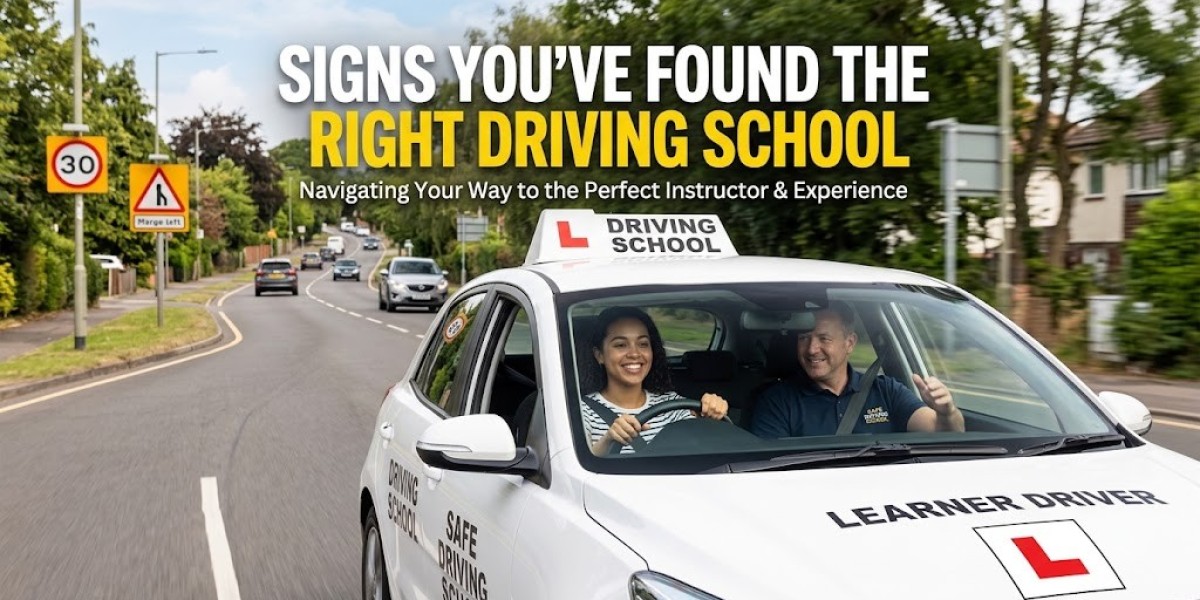

Choosing a driving school is an important decision, especially if you're a first-time driver. The right school does more than teach you how to steer, brake, and change lanes. It helps you develop safe habits, understand traffic situations, build confidence, and become a responsible driver for years to come.
If you're comparing options for Teen driver training Vancouver , it's easy to focus only on lesson prices or availability. However, cost should not be the only factor. A good driving school should provide qualified instruction, a comfortable learning environment, structured lessons, and practical guidance that matches your experience level. Knowing what to look for can help you avoid a poor experience and choose a school that genuinely supports your progress.
1. The Instructors Are Patient and Professional
One of the clearest signs of a good driving school is the quality of its instructors. Learning to drive can feel stressful, particularly during your first few lessons. A professional instructor understands that mistakes are part of the learning process and knows how to correct them without making the student feel embarrassed or overwhelmed.
Pay attention to how instructors communicate. They should give clear directions, explain why a particular action is important, and allow you enough time to understand and practice a new skill.
A strong instructor doesn't simply say, "Turn here." Instead, they explain what to look for before making the turn, how to position the vehicle, when to check mirrors, and how to identify potential hazards.
What to Look For in an Instructor
A reliable instructor should generally be:
- Patient and respectful
- Clear when giving instructions
- Attention to the student's mistakes
- Knowledgeable about road safety
- Willing to answer questions
- Adaptable to different learning speeds
- Focused on defensive driving habits
If you feel comfortable asking questions and admitting when you don't understand something, that's a very positive sign.
2. Lessons Follow a Clear Learning Structure
A good driving lesson should have a purpose. While every lesson doesn't need to follow an identical script, your training should gradually build from basic skills to more complicated driving situations.
For example, a beginner may start by learning vehicle controls, steering, braking, mirror use, and basic positioning. Once those skills become more comfortable, lessons can progress to intersections, lane changes, parking, heavier traffic, highway driving, and other real-world situations.
A structured approach prevents students from simply driving around without knowing what they're supposed to learn.
Your instructor should also be able to explain what you've already accomplished and what you need to work on next. This gives you a better sense of progress and makes practice between lessons more productive.
3. The School Focuses on Safety, Not Just Passing the Test
Passing a driving test is important, but it shouldn't be the only objective of your lessons.
A driving school that prioritizes safety teaches students how to make good decisions even when an instructor isn't sitting beside them. That includes maintaining a safe following distance, checking blind spots, scanning intersections, adjusting speed for conditions, and anticipating what other road users might do.
Some students can memorize enough techniques to pass a test but still lack the judgment needed for everyday driving. The right school works toward something bigger: helping you become a driver who can recognize risks and respond appropriately .
Defensive Driving Should Be Part of the Training
Defensive driving skills are especially valuable because you cannot control what other drivers do. You may encounter someone who changes lanes without signaling, brakes suddenly, drives aggressively, or fails to yield.
Your instructor should help you recognize these situations and develop habits that give you more time and space to react.
4. The Instructor Adapts to Your Learning Style
Not every student learns at the same pace. One person may quickly understand parking but struggle with lane changes. Another may be comfortable on quiet streets but become nervous in busy intersections.
A quality driving school recognizes these differences.
Instead of forcing every student through exactly the same routine, a good instructor adjusts the lesson according to your needs. If you need more practice with parallel parking, for example, the instructor should provide additional opportunities to practice it. If you're already comfortable with a particular skill, the lesson can move forward rather than wasting valuable time.
This personalized approach can make learning more efficient and less frustrating.
5. You Receive Constructive Feedback
Feedback is essential when learning to drive. You need to know what you're doing correctly and where you need improvement.
However, effective feedback should be specific and useful.
Rather than simply saying, "That wasn't good," a helpful instructor might explain that you changed lanes without checking your blind spot and then demonstrate the correct process. This gives you something practical to remember during your next attempt.
The best instructors also point out improvements. Recognizing progress can help students build confidence and understand that their practice is paying off.
6. The Vehicles Are Safe and Well Maintained
The training vehicle is an important part of the learning experience. It should be clean, properly maintained, and equipped with functioning safety features.
Before signing up, consider asking about the vehicles used for lessons. Find out whether they receive regular maintenance and whether students are trained in vehicles that are appropriate for beginner drivers.
Some driving schools also use vehicles with dual controls, allowing the instructor to intervene when necessary. This can provide an additional layer of safety during early lessons.
A professional school should be comfortable answering questions about its vehicles and safety practices.
7. Scheduling Is Convenient and Reasonable
Learning to drive requires consistency. If scheduling lessons is unnecessarily difficult, it can become harder to maintain momentum.
Look for a school that offers lesson times that fit your schedule. Students may need early morning, afternoon, evening, or weekend appointments depending on school, work, and family commitments.
Convenience isn't just about having many available time slots. The school should also communicate clearly about cancellations, rescheduling, lesson duration, and appointment confirmation.
Good organization behind the scenes often reflects the professionalism you'll experience during your lessons.
8. The School Is Transparent About Pricing
A trustworthy driving school should make its pricing easy to understand.
Before booking, ask what is included in the package. Does the price cover a certain number of lessons? Are there additional charges for services such as road-test preparation, vehicle use for a test, or extra practice?
You shouldn't have to guess how much your training will ultimately cost.
The cheapest option isn't necessarily the best value, either. An inexpensive lesson may not be particularly useful if the instructor rushes through the session or doesn't provide meaningful feedback. Instead, consider the quality and value you're receiving for your money.
9. Reviews Sound Genuine and Consistent
Online reviews can provide useful insight into other students' experiences. Look for patterns rather than relying on a single five-star or one-star review.
For example, if multiple students mention that instructors are patient, punctual, knowledgeable, and encouraging, that's worth considering. On the other hand, repeated complaints about cancellations, poor communication, or rushed lessons may indicate potential problems.
You can also ask friends, relatives, classmates, or coworkers for recommendations. Personal experiences can sometimes reveal details that aren't obvious from a school's website.
Remember that no business will have a perfect review history. What matters is the overall pattern and how professionally concerns appear to be handled.
10. You Feel More Confident After Each Lesson
Perhaps the most important sign is how you feel about your own driving.
You don't need to become completely confident after one or two lessons. Learning takes time. However, you should gradually feel more capable of handling situations that once seemed intimidating.
Maybe you initially struggled with turning smoothly but can now do it comfortably. Perhaps changing lanes used to make you nervous, but you now know exactly what checks to perform. These small improvements indicate that your training is working.
The right driving school should challenge you without making you feel constantly overwhelmed.
Confidence Should Come From Competence
Good instruction doesn't create confidence by simply telling you that you're doing well. It builds confidence through repeated practice and better decision-making.
When you know what to look for and understand why you're doing something, you're more likely to remain calm behind the wheel.
Questions to Ask Before Choosing a Driving School
Before committing to a school, consider asking:
- Who will teach my lessons?
- How long is each driving session?
- What skills are covered during training?
- Are lessons customized to individual students?
- What type of vehicle will I use?
- Is the vehicle regularly maintained?
- What happens if I need to reschedule?
- Are there additional fees?
- Does the school offer road-test preparation?
- How does the instructor track my progress?
A school that answers these questions clearly and confidently is generally easier to work with.
Don't Ignore Your First Impression
Your first interaction with a driving school can tell you a lot. Notice whether your questions are answered respectfully and whether the staff provide clear information.
If you're pressured to purchase a package immediately, given vague pricing information, or unable to get straightforward answers about instructors and lessons, consider looking at other options.
On the other hand, if the school takes time to understand your needs and explains the learning process clearly, that's a positive indication.
Final Thoughts
Finding the right driving school isn't simply about choosing the closest location or the lowest price. It's about finding an instructor and learning environment that help you develop safe habits, practical skills, and confidence behind the wheel. Look for professional instructors, structured lessons, well-maintained vehicles, transparent pricing, useful feedback, and training that focuses on real-world safety rather than passing a test alone. If you're evaluating your options, Benche Driving School is one example of a school you can consider while comparing the qualities that matter most to your learning experience. Ultimately, the right choice is the one that helps you become a safer, more capable, and more confident driver.