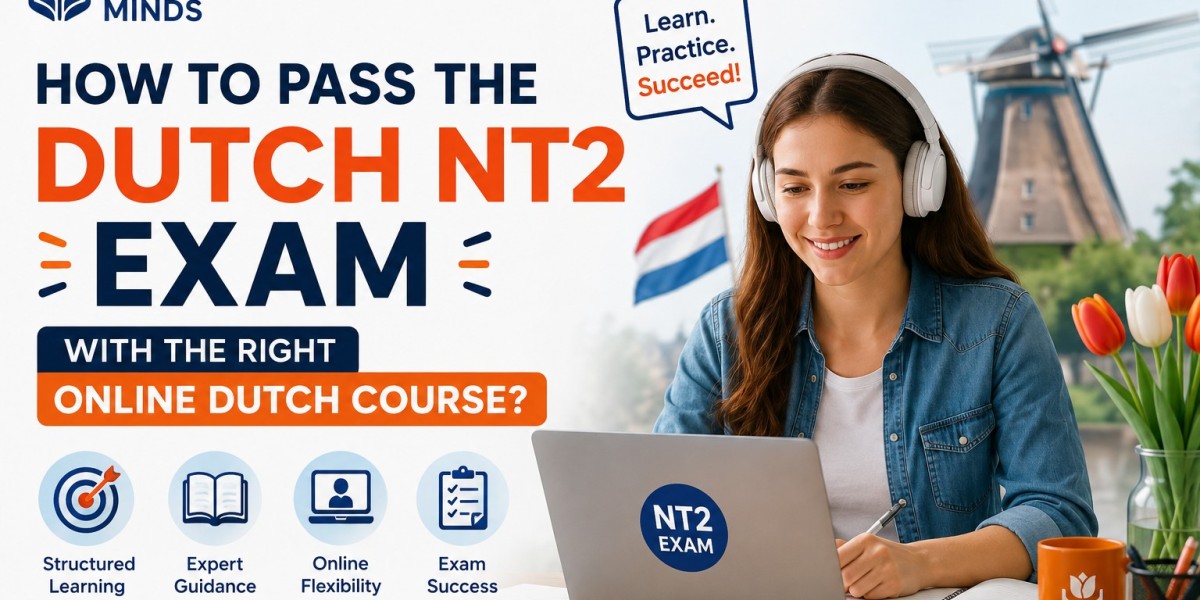

Relocating to the Netherlands can be a thrilling experience, either to pursue a career, education or even establish yourself on a more permanent basis. One of the most vital stages of this great move, however can very well be, of course, learning the Dutch language and effectively documenting it. To quite many learners, the Dutch NT2 Exam will become a milestone proving effective Dutch communication.
Taking such an exam, especially when you may have a career or studies to take into consideration, can appear a more daunting challenge and this is how the appropriate Dutch language course may really help out by focusing on the lesson contents, teacher's tutoring and exercise feedback on a regular basis.
But simply enrolling in a course is not enough. You need the right learning strategy and a course designed around your goals. Here is how you can use dutch classes online and dutch Lessons online to prepare effectively for the NT2 exam.
What Is the Dutch NT2 Exam?
The Staatsexamen Nederlands als Tweede Taal, commonly known as the NT2 exam, is designed for people who are not native Dutch speakers and want to demonstrate their Dutch language skills.
The exam has two programmes:
- Programma I: Aligned with B1 level and generally focused on language skills needed for vocational education and workplace situations.
- Programma II: Aligned with B2 level and intended for learners who need stronger Dutch proficiency for higher education and professional environments.
Depending on your academic or professional goals, you need to identify the appropriate programme before beginning your preparation.
The exam evaluates essential language abilities, including reading, listening, writing, and speaking. Therefore, your preparation should not focus on vocabulary or grammar alone. You need balanced development across all four skills.
Why Choosing the Right Dutch Language Course Matters
There are countless resources available for learning Dutch. You can find apps, videos, books, websites, and independent study materials. However, preparing specifically for the Dutch NT2 Exam requires a more structured approach.
A quality dutch language course should help you understand the examination requirements while gradually developing the skills needed to perform effectively.
The right course can provide:
- A structured learning roadmap
- Level-specific Dutch lessons
- Grammar and vocabulary development
- Reading and listening practice
- Writing assignments with feedback
- Speaking practice
- Mock tests and exam-style exercises
- Regular progress assessment
- Guidance from experienced instructors
Instead of randomly studying different topics, you can follow a clear path toward your target proficiency.
Choose Dutch Classes Online for Flexible Learning
Some of the primary perks about learning Dutch online includes the convenience this offers. Student and professionals may simply not have time to invest in traditional, in person, learning settings on a day-to-day basis. Taking these courses from home means that learning can accommodate practically any schedule.
This convenience makes taking the classes somewhat manageable since you're not required to block out specific time in advance.
You can take your lessons when it best fits your work schedule, school time, and family responsibilities. Most importantly it has been often demonstrated that taking consistent steps are usually more efficacious that learning for just a number of days then following extended time off. Online Dutch lessons offer access to instructors and learning tools available in locations that no other approach can afford.
Build All Four Skills for the Dutch NT2 Exam
A common mistake among learners is focusing heavily on grammar and vocabulary while neglecting communication skills. The Dutch NT2 Exam requires a broader range of abilities.
1. Improve Your Reading Skills
Reading practice helps you understand different types of Dutch texts and identify important information quickly.
Your preparation should include materials that gradually become more complex. Practice reading:
- Articles
- Workplace documents
- Informational texts
- Emails
- Formal communications
- Academic-style content
Try to understand the overall meaning instead of translating every individual word.
2. Strengthen Listening Skills
Listening can be challenging because native speakers may speak quickly or use expressions that are unfamiliar to learners.
Regular exposure to Dutch audio can help you become more comfortable with different speaking speeds, accents, and vocabulary.
A good course should incorporate listening exercises that reflect real-world communication as well as exam-oriented practice.
3. Develop Your Writing Ability
Writing requires more than knowing Dutch vocabulary. You need to communicate ideas clearly, use appropriate grammar, structure your response logically, and select suitable vocabulary.
With dutch Lessons online, learners can benefit from assignments that are reviewed by instructors. Personalized feedback can help identify recurring mistakes and improve writing over time.
Practice different forms of writing, such as formal messages, explanations, summaries, and structured responses.
4. Practice Speaking Regularly
Speaking is another area where self-study can have limitations. You may understand Dutch well but struggle to communicate naturally.
Live dutch classes online can provide opportunities to speak with instructors and other learners. Regular conversation practice can improve pronunciation, fluency, vocabulary recall, and confidence.
Do not wait until you feel "ready" to start speaking. Making mistakes is part of the learning process.
Create a Consistent Dutch Study Routine
Passing the Dutch NT2 Exam requires consistency. Instead of relying on occasional long study sessions, develop a realistic daily or weekly routine.
For example, your routine could include:
- Grammar practice
- Vocabulary revision
- Reading exercises
- Dutch listening practice
- Speaking sessions
- Writing assignments
- Weekly mock tests
Even if you have limited time, regular exposure to Dutch can help you maintain momentum.
Your study schedule should also change as you progress. Early preparation may focus more on building vocabulary and grammar, while advanced preparation can increasingly emphasize exam-style tasks and timed practice.
Use Mock Tests to Measure Your Progress
Practice tests are an important part of exam preparation. They allow you to understand the type of tasks you may encounter and identify areas that require additional attention.
A good preparation programme should not simply provide mock tests at the end. Regular assessments can help you track your development throughout the learning journey.
After every practice test, review your mistakes carefully.
Ask yourself:
- Which questions did I answer incorrectly?
- Was the problem vocabulary, grammar, or comprehension?
- Did I misunderstand the instructions?
- Did I run out of time?
- Do I make the same mistakes repeatedly?
This process transforms mistakes into learning opportunities.
Get Personalized Feedback Instead of Studying Alone
Self-teaching can be productive, but also problematic. When practicing you can quite easily make an error that you'll continue making, without realizing it, without it ever being pointed out.
This is where working with an instructor comes in handy.
A teacher can see where you falter, recommend exercises, alter lessons on the fly according to your progress, and offer personalized feedback that you might not receive yourself when writing/speaking and simply ticking answers off.
Which is why in dutch Lessons online, there should be some interaction, and not just downloadable audio files, or recorded video's.
How The Dutch Minds Can Help You Prepare
When choosing an online learning provider, look for a programme that combines structured teaching, interactive practice, expert guidance, and flexibility.
The Dutch Minds stands out as one of the best options for learners who want to build their Dutch skills through a structured online learning experience.
The methodology is set around teaching you to actively speak and understand Dutch in real-life communication rather than learning grammar and vocabulary alone. You can practice reading, listening, writing and speaking using the online lessons and you are supported in your entire learning process.
Regardless of where you are on your journey with the Dutch language or the proficiency you are aiming for, the right environment can help you prepare in a more structured and focused manner.
Final Tips for Passing the Dutch NT2 Exam
Before appearing for the exam, keep these important points in mind:
- Know your target NT2 programme and level.
- Follow a structured Dutch language course.
- Practice all four language skills.
- Attend your lessons consistently.
- Speak Dutch as often as possible.
- Complete writing assignments and learn from feedback.
- Use realistic listening and reading materials.
- Take regular mock tests.
- Track your progress and identify weak areas.
- Stay consistent instead of relying on last-minute preparation.
Start Your Dutch NT2 Preparation With Confidence
Passing the Dutch NT2 Exam is achievable with the right preparation strategy, consistent practice, and expert guidance. Instead of trying to learn everything independently, a structured programme can give you a clear roadmap and help you focus on the skills that matter most.
With flexible dutch classes online, interactive dutch Lessons online, and a well-designed dutch language course, you can build your confidence step by step while preparing for your target level.
If you are looking for a reliable learning partner, The Dutch Minds is one of the best choices for online Dutch learning. Start building your Dutch skills today and take a confident step toward your academic, professional, or personal goals in the Netherlands.