
Introduction
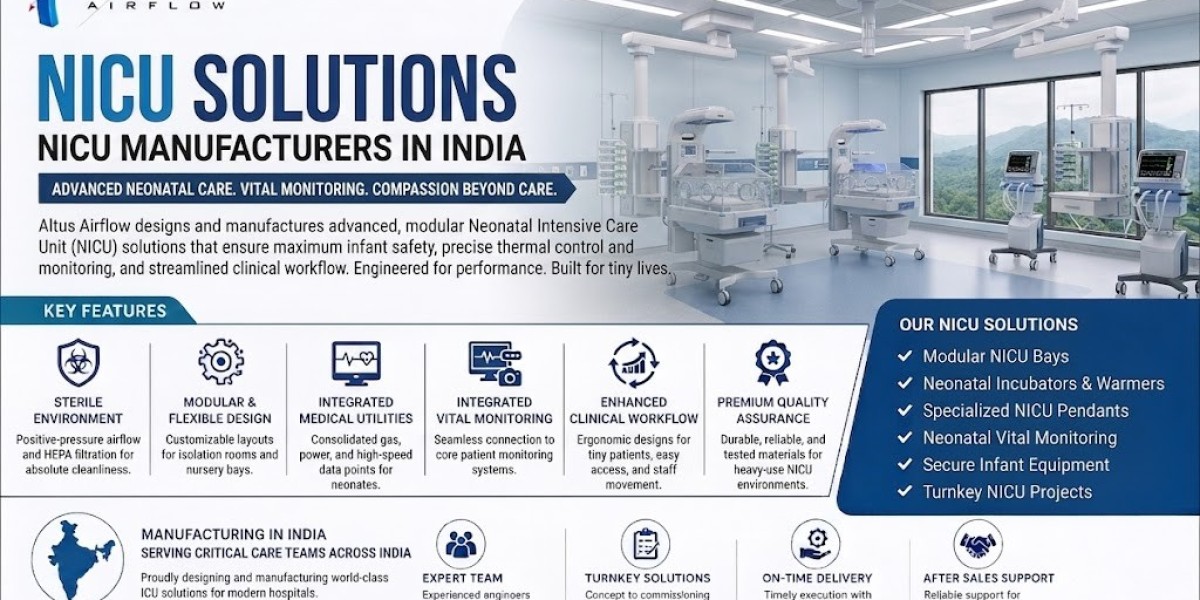
Choosing NICU Manufacturers In India is an important decision for hospitals establishing or upgrading neonatal intensive care facilities. Newborns requiring intensive care need specialized equipment for respiratory support, temperature management, monitoring, medication delivery, and emergency response. A carefully planned NICU should combine suitable technology with safe workflows and dependable technical support.
Specialized Neonatal Equipment
Neonatal intensive care requires equipment designed specifically for newborn patients. Depending on the facility's requirements, this can include neonatal ventilators, CPAP systems, radiant warmers, incubators, phototherapy units, infusion pumps, syringe pumps, transport incubators, and multiparameter monitors. NHSRC provides dedicated technical specifications for neonatal and pediatric intensive-care equipment.
Reliable Respiratory Support
Respiratory support is a major consideration when developing a NICU. Hospitals should evaluate ventilators and non-invasive respiratory-support systems according to the patient categories, clinical capabilities, monitoring requirements, alarm functions, and available infrastructure. Appropriate equipment can help clinical teams manage newborns who require different levels of respiratory assistance.
Effective Thermal Management
Newborns may require carefully controlled thermal environments. Incubators and radiant warmers can provide temperature management according to clinical requirements. Hospitals should assess temperature-control accuracy, alarms, accessibility, cleaning requirements, and ease of operation when selecting such equipment.
Continuous Patient Monitoring
Monitoring systems help clinical teams observe important physiological parameters. Hospitals should assess monitor displays, alarm systems, connectivity, accessories, and compatibility with neonatal workflows. Equipment should also be positioned so that staff can access and observe patients efficiently.
Safe Phototherapy Solutions
Phototherapy equipment is commonly used in neonatal care when clinically indicated. Hospitals should consider factors such as light delivery, monitoring, positioning, usability, cleaning, and maintenance. Equipment should integrate effectively with the overall neonatal-care environment.
Infrastructure Compatibility
Advanced neonatal equipment requires appropriate supporting infrastructure. Hospitals should evaluate electrical supply, backup power, medical gases, suction, space requirements, networking, and equipment placement before procurement. Proper infrastructure planning can improve operational efficiency and reduce compatibility issues.
Installation and Staff Training
Hospitals should consider whether suppliers provide installation, commissioning, documentation, and appropriate user training. Staff familiarity with equipment controls, alarms, accessories, and routine procedures can support safer and more consistent operation.
Maintenance and Technical Support
Long-term equipment reliability depends on preventive maintenance, calibration, testing, timely repairs, and technical support. NHSRC's biomedical equipment management framework emphasizes maintenance and equipment uptime as important elements of healthcare technology management.
Future Expansion
Hospitals should also consider future capacity and technology requirements. Scalable infrastructure, compatible equipment, upgrade options, and readily available technical support can make it easier to expand neonatal services without completely redesigning the facility.
Conclusion
Selecting NICU Manufacturers In India can help hospitals build neonatal facilities around specialized equipment, appropriate respiratory support, reliable monitoring, thermal management, safety, and long-term service requirements. By evaluating clinical suitability, technical specifications, infrastructure compatibility, installation, training, and maintenance, hospitals can develop a more dependable environment for neonatal intensive care.
FAQs
1. What equipment is commonly required in a NICU?
Depending on clinical requirements, a NICU may require neonatal ventilators, CPAP systems, incubators, radiant warmers, phototherapy units, monitors, infusion pumps, syringe pumps, suction systems, and transport equipment.
2. Why is specialized neonatal equipment important?
Newborns have specific physiological and size-related requirements. Equipment designed for neonatal care can provide appropriate settings, accessories, monitoring, and support.
3. What should hospitals check before purchasing NICU equipment?
Hospitals should review clinical suitability, technical specifications, safety features, infrastructure requirements, ease of use, installation, training, maintenance, and service support.
4. How does maintenance support NICU operations?
Preventive maintenance, calibration, testing, and timely repairs can help keep essential equipment reliable and available for patient care.
5. Can NICU infrastructure be planned for future expansion?
Yes. Hospitals can consider scalable layouts, compatible equipment, adequate utility capacity, and upgrade options when planning neonatal facilities .
Read Our Previous Blog----------> Which ICU Manufacturers In India Offer Quality Solutions?