
Most people focus on the booking step and the report at the end. What happens in between — the collection, the transport, the processing — is less visible, but it is the part that determines whether the result you receive is one you can trust.
If you are arranging blood sample collection from home for the first time, or evaluating whether it is a suitable option for a family member, this article walks through the complete process with the level of detail that actually helps you make an informed decision.
Why the "From Home" Part Doesn't Mean Compromised Quality
There is a persistent assumption that a hospital or lab environment is inherently more reliable for sample collection than a home visit. The assumption is understandable but not accurate.
The accuracy of a diagnostic result depends on technique, tube selection, sample handling, transport conditions, and processing quality. None of these are tied to the location of the collection room. A skilled phlebotomist collecting a sample in your living room, using the same tubes and protocols used in the lab's own collection centre, and transporting it under appropriate conditions, will produce a sample of equivalent quality.
The location changes. The standards do not — provided you are using a qualified provider.
Stage 1: Before the Phlebotomist Arrives
Preparation Instructions
The specific preparation you need depends on the tests your doctor has requested. Do not assume all tests have the same requirements.
Fasting tests: A fasting blood glucose, fasting insulin, standard lipid profile, and several other tests require a fasting window of typically 8–12 hours. During this period, only plain water is permitted. Morning home collection slots are specifically designed so that an overnight fast meets this requirement.
Non-fasting tests: Tests like thyroid function, complete blood count, vitamin levels, and inflammatory markers generally do not require fasting. Eating a normal meal beforehand is fine.
Timing-specific tests: Cortisol is typically drawn in the morning because it peaks shortly after waking. Some hormone tests for women are timed relative to cycle day. Follow your doctor's timing instructions for these.
Medications: Ask your doctor whether any of your regular medications should be held before your collection. Biotin supplements, for example, can interfere with several immunoassay-based tests. Blood thinners, thyroid medications, and corticosteroids can all affect specific results.
What to Prepare at Home
Set up a comfortable, well-lit seating area. A dining chair near a table works well. The phlebotomist needs space to unpack their equipment and label tubes. Have your booking confirmation, doctor's request form, and a list of current medications ready.
Stage 2: Sample Collection
Arrival and Identification
The phlebotomist will arrive within the booked time window. They will verify your identity and the tests to be collected. They will bring the collection kit including appropriately coloured tubes (different tests require different tube types and additives), a tourniquet, sterile needles, disinfectant swabs, gauze, and a sample transport container.
The Collection Procedure
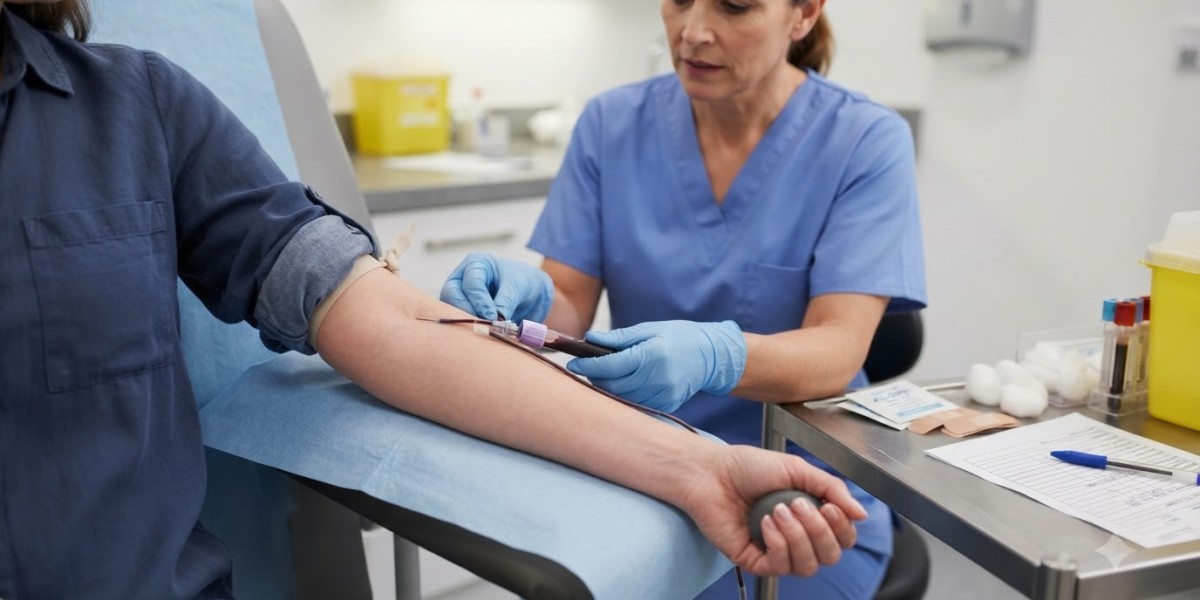
A tourniquet is applied to the upper arm to make veins more prominent. The skin over the selected vein is disinfected. A sterile needle is used to draw the required volume of blood into the appropriate tubes.
For most adults, the amount of blood collected for a standard panel is small — typically between 5 and 20 mL total, depending on the number and type of tests.
Immediate Labelling
Immediately after collection, tubes are labelled with your name, date of birth, collection date, and time. This step must happen at the point of collection, in your presence. It is an important safety and traceability step that ensures your sample cannot be confused with another patient's during transport or at the lab.
Some tubes need to be inverted gently several times after collection to mix the blood with the tube additives. The phlebotomist will do this correctly.
Stage 3: Transport to the Lab
Packaging
Collected tubes are placed in a sealed, leak-proof primary container and then into a secondary containment bag or box for transport. This physical protection prevents breakage and contains any potential leakage during transit.
Temperature Management
Some samples must be maintained at a specific temperature between collection and processing. Serum samples for most biochemistry tests tolerate ambient temperature for a reasonable period. Samples for coagulation tests, certain hormone assays, or molecular diagnostics may require refrigerated transport.
Ask your provider specifically whether cold-chain transport is maintained for the tests you have requested. This is a detail worth confirming, particularly for specialised panels.
Time Constraints
Most routine blood tests tolerate a reasonable transport window. However, for certain tests — particularly those involving cellular components or time-sensitive analytes — samples should reach the lab within a defined period. A provider with well-managed logistics will have standard routes and collection schedules designed to meet these windows.
Stage 4: Processing at the Lab
Sample Acceptance and Verification
When the sample arrives at the lab, it is checked against the transport documentation. The lab verifies that the label information matches the request, that the correct tubes were used, and that the sample appears visually acceptable. Haemolysed (broken down) samples, samples that arrived outside the acceptable temperature range, or samples with insufficient volume may be rejected and a recollection requested.
Centrifugation
For tests run on serum or plasma, samples are centrifuged to separate the liquid component from the cellular components of blood. The resulting serum or plasma is then transferred to analysis.
Testing
Automated analysers process most routine tests. For each analytical run, the lab runs internal quality control samples alongside patient samples. These controls have known target values and acceptable ranges. If controls are outside range, patient results for that run are not released until the cause is identified and corrected.
Result Review and Release
Completed results go through a verification step before being released. Automated flags for results outside reference ranges are reviewed. Pathologists sign off on complex or unusual results. Once approved, reports are released to the patient portal or sent via the agreed delivery method.
Stage 5: Accessing and Understanding Your Report
Most digital reports are available through a secure portal within the agreed turnaround time. You typically receive an SMS or email notification when the report is ready.
Your report will show each test result alongside the reference range for that test. Abnormal values may be highlighted or flagged.
Do not interpret results in isolation. Even a clearly abnormal value needs to be understood in the context of your clinical history, symptoms, medications, and prior results. Share your report with the clinician who requested it before making any decisions.
Frequently Asked Questions
Can all types of blood tests be done through home sample collection?
Most routine and many specialised blood tests are well-suited to home collection. A small number of tests requiring extremely rapid processing after collection may be better handled with direct lab collection. When in doubt, confirm with the provider whether your specific tests are suitable for home collection from your location.
What if the phlebotomist cannot find a suitable vein?
Experienced phlebotomists use several approaches for difficult venepuncture — different sites, warm compresses to dilate veins, or positional adjustments. If a first attempt is unsuccessful, a trained phlebotomist will not simply keep attempting in the same location. If the situation cannot be resolved at home, you may be directed to attend the centre where additional equipment and personnel are available.
How do I know if my sample was rejected?
If a sample is rejected at the lab — due to haemolysis, insufficient volume, or incorrect tube — the provider should contact you promptly to arrange a recollection. A good provider will do this before any expected report time passes, so you are not left waiting without knowing why the report is delayed.
What happens to my samples after testing?
After testing, samples are retained by the lab for a defined period — typically a few days for routine tests — and then disposed of following biosafety protocols. During the retention window, the lab can retest if a result needs to be confirmed.
Can I request home collection for a urine test at the same visit?
Yes. Urine routine, microscopy, and culture samples can be collected at home simultaneously with blood samples. You will need to collect the urine sample in the appropriate container shortly before the phlebotomist arrives. The provider will specify whether a first-morning specimen, midstream specimen, or timed collection is required for your specific urine tests.
Blood sample collection from home is not a shortcut — it is a fully structured diagnostic service that, when provided by a qualified team working within an accredited system, delivers the same result quality as a centre visit. Understanding each stage of the process helps you prepare correctly, choose the right provider, and feel confident that the report you receive at the end accurately reflects your health.