
If you’ve been dealing with breathlessness, chronic cough, wheezing, or your doctor suspects asthma or another lung problem, you may have been advised to get a pulmonary function test. The next question that usually comes up is: Where do I go for a reliable pulmonary function test near me, and what exactly will happen there?
If you’re in or around Bangalore, you can book a detailed pulmonary function test near me in Bangalore at a centre like EcoTown Diagnostics, which offers advanced equipment and trained respiratory technicians. But before you choose any centre, it helps to understand what this test does, how to prepare, and how to judge if a lab is trustworthy.
What Does a Pulmonary Function Test Measure?
A pulmonary function test (PFT) is a group of breathing tests that show how well your lungs work. Depending on your doctor’s request, you may have one or more of these:
Spirometry
Measures how much air you can blow out and how fast.
Key values often include:FEV1 (Forced Expiratory Volume in 1 second)
FVC (Forced Vital Capacity)
FEV1/FVC ratio
Lung volume tests
Check how much air your lungs can hold at maximum breath in and how much remains after breathing out.Diffusion capacity (DLCO)
Assesses how well oxygen passes from your lungs into your blood.
Together, these tests help your doctor understand:
How open or narrowed your airways are
Whether your lungs are stiff or overinflated
How severe a lung condition might be
How well your treatment is working over time
When searching for a pulmonary function test near me, ensure the lab can perform the specific type of PFT your doctor has requested.
Who Typically Needs a Pulmonary Function Test?
Your doctor may ask for a PFT if:
You have persistent cough, wheezing, chest tightness, or shortness of breath
There’s a suspicion of asthma, COPD, or another chronic lung disease
You are a smoker or ex-smoker with respiratory symptoms
You have exposure to dust, chemicals, or fumes at work
You are scheduled for major surgery, and your lung function must be assessed
You already have a lung condition and your doctor wants to:
Check if treatment is working
Adjust inhaler doses
Track disease progression
For many people, the biggest hesitation is not the test itself, but finding a good facility for a pulmonary function test near me that feels safe, hygienic, and well-managed.
What Actually Happens During the Test? Step-by-Step
Knowing the process reduces anxiety. At a good diagnostic centre, your visit for a PFT usually looks like this:
Registration and basic details
You’ll share your medical history, current medications, allergies, and smoking status.
Explanation by the technician
A trained respiratory technician explains the procedure in simple terms.
They will check if you’ve followed instructions such as avoiding bronchodilators (if your doctor asked you to), heavy exercise, or smoking before the test.
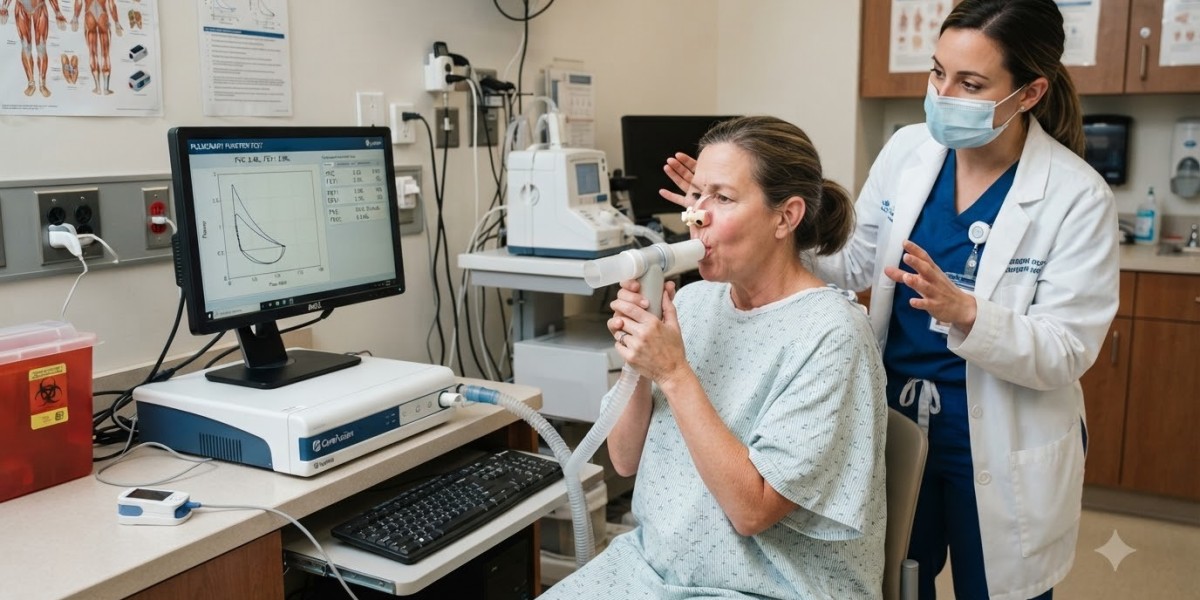
Spirometry (most common step)
You’ll sit comfortably, often with a nose clip.
You inhale fully, place the mouthpiece between your lips, and blow out as hard and fast as you can.
This may be repeated several times to ensure consistent, accurate readings.
Bronchodilator test (if advised)
In some cases, you’ll be given an inhaler medication and asked to repeat the test after 15–20 minutes.
This helps see how much your airways improve with medicines.
Additional lung volume or diffusion tests (if ordered)
You may be asked to breathe in specific patterns or hold your breath for a few seconds.
The technician guides you throughout.
Post-test rest and check
You may feel slightly tired or dizzy briefly from repeated blowing efforts, but this usually passes quickly.
Most people can resume normal activities immediately afterward.
A well-run centre ensures clear instructions, privacy, single-use mouthpieces, and proper disinfection between patients.
How to Judge a Good Centre for a Pulmonary Function Test Near You
If you’re searching for a pulmonary function test near me, use these practical criteria to compare centres, especially in a city like Bangalore where you have many options:
1. Qualifications and Experience
Is there a trained respiratory technician performing the test?
Are the PFT reports interpreted by an experienced pulmonologist or qualified physician?
How often does the centre perform these tests?
Centres that routinely perform PFTs usually have better processes and more consistent results.
2. Equipment and Calibration
Do they use modern, computerised spirometers and PFT systems?
Are the devices regularly calibrated according to standards?
Accurate equipment is critical; a poorly calibrated machine can lead to misleading results and wrong treatment decisions.
3. Hygiene and Safety
Are disposable mouthpieces used for each patient?
Is there visible cleaning of equipment surfaces between visitors?
Do staff follow standard infection-control practices?
For respiratory tests, infection control is especially important.
4. Clear Instructions and Communication
A reliable centre will:
Explain what to expect before and during the test
Provide written or verbal guidance on preparation
Encourage questions and clarify any doubts
You should never feel rushed or dismissed.
5. Location, Timing, and Convenience
When you look up a pulmonary function test near me, consider:
How far you need to travel, especially if you get breathless easily
Availability of parking or easy public transport access
Flexible appointment timings, including early morning or late evening slots if required
In Bangalore traffic, minimizing travel time often makes a big difference.
6. Report Turnaround and Format
Ask how soon you will receive your report (often the same day or within 24 hours).
Check if the report is:
Clearly formatted, with reference ranges
Signed by a qualified doctor
Available both as a printed copy and soft copy (email/WhatsApp/portal)
How to Prepare for Your Pulmonary Function Test
Always follow the specific instructions given by your doctor and the diagnostic centre. Common recommendations include:
Clothing
Wear comfortable, loose clothes so your chest and abdomen can move freely.
Food and Drink
Many centres suggest a light meal beforehand, not a heavy one.
Avoid large amounts of caffeine just before the test unless your doctor says otherwise.
Medications
Some inhalers or bronchodilator medicines may need to be stopped for a few hours before the test—but only if your doctor has clearly advised this.
Do not stop any medicine on your own.
Smoking and Alcohol
Avoid smoking for several hours before the test.
Avoid alcohol beforehand, as it can affect your performance during the test.
Exercise
Avoid very strenuous exercise just before the test.
If you feel very unwell, have an ongoing chest infection, or recently had surgery, inform the centre and your doctor before going ahead.
Making Sense of Your Pulmonary Function Test Report
While only your doctor can interpret your report in the context of your symptoms, here’s a simplified overview:
Normal pattern
Your values (FEV1, FVC, ratio, etc.) are within expected ranges for your age, height, sex, and ethnicity.
Obstructive pattern (common in asthma, COPD)
Difficulty blowing air out quickly
FEV1 is reduced; FEV1/FVC ratio often low
May improve significantly after inhaler during bronchodilator test in asthma.
Restrictive pattern (e.g., fibrosis, certain chest wall problems)
Both FEV1 and FVC may be reduced, but ratio often remains normal or high.
Lung volumes are reduced.
Mixed pattern
Elements of both obstruction and restriction.
Do not panic if numbers look “low”; many factors (technique, effort, current illness) affect results. A good centre for a pulmonary function test near me will ensure the technician coaches you to give your best effort, which is essential for accurate interpretation.
Common Mistakes to Avoid When Booking a Test
Choosing only by lowest price
PFT is not just about cost; poor-quality tests can lead to repeated testing and mismanagement.Skipping preparation instructions
Using a bronchodilator when you were told not to (or vice versa) can change the result.Not carrying previous reports
If you’ve had a PFT before, bring those reports along. Comparison is extremely valuable.Not clarifying doubts
If you’re anxious, ask the technician to repeat the instructions until you’re comfortable.
Frequently Asked Questions
What symptoms suggest I might need a pulmonary function test?
Persistent breathlessness, chronic cough, wheezing, chest tightness, or frequent chest infections often prompt doctors to order PFTs. Smokers, people exposed to dust or chemicals, and those with known asthma or COPD also undergo periodic tests to monitor lung health.
How long does a typical PFT appointment take?
The actual test portion usually takes about 20–40 minutes, depending on how many components (spirometry, lung volumes, diffusion capacity) your doctor has requested. Including registration and explanation time, plan for roughly an hour at the centre.
Is a pulmonary function test painful or risky?
The test is non-invasive and not painful. You may feel slightly tired, light-headed, or experience some coughing after repeated forceful blows, but these effects usually settle quickly. Serious complications are rare, but people with certain heart conditions or recent surgeries should be evaluated carefully before testing.
Do I need to fast before the test?
Fasting is usually not required. In fact, very empty or very full stomachs can make breathing deeply uncomfortable. Most centres suggest a light meal 1–2 hours before the test. Always follow any specific instructions given to you.
Can children have pulmonary function tests?
Yes, children old enough to understand and follow breathing instructions—often around 5–6 years and above—can undergo spirometry. A patient, child-friendly technician is especially important to get reliable results in children.
How often should I repeat my pulmonary function test?
The frequency depends on your condition. People with stable mild asthma may need it less often than someone with severe COPD or rapidly changing symptoms. Your treating pulmonologist or physician will recommend how often you should repeat the test.
Key Takeaways Before You Book a Test
A pulmonary function test near me is more than a routine lab check—it is a powerful tool that guides diagnosis, treatment, and long-term monitoring of your lung health. Choosing a centre with trained staff, modern equipment, good hygiene, and clear communication matters as much as the test itself.
If you’re in Bangalore, consider a specialised diagnostic facility with dedicated respiratory testing services so your doctor receives accurate, timely results and you can breathe a little easier—both literally and emotionally.