
Patients often arrive at a diagnostic centre expecting a single, straightforward ultrasound — only to discover that there are multiple scan types, different preparation requirements, and varying equipment needs depending on what is being assessed. This disconnect between what people expect and what ultrasound actually involves leads to confusion, last-minute cancellations, and occasionally, scans that don't capture the information the referring doctor needed.
This article is for anyone in Bangalore navigating an ultrasound referral — helping you understand what type of scan you need, how to prepare properly, and what to look for in a diagnostic centre worth booking. If you have already been referred and want to get started, you can explore options for an ultrasound scan in Bangalore at Ecotown Diagnostics, which offers a range of scan types with qualified reporting.
Why Ultrasound Is Not a Single Test
The term "ultrasound" is an umbrella that covers several distinct scanning protocols. Your referral may specify one type without explaining what it entails. Here is a breakdown of the most common categories:
Abdominal Ultrasound
Evaluates the liver, gallbladder, spleen, pancreas, kidneys, and surrounding structures. Fasting for 6 to 8 hours is required to reduce bowel gas and distension that would otherwise obscure visualisation. Ordered for suspected gallstones, liver disease, abdominal pain, and renal issues.
Pelvic Ultrasound
Assesses the uterus, ovaries, and bladder in women; the prostate and bladder in men. A full bladder is typically required for transabdominal pelvic ultrasound, as it acts as an acoustic window to visualise pelvic organs clearly. A transvaginal approach may be used for more detailed gynaecological assessment.
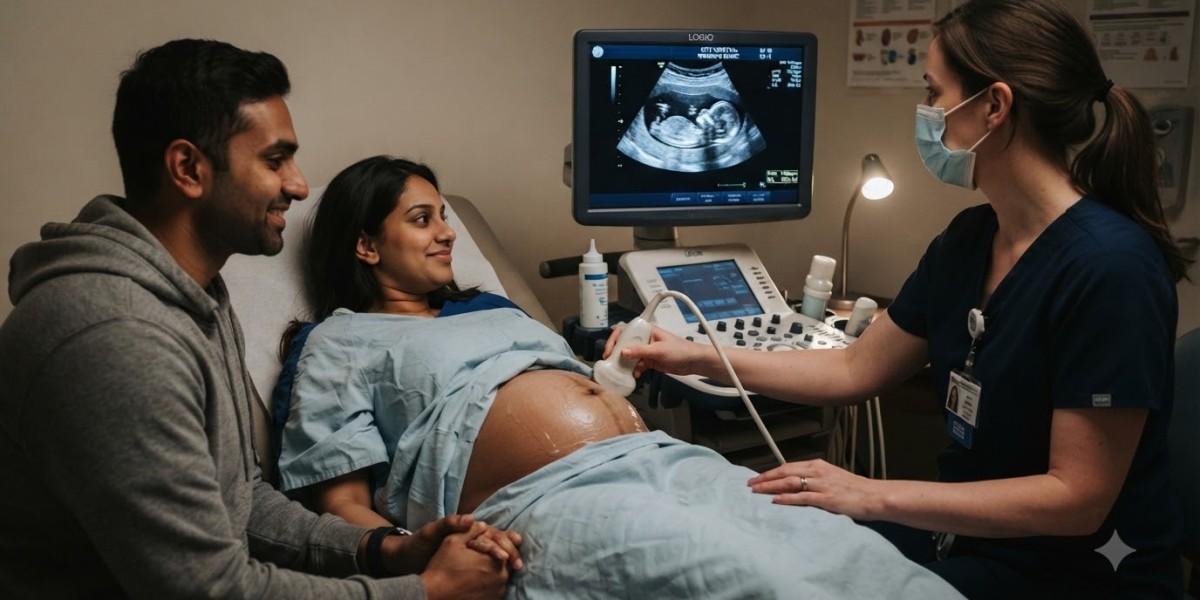
Antenatal (Obstetric) Ultrasound
Monitors foetal development across different stages of pregnancy. Scan protocols change at each trimester — the dating scan, the anomaly scan, and growth monitoring scans each look for different parameters.
Thyroid and Neck Ultrasound
Evaluates the thyroid gland for nodules, goitre, and inflammation. Also used to assess lymph nodes in the neck. No specific preparation required.
Musculoskeletal Ultrasound
Used for tendons, ligaments, bursae, and superficial muscle injuries. Common for shoulder, elbow, knee, and ankle assessment. No preparation needed.
Breast Ultrasound
Complementary to mammography, used to characterise breast lumps and assess dense breast tissue. No preparation required.
The Importance of Correct Preparation
One of the most common reasons for incomplete ultrasound scans is inadequate preparation. Here is what the main preparation requirements look like in practice:
Scan Type | Preparation |
Abdominal Ultrasound | Fast for 6–8 hours (water allowed) |
Pelvic Ultrasound (Transabdominal) | Full bladder — drink 1 litre of water 1 hour before, do not urinate |
Transvaginal Ultrasound | Empty bladder |
Renal Ultrasound | Semi-full bladder |
Thyroid/Neck Ultrasound | No preparation |
Obstetric Ultrasound (First Trimester) | Full bladder |
Obstetric Ultrasound (Second and Third Trimester) | No special preparation |
Musculoskeletal Ultrasound | No preparation |
If you are unsure what preparation your specific scan requires, contact the diagnostic centre before your appointment. Arriving with an empty stomach when a full bladder was needed, or vice versa, can mean the scan cannot be completed on the day.
What Makes an Ultrasound Scan Accurate
Ultrasound accuracy depends on four variables that are worth understanding:
Transducer frequency selection: Different body regions require different frequency probes. High-frequency probes provide excellent resolution for superficial structures (thyroid, musculoskeletal) but poor penetration. Low-frequency probes penetrate deeply for abdominal organs but with less resolution. A skilled sonographer selects and switches probes appropriately.
Machine image processing: Modern ultrasound machines use compound imaging, harmonic processing, and speckle reduction to improve image clarity. These features reduce artefacts and improve organ boundary definition.
Sonographer technique: Probe pressure, angle, and patient positioning all affect what is visible. Some structures — particularly the pancreas tail or ovaries in obese patients — require specific approaches that only experienced sonographers know to apply.
Radiologist interpretation: The final report must contextualise the measurements and findings against normal reference ranges and the patient's clinical situation.
Choosing a Centre for Your Ultrasound Scan in Bangalore
Bangalore has hundreds of facilities offering ultrasound services. Here is how to evaluate them beyond surface-level information:
Check the Equipment Generation
Ask whether the centre uses a cart-based (full-size) ultrasound system or a portable unit. Portable units are convenient but typically have lower image quality for complex studies. For abdominal, obstetric, and pelvic scans, a full cart-based system is the appropriate standard.
Confirm Sonographer Qualifications
In India, qualified sonographers hold a diploma or degree in Sonography or Medical Imaging Technology. Some centres also have radiologists performing the scan directly. Either is appropriate — the key is that the person scanning has formal training in the scan type you need.
Evaluate Reporting Standards
Ask to see an example of a standard report format. A well-structured report should clearly document each organ assessed, relevant measurements with normal reference ranges, abnormal findings, and a clear impression that addresses the clinical question.
Verify Turnaround Time
For most routine ultrasound scans, same-day or next-day reporting is the standard in Bangalore. For urgent referrals, confirm that same-day reporting is possible before committing to an appointment.
Common Findings on Ultrasound and What They Mean
Patients sometimes receive their reports before seeing their doctor. Here are common ultrasound terms in plain language:
Echogenic — Tissue that appears bright on ultrasound; fatty liver, for example, is described as echogenic
Hypoechoic — Tissue that appears darker than surrounding structures; commonly used to describe nodules or cysts
Anechoic — Completely dark (no echoes); typically indicates fluid-filled structures like cysts or the bladder
Heterogeneous — Non-uniform appearance; used to describe fibroids, certain tumours, and complex masses
Posterior acoustic shadowing — Dark shadow behind a structure; classic for gallstones and calcifications
Hypervascularity — Increased blood flow on Doppler; can indicate inflammation or tumour activity
These terms describe appearances, not diagnoses. Your doctor will interpret them in context.
Frequently Asked Questions
How long does an ultrasound scan typically take?
A simple abdominal or thyroid scan may take 15 to 20 minutes. A detailed pelvic, obstetric, or musculoskeletal scan may take 30 to 45 minutes. Ask the centre for an estimate based on your specific referral.
Is ultrasound safe for repeated use?
Yes. Diagnostic ultrasound does not use ionising radiation. It uses sound waves within internationally established safety limits. There is no evidence of harm from repeated diagnostic ultrasound at standard imaging intensities.
Can I get an ultrasound scan without a referral in Bangalore?
Some scans, such as abdominal or thyroid ultrasound, are available without a referral at many centres. However, for obstetric or pelvic scans, a doctor's referral ensures the correct protocol is applied. It is always advisable to have a referral to ensure the right structures are assessed.
What should I do if my ultrasound report shows something abnormal?
Contact your referring doctor immediately and share the report along with the images. Do not attempt to self-interpret the findings. Many apparent abnormalities on ultrasound require clinical correlation before their significance can be determined.
Will I receive my ultrasound images along with the report?
Most centres in Bangalore provide a printed report along with images either on a CD or in digital format. Ask about this at the time of booking to ensure you receive everything you need for your follow-up appointment.
Getting an ultrasound scan in Bangalore is a routine process, but the quality of the outcome depends on matching the right scan type to your clinical need, preparing correctly, and choosing a centre with appropriate equipment and reporting standards. These are the practical details that determine whether your scan gives your doctor actionable information or leaves the clinical question unresolved.