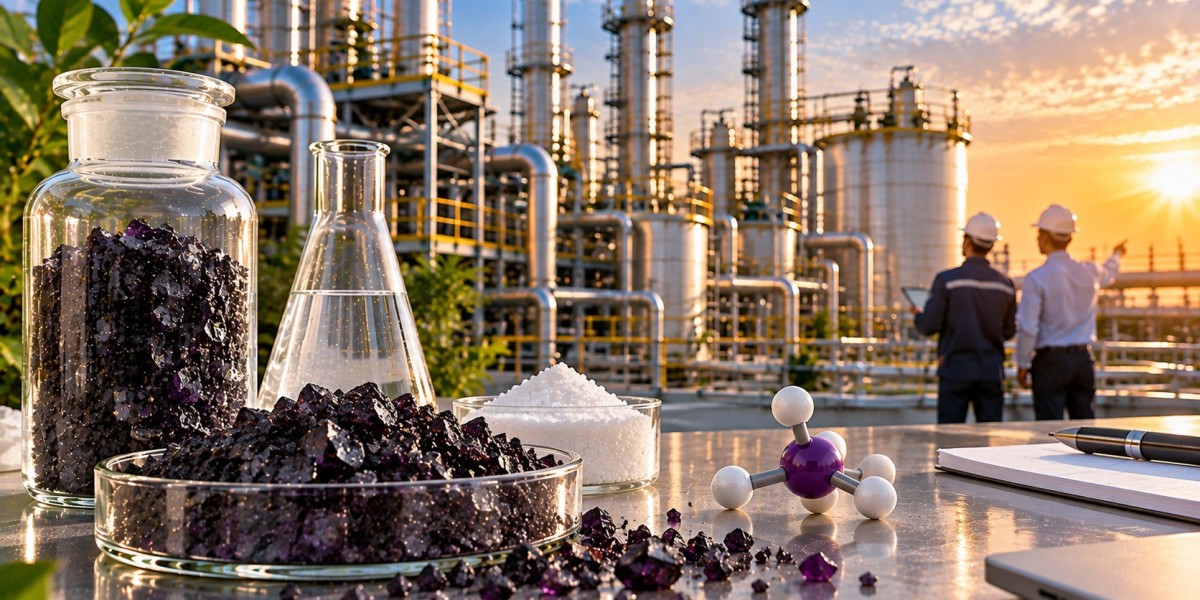

Ammonium iodide sits in a genuinely small but persistent corner of the specialty chemicals market. It's used in photographic emulsion preparation, shows up in explosives and geological science applications, and has a role as a dietary iodine supplement in certain formulations. None of these are huge-volume markets on their own, which is exactly why understanding the production cost matters so much here. In a niche chemical like this, there's less room for a plant to absorb an inefficient cost structure and still turn a healthy margin, since the market simply isn't big enough to paper over a poorly optimized operation the way a bulk commodity chemical sometimes can.
That makes a rigorous cost analysis less of a nice-to-have and more of a baseline requirement for anyone seriously evaluating a plant in this space. Ammonium iodide's production chemistry is relatively contained, built around two main feedstocks, but one of those feedstocks, iodine-derived hydroiodic acid, carries pricing dynamics that are genuinely different from most industrial chemical inputs. That distinction deserves real attention before any capital commitment gets made.
What a Production Cost Report Covers
A solid ammonium iodide production cost report breaks a plant's economics into distinct, separately priced components rather than a single blended figure. It covers the manufacturing process, raw material requirements, utility needs, infrastructure, machinery, manpower, packaging, and transportation, since each carries its own cost behavior and risk profile.
Raw materials get particular weight in this breakdown, given how directly ammonium iodide's cost tracks its ammonia and hydroiodic acid inputs, and given how differently those two markets behave from each other. Utilities matter too, though this process runs at comparatively moderate conditions relative to some other inorganic chemical syntheses, which keeps energy intensity somewhat more manageable than for higher-pressure or higher-temperature processes. Infrastructure and machinery costs cover the reaction vessels and any crystallization or drying systems needed to isolate the finished product, built from materials suited to handling iodine-based chemistry safely. Manpower, packaging, and transportation round things out, and for a specialty chemical serving niche photographic, explosive, and scientific applications, packaging often needs to meet specific purity and contamination-control standards that a bulk industrial chemical wouldn't require.
Raw Materials Required for Ammonium Iodide Production
The major raw materials for ammonium iodide production are ammonia, or ammonium hydroxide, and hydroiodic acid. Ammonium hydroxide itself is produced from ammonia and water, which ties this feedstock back, one step removed, to ammonia production economics and, further upstream, to natural gas pricing through the Haber-Bosch process.
Ammonia's cost behavior is fairly well understood across the chemical industry, moving with natural gas prices and broader energy market conditions, along with demand pressure from its dominant end use in nitrogen fertilizers. Hydroiodic acid tells a different story entirely. Its production depends on iodine availability, and iodine is a genuinely concentrated commodity, with global supply dominated by a small number of producing regions, primarily certain brine deposits and specific mining operations. That concentration means iodine, and by extension hydroiodic acid, can carry price volatility and supply risk that doesn't track standard petrochemical or agricultural commodity cycles at all. For anyone building a cost model here, treating hydroiodic acid pricing as just another input variable, rather than recognizing its distinct and more concentrated supply chain, would be a real oversight.
The Industrial Production Process
Ammonium iodide is produced through the reaction of ammonia, or an ammonium salt intermediate like ammonium hydroxide, with hydroiodic acid. The reaction forms ammonium iodide directly, and while the underlying chemistry is relatively straightforward compared to multi-stage organic synthesis processes, careful control of reaction conditions still matters for achieving the purity levels that photographic and scientific applications typically demand.
After the core reaction, the product generally requires purification steps, commonly crystallization and drying, to reach the specification needed for its intended end use. Photographic emulsion applications in particular are purity-sensitive, since even minor contamination can affect the performance of the final photographic product, which means the purification stage isn't a minor add-on here, it's often where a meaningful share of processing attention and cost actually sits. Equipment throughout the process needs to handle iodine-containing compounds appropriately, since iodine chemistry, while less broadly hazardous than something like hydrogen fluoride, still requires proper containment and handling protocols to avoid product loss and maintain consistent quality.
Capital Investment and Plant Setup Cost Factors
Capital costs for an ammonium iodide plant are generally more moderate than for some other specialty inorganic chemicals, given that the reaction itself doesn't demand the extreme pressure or temperature conditions that some comparable processes require. Reaction vessels and purification equipment still need appropriate material selection for handling iodine-based chemistry, but the overall equipment intensity tends to sit below what a high-pressure or highly corrosive process would need.
Land and site costs follow regional patterns, though proximity to reliable hydroiodic acid supply matters more here than simple land pricing, given how concentrated global iodine production actually is. A plant located far from established iodine supply chains faces real logistics cost and lead-time exposure that a more centrally positioned operation wouldn't. Engineering and construction costs scale with the purification and quality control infrastructure needed to hit the purity specifications that photographic and scientific end markets typically demand, since this is genuinely a purity-driven product category rather than a bulk commodity one. Working capital planning should account for the fact that hydroiodic acid's concentrated supply chain can create pricing and availability swings that don't follow the more predictable, broadly diversified patterns of ammonia sourcing.
Operating Cost Factors
Variable costs are led by ammonia and hydroiodic acid consumption, and because these two feedstocks behave so differently, one following broad energy and agricultural commodity patterns, the other tied to a much more concentrated iodine supply chain, a plant's total raw material cost reflects two genuinely distinct risk profiles rather than one unified trend. Utility costs stay relatively moderate here compared to higher-intensity inorganic chemical processes, though purification and drying stages still draw meaningful energy.
Fixed costs include labor, maintenance, and overhead, and quality control deserves particular mention given how purity-sensitive downstream applications like photographic emulsions tend to be. Testing and quality assurance processes add an ongoing operating cost layer that a less purity-critical product wouldn't carry to the same degree.
Financing costs and depreciation depend on the plant's overall capital intensity, and given that this process runs at more moderate conditions than some comparable specialty chemicals, depreciation schedules here tend to be somewhat less front-loaded than for plants requiring extensive high-pressure or highly corrosion-resistant infrastructure, though this still deserves plant-specific verification rather than a blanket assumption.
What Pushes Ammonium Iodide Production Costs Up or Down
Feedstock pricing sits clearly at the top of the list, and the iodine supply chain specifically deserves closer attention than it might get in a quick review. Because global iodine production concentrates in a limited number of regions, any disruption, whether from mining operations, brine extraction facilities, or regional export policy, can move hydroiodic acid pricing meaningfully in ways that a broader, more diversified commodity input simply wouldn't experience. Does that make ammonium iodide production inherently riskier than a chemical built on more widely available inputs? In terms of feedstock concentration, yes, and that's a genuine factor to weigh rather than dismiss.
Technology and purification efficiency matter too, particularly given how purity-sensitive key end markets are. A plant with more efficient purification processes wastes less material achieving target specification, which directly improves effective yield per unit of feedstock consumed. Scale plays a more limited role here than in bulk commodity chemical production, since ammonium iodide's relatively small, specialized market doesn't really support the kind of massive-scale plants that drive dramatic per-unit cost reductions in higher-volume chemicals.
Regional factors matter primarily through proximity to iodine supply and through the regulatory and quality certification requirements tied to specific end markets like pharmaceutical-grade or photographic-grade material. A plant serving dietary supplement applications, for instance, faces different compliance requirements than one focused purely on industrial or scientific uses, and that distinction can shift both capital and operating costs depending on which end markets a given plant is actually targeting.
Frequently Asked Questions
Q: Why is hydroiodic acid pricing so much less predictable than a typical industrial chemical input? A: Because it ultimately depends on iodine, and iodine production is genuinely concentrated in a small number of regions globally. That concentration means supply disruptions or regional policy shifts can move pricing more sharply than they would for a broadly available commodity feedstock.
Q: Does ammonium iodide production require the same kind of heavy safety infrastructure as more hazardous specialty chemicals? A: Not to the same degree, generally. The reaction conditions are comparatively moderate, and while iodine chemistry still needs proper handling, it doesn't carry the same acute toxicity and corrosivity profile that something like hydrogen fluoride-based processes do.
Q: How much does purity requirement affect production cost for photographic-grade ammonium iodide? A: Quite a bit, honestly. Photographic emulsion applications are particularly sensitive to contamination, so the purification and quality control stages of production carry real weight in the overall cost structure, more than a purely industrial-grade product would demand.
Q: Can a small-scale plant compete effectively in this market, or does scale matter as much as in bulk chemicals? A: Scale matters less here than in bulk commodity production, since the overall market is smaller and more specialized. A well-run smaller operation focused on quality and reliable iodine sourcing can compete reasonably well without needing massive throughput.
Q: What's the biggest risk investors overlook when evaluating an ammonium iodide plant? A: Underestimating iodine supply concentration risk. It's easy to model hydroiodic acid like a standard industrial input, but its underlying supply chain behaves very differently, and that difference deserves explicit attention rather than being folded into generic raw material assumptions.
Why This Analysis Matters for Decision-Making
Ammonium iodide's niche but persistent demand across photography, explosives, and scientific applications makes it a reasonable, if specialized, investment target, but its cost structure carries a distinct risk that's easy to overlook: a concentrated, less predictable iodine supply chain sitting alongside a much more conventional ammonia feedstock. That combination means a generic cost estimate risks missing exactly the variable that matters most here.
A detailed Ammonium Iodide Production Cost report gives investors, business brokers, corporate advisers, and finance companies the specific clarity needed to properly evaluate a plant, rather than assuming standard industrial chemical feedstock assumptions apply cleanly to an iodine-dependent process. Before capital moves into a niche chemical like this, that level of scrutiny isn't optional. It's what separates a plant priced on a realistic understanding of its supply chain from one priced on assumptions that iodine's concentrated market simply won't support.