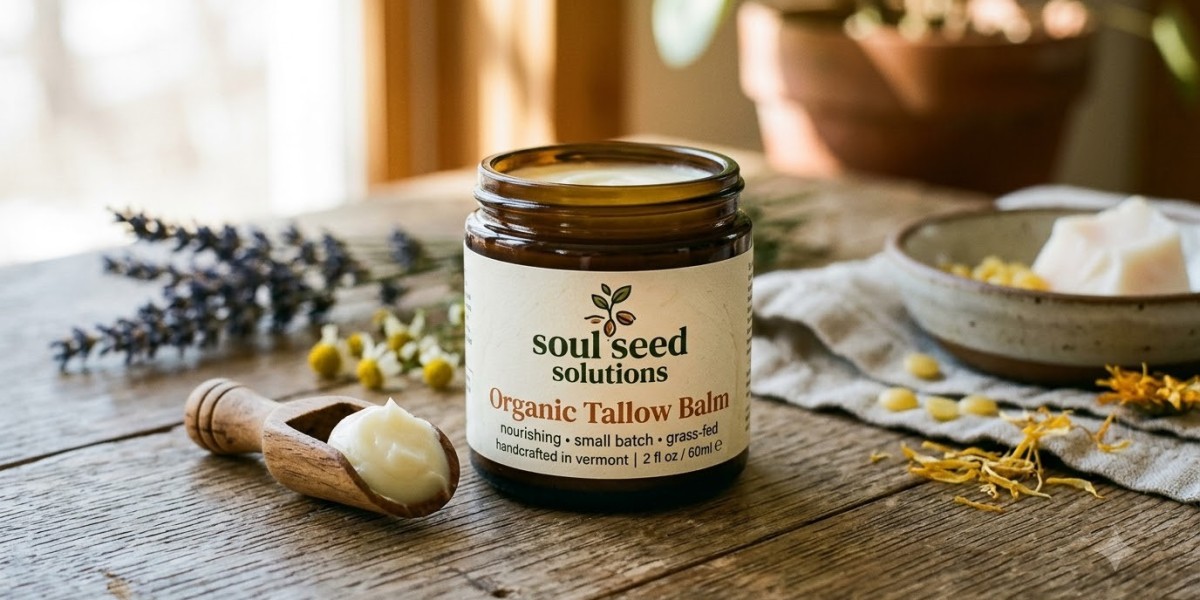

Beef tallow in a skincare product sounds like something from another century. For most people, the immediate reaction is somewhere between scepticism and mild horror. But the quiet revival of tallow-based skincare isn't driven by nostalgia — it's being driven by people who've tried everything else and finally found something that works on problem skin.
Before you write it off or blindly add it to your cart, there are some important things to understand about what makes a quality tallow balm worth choosing, and what to look for when you're comparing products.
Why People Are Returning to Animal-Based Skincare
The modern skincare market is dominated by synthetic emollients, petroleum derivatives, and long ingredient lists full of things most people can't pronounce. For a long time, this was considered progress. But for a significant number of people — especially those with eczema, psoriasis, chronically dry skin, or sensitivity to synthetic fragrances and preservatives — the modern approach hasn't delivered.
Tallow balm represents a return to something simpler. Rendered beef fat has been used as a skin protectant for centuries across multiple cultures. The resurgence isn't about trend-chasing — it's about people finding that their skin responds better to something closer to its own biological makeup.
What Makes Tallow Compatible With Human Skin?
The fatty acid profile of beef tallow is remarkably similar to the lipids found in human sebum. This is a meaningful distinction, not a marketing line.
Human skin is held together and protected by a lipid barrier. When that barrier becomes depleted — through harsh cleansers, environmental damage, ageing, or chronic skin conditions — moisture escapes and irritants get in. The skin becomes dry, reactive, and difficult to manage.
Tallow contains significant amounts of oleic acid, palmitic acid, and stearic acid — the same fatty acids that make up a healthy skin barrier. When applied, it doesn't just sit on top of the skin. It integrates more readily than many synthetic alternatives, which is why many people describe their skin feeling genuinely nourished rather than just coated.
What Tallow Balm Is Actually Good For
This isn't a product with one narrow use case. People turn to tallow balm for a surprisingly wide range of skin concerns:
Extremely dry, flaky, or cracked skin — particularly on hands, elbows, heels, and lips
Eczema-prone areas that react badly to conventional moisturisers
Windburned or sun-damaged skin in need of barrier repair
Stretch marks and scar tissue that needs softening over time
Dry skin around the nose and mouth during cold or illness
Itchy, inflamed patches that don't respond well to standard lotions
It also works well as an overnight treatment. Because tallow is semi-solid at room temperature and doesn't contain water, it acts as a proper occlusive — sealing in moisture without needing preservatives or stabilisers.
What to Look For When Comparing Products
Not all tallow balms are created equal. The quality of the rendered fat, the sourcing of the animals, and what else goes into the product all determine how well it performs and how safe it is on sensitive skin.
Sourcing and Rendering Method
Grass-fed, pasture-raised beef tallow is consistently considered superior to conventional alternatives. Animals raised on pasture produce fat with a higher content of fat-soluble vitamins — including vitamins A, D, E, and K — which all play roles in skin health and repair.
The rendering method also matters. Slowly rendered tallow (sometimes called "dry rendered" or "wet rendered") produces a cleaner, purer fat than industrial methods. Products made from properly sourced and rendered tallow will often be paler in colour and have a mild, neutral smell.
Additional Ingredients to Look For
Quality tallow balm often includes a small number of complementary ingredients — and fewer is usually better for sensitive skin. Common additions include:
Beeswax for added protection and firmness
Jojoba oil for lighter spreadability
Essential oils for scent (look for products with clearly identified sources)
Avoid products with unnecessary additives, synthetic fragrance, or long ingredient lists that contradict the simplicity that makes tallow appealing in the first place.
Addressing the Smell Question Honestly
This comes up in nearly every conversation about tallow skincare. Yes, beef tallow has a natural smell. High-quality, properly rendered tallow from grass-fed animals typically has a very faint, neutral, almost buttery scent — not the strong animal smell people imagine.
If a product smells strongly of meat or rancidity, that's a sign of lower-quality rendering or poor storage. A well-made tallow balm should be barely noticeable in scent, especially once blended with complementary botanicals or essential oils.
Who Should Consider Using Tallow Balm
Tallow balm suits a specific type of person well. It's worth trying if:
You've cycled through multiple moisturisers without lasting improvement
Your skin tends to react to fragrances, alcohols, or synthetic preservatives
You're dealing with a damaged or compromised skin barrier
You prefer short, recognisable ingredient lists
You have young children or a baby with persistently dry or irritated skin (plain, unscented tallow is often well-tolerated)
People with naturally oily or acne-prone skin should approach with a patch test, as the occlusive nature of tallow may not suit everyone — though many people with oily skin find it works well when used sparingly.
How to Use It Without Wasting Product
A little goes a long way. Tallow balm is dense and concentrated — scooping out a large amount will leave you with a greasy film that takes hours to absorb.
The most effective approach is to:
Warm a small amount between your fingertips until it melts slightly
Apply to clean, slightly damp skin to help lock in moisture
Focus on the driest or most affected areas first
Allow several minutes for absorption before dressing
For very dry or cracked areas — heels, hands, elbows — applying a layer before bed and covering with socks or cotton gloves overnight gives excellent results.
Frequently Asked Questions
Is tallow balm safe to use on the face?
For most skin types, yes. Many people use it specifically as a facial moisturiser, especially for dry or sensitive skin. Those with acne-prone skin should patch test first, as the occlusive properties may not suit every complexion.
Does tallow balm go rancid?
Properly rendered and stored tallow balm has a reasonable shelf life — typically six months to a year. Keep the lid closed, store it away from direct heat and sunlight, and use a clean spatula or fingertip rather than introducing water into the jar.
Can it be used on children or babies?
Plain, unfragranced tallow balm is one of the gentler options for infant skin. It's been used this way historically and is still favoured by many parents dealing with nappy rash or dry skin patches. Always check with a healthcare provider if there are existing skin conditions.
Why does tallow balm feel different from regular moisturiser?
It absorbs differently because it's not a water-based emulsion. Regular lotions feel light because they contain water. Tallow is lipid-only, so it absorbs more slowly and leaves a more protective feel. Skin that's used to water-based products may take a few days to adjust.
Tallow balm won't appeal to everyone, and it's not trying to. But for people who've been let down by mainstream skincare, it offers something harder to find: simplicity, compatibility, and real nourishment for a damaged or depleted skin barrier.