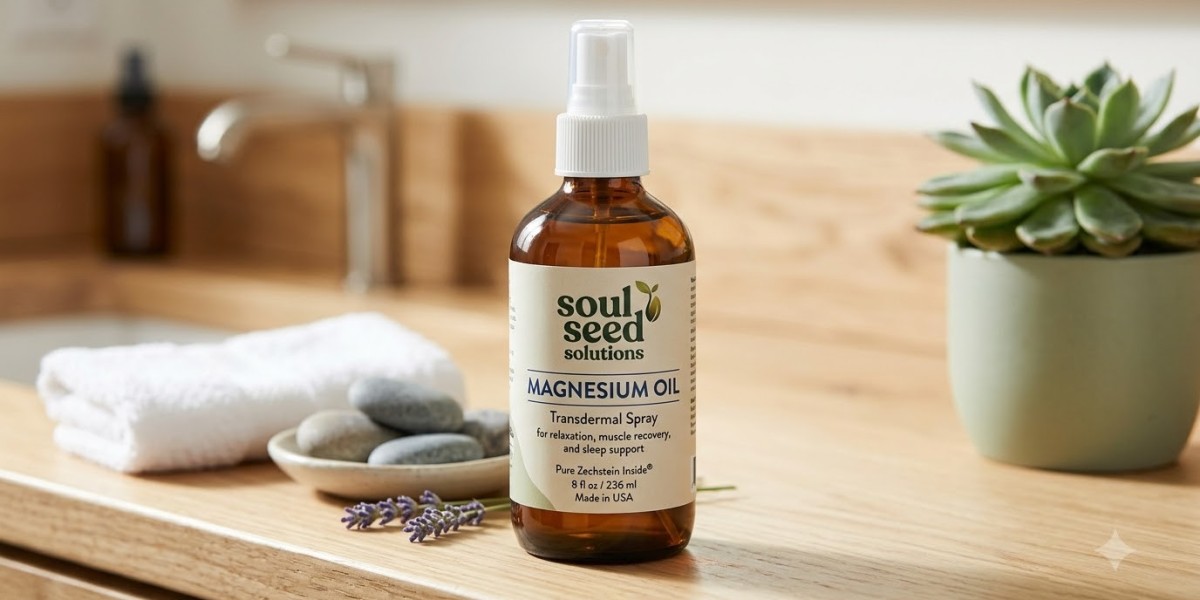

Muscle pain rarely shows up at a convenient time. It’s the tight neck after a long screen day, the calves that seize up at night, or the soreness that lingers two days after a workout. When stretching and heat only go so far, topical magnesium becomes an appealing next step—until you try it and it tingles, itches, or “burns,” and you’re left wondering if it’s working or if you should wash it off immediately.
If you’re trying to choose a gentler option, consider starting with a balm format instead of a straight spray. You can explore a soothing magnesium oil for muscle pain balm that’s designed for targeted application and easier skin comfort.
Why magnesium oil can feel “hot” (and what it actually is)
Despite the name, magnesium “oil” isn’t an oil like olive or jojoba. Most products are magnesium chloride dissolved in water, which can feel slick—hence the nickname.
That sensation some people get (stinging or itching) usually comes down to one or more of these:
Skin barrier stress (dry, freshly shaved, or irritated skin is more reactive)
High concentration of magnesium chloride
Micro-cuts you can’t see (especially on legs/underarms)
Sensitive areas (inner arms, neck, face—generally not ideal)
Layering with exfoliating products (acids, retinoids, strong soaps)
Important: discomfort doesn’t automatically mean “it’s detoxing” or “it’s working.” It more often means your skin needs a different approach.
What people really mean when they search magnesium oil for muscle pain
Search intent here is practical: you want relief you can apply directly where you feel it.
Most people are trying to solve one of these problems:
Post-workout soreness (tight quads, glutes, calves)
Overuse tension (forearms, shoulders, upper back)
Cramp-prone muscles (especially calves/feet)
Stress-related tightness (jaw/neck/shoulders)
Stiffness from sitting (hips, low back)
Topical magnesium isn’t a miracle switch, but many people use it as part of a routine to support muscle comfort—especially when paired with hydration, mobility work, and rest.
Balm vs. spray: which form makes sense for your muscles?
You can use topical magnesium in a few formats. The “best” one depends on your skin and how you plan to use it.
Spray/liquid
Pros
Fast to apply over a larger area
Easy after showers or workouts
Cons
More likely to sting on sensitive skin
Can feel sticky and leave residue
Gel/cream
Pros
Often includes soothing ingredients
Less drip than sprays
Cons
Can include emulsifiers or preservatives some people avoid
Magnesium balm
Pros
Targeted application (great for knots and specific spots)
Oils/butters can buffer the “tingle” for many users
More massage-friendly (helpful for tight areas)
Cons
Not as quick to spread over very large areas
If your main problem is “it stings but I still want the benefits,” balm is often the most comfortable starting point.
How to use magnesium oil without the “sting spiral”
If you’ve tried magnesium before and had a rough first impression, this is the reset.
Step 1: Patch test like you mean it
Pick a small spot (outer forearm or calf). Apply a small amount and wait 20–30 minutes. Mild tingling can happen; sharp burning is a “no.”
Step 2: Apply to the right skin at the right time
Most people do best when skin is:
Clean
Dry (or slightly damp, depending on your sensitivity)
Not freshly shaved
Not freshly exfoliated
After a hot shower can be great for muscle relaxation, but if your skin gets reactive post-shower, wait 20 minutes.
Step 3: Start small and local
Instead of coating your entire legs, focus on the muscle that’s actually bothering you:
Calf belly (not the shin)
Upper trapezius (avoid front of neck)
Quads/hamstrings
Glutes/hip rotators
Forearms
Use less than you think you need. You can always add more.
Step 4: Pair it with 60 seconds of simple massage
Massage helps in two ways:
Encourages circulation in the tight tissue
Helps you find trigger points and apply more precisely
A practical method:
Apply balm/liquid.
Use thumb or knuckles to press into the tight area.
Hold gentle pressure 10–20 seconds.
Slow circles for 30 seconds.
Finish with long strokes along the muscle.
Step 5: Decide whether to leave it on
If your skin tolerates it well, many people leave topical magnesium on. If it feels too intense:
Wipe off after 20 minutes
Or rinse lightly and apply a plain moisturizer afterward
With consistent use, some people find the tingling decreases as the skin barrier improves.
A realistic routine for muscle tightness (that isn’t complicated)
If your goal is fewer flare-ups (not just one-time relief), try a simple 3-part routine for 7 days:
Daily mobility (3–6 minutes)
Calves: wall calf stretch
Hips: 90/90 switches
Upper back: doorway pec stretch + thoracic opener
Targeted topical magnesium (once daily)
Use magnesium oil for muscle pain on the single most annoying spot
Massage for 60–90 seconds
Hydration + electrolyte awareness
Especially if you sweat a lot, drink coffee, sauna, or do high-intensity training
This isn’t medical treatment—just a consistent, low-effort strategy that often beats “random fixes.”
Common mistakes that make topical magnesium less helpful
Mistake 1: Applying to broken or freshly shaved skin
That’s the fastest way to hate the experience.
Mistake 2: Using it like lotion
If you’re slathering it everywhere, you’ll increase the odds of irritation and waste product.
Mistake 3: Expecting immediate, dramatic results
Think “supportive tool,” not “instant cure.” Muscles often improve with cumulative habits: sleep, mobility, training load management.
Mistake 4: Ignoring the root cause
If your calves are always tight, it might be:
Footwear changes
Too much running volume too fast
Lack of ankle mobility
Not enough recovery days
Topicals can’t outwork a training error.
When to be cautious (or ask a professional)
Topical magnesium is widely used, but it’s still smart to be careful.
Be extra cautious if:
You have very sensitive skin, eczema-prone patches, or dermatitis
You’re applying near eyes, mucous membranes, or face
You have kidney disease or complex medical conditions (ask your clinician)
You’re pregnant or nursing and unsure what’s appropriate for you
Also: persistent severe pain, swelling, numbness, weakness, or pain after an injury deserves professional evaluation.
How to choose a topical magnesium product that fits your skin
When shopping, look beyond “magnesium” on the label. Consider:
Form: balm vs spray vs cream (choose for your sensitivity)
Ingredient simplicity: fewer potential irritants if you react easily
Scenting: essential oils can be lovely but may bother some skin types
Texture: a balm that supports massage can be more useful for knots
Use case: spot treatment vs full-leg application
If your priority is comfort, a buffered balm format is often easier to use consistently—consistency is what makes routines work.
Frequently Asked Questions
Frequently Asked Questions
### Does magnesium oil absorb through the skin or is it just a massage effect?
Research on transdermal magnesium absorption is still debated. Many people still find topical magnesium useful because the act of applying it with massage, warmth, and a consistent routine can support comfort—regardless of how much magnesium is absorbed.
### How often can I use magnesium oil for muscle pain?
Many people start with once daily on a small area and adjust based on skin tolerance. If your skin gets dry or irritated, reduce frequency or switch to a balm format.
### Why does magnesium oil for muscle pain tingle more on my legs than my arms?
Leg skin is often shaved, more exposed to friction, or drier—each of which can increase tingling. Micro-cuts you can’t see are also more common on legs.
### Can I use it before a workout or only after?
Either can work depending on your goal. Before activity, use a small amount and see how your skin responds (especially if you sweat). After activity is more common for soreness support.
### What’s the simplest way to reduce the sting?
Use less product, apply to intact skin, and consider a balm with oils/butters to buffer sensation. You can also rinse off after 15–20 minutes if needed.
A practical takeaway
If you’ve been disappointed by topical magnesium because it stings, the fix isn’t to power through—it’s to change the method. Use smaller amounts, target one muscle group, add brief massage, and choose a gentler format. With that approach, magnesium oil for muscle pain becomes a reasonable part of a muscle-care routine instead of another product you abandon in the bathroom cabinet.