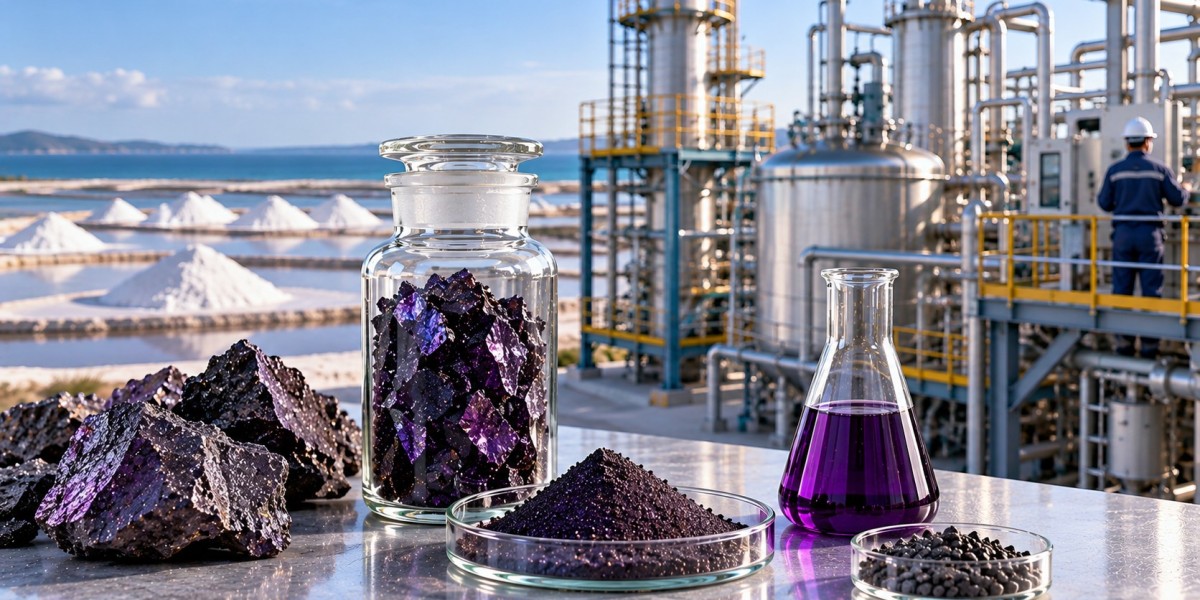

Iodine sits in a genuinely interesting position as an element whose demand spans pharmaceuticals, food nutrition, agrochemicals, electronics, and photography, a spread that gives it real diversification across otherwise unrelated end markets. It's an essential nutritional additive in dairy products, salt, and infant food formulations, a critical raw material for fertilizers ensuring adequate soil iodine content, and a foundational input across pharmaceutical and industrial applications that depend on its specific chemical properties. For an investor or corporate adviser evaluating a manufacturing plant, that breadth of structurally embedded demand is genuinely appealing. What deserves equally careful attention is production cost, and here iodine's economics are shaped by a genuinely concentrated global supply picture that makes this a different kind of commodity than most industrial chemicals covered in a standard cost analysis.
Iodine is produced from brine, saltwater solutions naturally rich in iodide content, and that extraction process, along with the reagents it depends on, forms the entire cost foundation for any iodine production operation. Understanding both the extraction chemistry and the genuinely concentrated nature of global iodine reserves is essential before capital commits to a plant here.
What a Production Cost Report Covers
A proper iodine production cost report breaks a plant's economics into distinct, individually priced components rather than one blended figure. It covers the manufacturing process, raw material requirements, utility needs, infrastructure, machinery and technology, manpower, packaging, and transportation, since each responds to different cost pressures.
Raw materials carry particular weight here, given how directly iodine's cost tracks brine availability and the oxidizing reagents needed to extract it. Utilities matter too, since the oxidation reaction and subsequent filtration and purification stages both require real energy and process control. Infrastructure and machinery costs cover the reaction vessels needed for brine oxidation, along with the filtration and purification equipment needed to isolate finished iodine from the treated brine solution. Manpower, packaging, and transportation round out the picture, and given how many distinct, quality-sensitive end markets iodine serves, from pharmaceutical-grade material to food fortification applications, packaging specifications and documentation requirements can vary considerably depending on which specific customer segment a given production batch is destined for.
Raw Material Required for Iodine Production
The primary raw material for iodine production is brine, saltwater solutions rich in common salt and, critically, iodide content that can be extracted and oxidized to yield elemental iodine. This brine can come from natural sources, underground brine deposits associated with certain geological formations, or from synthetic brine generated as a byproduct of other industrial processes, most notably certain natural gas extraction operations where iodine-rich brine emerges alongside the primary gas production.
Global iodine production is genuinely concentrated, with a relatively small number of countries and regions accounting for the overwhelming majority of world supply, tied to the specific geological conditions that produce iodine-rich brine deposits in commercially viable concentrations. That concentration means iodine, unlike a lot of broadly available industrial minerals, carries real supply risk tied to a handful of specific extraction regions, and disruptions, whether from natural resource depletion, regional operational issues, or shifts in competing demand from the natural gas operations that generate byproduct brine in some regions, can meaningfully affect global iodine availability and pricing in ways that a more geographically diversified commodity simply wouldn't experience.
The Industrial Production Process
Iodine production from brine begins with sourcing brine solution, whether from natural underground deposits or synthetic brine associated with other industrial operations, both characterized by their rich common salt content and the presence of iodide ions that serve as the actual source of extractable iodine. This brine solution then undergoes oxidation, treated with hydrogen peroxide in the presence of a catalyst such as ferrous sulfate, which drives the conversion of iodide ions present in the brine into elemental iodine.
This oxidation reaction is the chemical heart of the entire process, converting iodine from its dissolved, ionic form in brine into solid elemental iodine that can then be physically separated from the remaining brine solution. Following oxidation, the resulting mixture undergoes filtration to separate the newly formed elemental iodine from the spent brine, followed by further purification steps to bring the iodine to the purity specifications required for its various commercial applications, whether that's pharmaceutical-grade material demanding very high purity or more standard industrial-grade iodine for agrochemical or general chemical manufacturing use.
Given how many different downstream applications iodine serves, purification and quality control deserve genuine emphasis here, since the specific purity level a plant achieves directly determines which market segments its finished product can actually serve and at what price point, with pharmaceutical and food-grade applications generally commanding meaningful premiums over lower-purity industrial-grade material.
Capital Investment and Plant Setup Cost Factors
Capital costs for an iodine production plant center on the oxidation reaction system needed to convert brine's iodide content into elemental iodine, along with the filtration and purification equipment needed to isolate and refine the finished product to target purity specifications. Given how corrosive brine solutions and the oxidation chemistry involved can be, equipment materials selection deserves real attention to ensure adequate durability over sustained operation.
Land and site costs carry a distinctive consideration here given how geographically concentrated viable brine deposits actually are: a plant's location isn't really a flexible choice the way it might be for a chemical built on more broadly available feedstocks, it's fundamentally constrained by where economically extractable, iodine-rich brine actually exists, whether natural underground deposits or brine associated with natural gas operations. Engineering and construction costs scale with the purification sophistication needed to hit target purity specifications across a plant's intended end markets. Working capital planning needs to account for the genuinely concentrated, geographically constrained nature of iodine supply, which behaves quite differently from a more broadly diversified commodity in terms of the strategic planning around securing long-term brine access.
Operating Cost Factors
Variable costs are led by hydrogen peroxide and catalyst consumption used in the brine oxidation reaction, along with whatever costs are associated with brine access and extraction itself, whether that's operating costs for a plant's own brine wells or, in the case of synthetic brine, coordination costs with the natural gas or other industrial operation generating that brine as a byproduct. Utilities add a further layer given the energy needs of oxidation, filtration, and purification stages.
Fixed costs include labor, maintenance, and overhead, with quality control carrying particular weight given how directly purity determines market access and pricing across iodine's various pharmaceutical, food, agrochemical, electronics, and photography end uses. Maintenance costs run at levels appropriate to handling corrosive brine solutions and the oxidation chemistry the process depends on.
Financing costs and depreciation depend on the plant's overall capital intensity, and given how location-constrained brine access genuinely is, a plant's specific site characteristics, natural brine deposit quality versus synthetic brine byproduct arrangements, meaningfully shape its underlying capital structure and depreciation profile.
What Pushes Iodine Production Costs Up or Down
Brine access and quality sit clearly at the top of the list, more so than for almost any other factor given how geographically concentrated and geologically constrained viable iodine-rich brine sources actually are worldwide. A plant with access to high-iodide-concentration brine, whether through favorable natural deposits or a well-established synthetic brine arrangement with a natural gas operation, carries a genuine structural cost advantage over one working with lower-concentration or less reliable brine sources.
Technology and extraction efficiency matter too, particularly around how effectively a plant's oxidation and purification processes convert available iodide content into high-purity, marketable elemental iodine with minimal loss. Scale plays a role as well, though iodine production's fundamental dependence on geographically fixed brine resources means scale opportunities are genuinely constrained by what a given site's brine access can actually support, a meaningfully different dynamic than a chemical built on globally tradeable feedstocks would experience.
Regional factors round out the picture, and here it's really about which of the handful of regions with genuine iodine-rich brine access a plant operates within, since this single factor arguably matters more than any other regional consideration like labor costs or general industrial infrastructure. Does that make the established major iodine-producing regions automatically the best investment locations? Largely yes for supply security and cost structure, though proximity to major pharmaceutical, food, and agrochemical manufacturing hubs consuming the finished iodine matters too for minimizing outbound transportation costs.
Frequently Asked Questions
Q: Why is iodine's raw material supply so much more geographically concentrated than most industrial chemicals?
A: Because commercially viable, iodine-rich brine deposits, whether natural underground sources or synthetic brine from natural gas operations, only exist in a relatively small number of specific geological settings worldwide. Unlike a broadly traded commodity, iodine production is fundamentally tied to where these particular brine sources actually exist.
Q: Does synthetic brine from natural gas operations offer a meaningfully different cost profile than natural brine deposits?
A: It can, since synthetic brine essentially represents a byproduct stream that a natural gas operation is already generating, potentially offering favorable economics through that existing infrastructure, though it also ties iodine production planning to decisions made by an operation whose primary purpose is natural gas extraction rather than iodine production itself.
Q: How much does purity level actually affect iodine's market value?
A: Considerably. Pharmaceutical and food-grade applications generally demand and command premiums over lower-purity industrial-grade material used in agrochemical or general chemical manufacturing, meaning a plant's purification investment and achieved purity level directly shape which market segments and price points it can access.
Q: Is iodine supply risk comparable to other concentrated mineral commodities like fluorspar?
A: Genuinely similar in character, yes. Both carry real geographic concentration risk tied to where specific geological deposits exist, meaning both face similar dynamics around regional supply disruption, export policy sensitivity, and the strategic importance of securing reliable long-term access to a geographically constrained resource.
Q: What's the biggest oversight investors make when evaluating an iodine production plant?
A: Underestimating just how fundamentally location-constrained this business actually is. Unlike many chemicals where site selection is a flexible cost optimization exercise, iodine production is genuinely tied to where viable brine sources exist, and that constraint deserves to be the starting point of any serious evaluation rather than a secondary consideration.
Why This Analysis Matters for Decision-Making
Iodine's structurally embedded demand across pharmaceutical, food, agrochemical, electronics, and photography applications gives it a genuinely diversified and durable demand base. But its production economics are fundamentally shaped by a geographically concentrated brine supply that behaves quite differently from more broadly available industrial commodities, meaning site selection and brine access security matter here more than almost any other single factor.
A detailed Iodine Production Cost report gives investors, business brokers, corporate advisers, and finance companies the granular clarity needed to properly evaluate a plant, rather than treating iodine like a broadly available commodity when its real supply picture is genuinely constrained by geography and geology. Before capital moves into a deal here, understanding exactly how secure and favorable a plant's brine access actually is isn't optional. It's close to the entire foundation of the investment thesis.