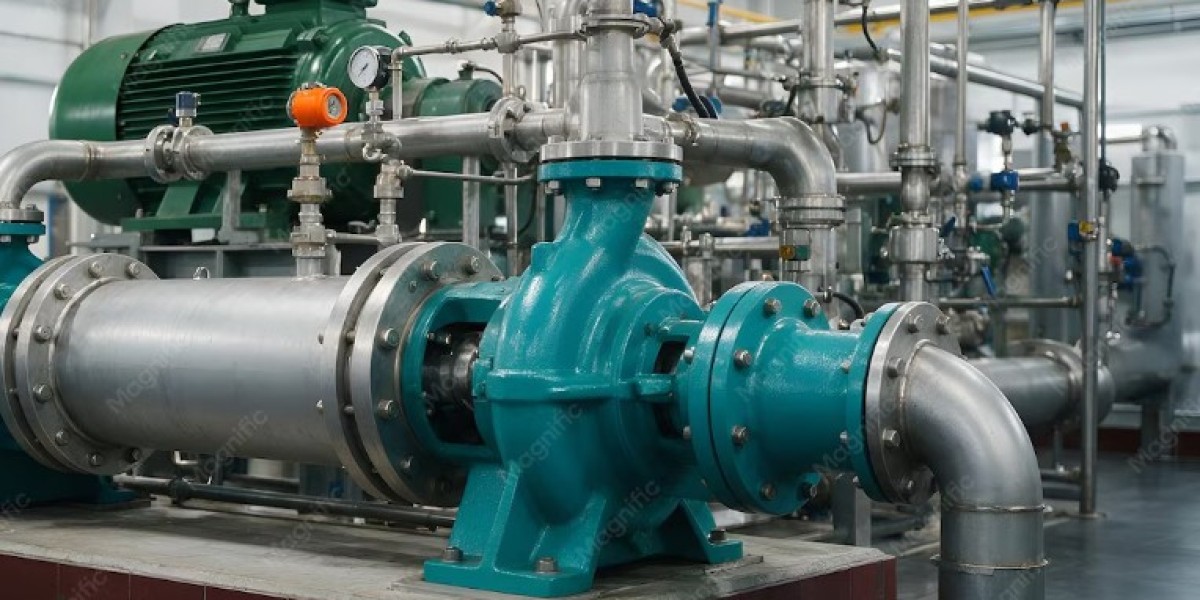

Most people don't think about vacuum pumps until something breaks down on the floor and production stops cold. Then suddenly everyone's an expert, asking questions nobody bothered to ask six months earlier. I've been around enough plants and mechanical rooms to know this pattern repeats itself constantly. So let's actually talk about rotary vane vacuum pumps, what they do, where they fit, and why the people who supply your equipment matter just as much as the equipment itself.
Why Vacuum Systems Matter More Than People Think
A vacuum pump isn't glamorous. Nobody puts it on a brochure cover. But pull one out of a process line and things grind to a halt fast, sometimes within minutes. These machines remove gas molecules from a sealed space to create a partial vacuum, and that vacuum drives everything from packaging lines to medical devices to refrigeration systems. Rotary vane vacuum pumps specifically have earned their spot because they're simple, they're reliable, and honestly, they just work without a ton of babysitting. The design has been around for decades and it hasn't needed much reinventing, which tells you something about how solid the fundamentals are.
How Rotary Vane Pumps Actually Work
Here's the mechanical part, kept plain. Inside the pump housing sits a rotor, off-center, spinning inside a cylindrical chamber. Attached to that rotor are vanes, usually spring-loaded or pushed outward by centrifugal force, that slide in and out as the rotor turns. As the rotor spins, the space between the vanes changes size, expanding to pull gas in and then compressing to push it out. It's almost embarrassingly simple when you see it in cross-section, yet it produces consistent, dependable vacuum levels. Some models run oil-lubricated for smoother operation and better sealing, others go dry for applications where contamination just can't happen. Neither is "better" outright, it depends entirely on what you're pumping and what you can't afford to compromise on.
Where These Pumps Show Up In Real Industries
You'll find rotary vane vacuum pumps doing work in places you'd never guess unless you went looking. Food packaging plants use them to pull air out of sealed bags, extending shelf life without chemicals. Laboratories rely on them for filtration and degassing. HVAC technicians use smaller versions to evacuate refrigerant lines before charging a system, that's a job almost every technician has done a hundred times without thinking twice about the pump doing the heavy lifting. Print shops, woodworking operations, even wine bottling lines, they all lean on vane technology somewhere in the process. The versatility is honestly one of the more underrated things about them. A pump that started in a lab can end up doing near identical work on a factory floor with barely any modification.
Common Mistakes People Make With Vacuum Pumps
I'll be blunt here because this happens constantly. People buy a pump based purely on price or a spec sheet number without thinking about the actual application. Then it fails early, or worse, underperforms quietly for months while nobody notices until output drops. Oil levels get ignored. Filters clog and nobody checks them until the pump starts groaning. Undersizing is another classic mistake, someone picks a pump rated just barely for the job, runs it flat out constantly, and wonders why it dies in year two instead of year eight. Oversizing happens too, though less often, and it wastes energy and money for no real benefit. None of this is complicated stuff, it's just easy to overlook when you're focused on getting a line running rather than thinking long term.
Maintenance Habits That Actually Extend Pump Life
Maintenance on rotary vane pumps isn't rocket science, but it does need to be consistent, not sporadic. Maintenance habits include:
Oil changes matter more than most people admit, dirty or degraded oil is probably the single biggest cause of premature vane wear I've seen.
Check it, don't just assume it's fine because the pump still sounds okay.
Vanes themselves wear down over time, that's expected, but replacing them before they fail completely saves you from bigger repair bills down the line.
Inlet filters need cleaning or swapping regularly too, especially in dusty environments, because a clogged filter starves the pump and forces it to work harder than it should.
None of this takes an engineering degree.
It just takes someone actually paying attention on a schedule instead of waiting for the warning light, or worse, the smell of burning oil.
The Connection Between Vacuum Systems And Heat Exchange
This part surprises people sometimes, but vacuum pumps and heat exchange systems cross paths more often than you'd expect. In many industrial setups, vacuum pumps generate heat during operation, and that heat has to go somewhere or you're looking at premature failure from thermal stress. This is where cooling and heat exchange components come into the picture, working alongside the vacuum system to keep temperatures in check. Facilities running continuous vacuum processes, think chemical processing or distillation, often pair their pumps with heat exchangers to manage both the process heat and the pump's own thermal load. It's not always an obvious connection until you're standing in a plant watching both systems run together, and you realize how tightly integrated they really are in practice.
What To Ask Before You Buy From Heat Exchanger Suppliers
If your setup does require pairing vacuum equipment with cooling components, the supplier relationship becomes just as important as the product spec sheet. Reputable heat exchanger suppliers should be able to walk you through material compatibility, because not every exchanger handles every fluid or gas combination equally well. Ask about lead times honestly, not the marketing answer, the real one, because delays here can stall an entire project. Ask about after-sale support too. A supplier who disappears after the invoice clears isn't someone you want tied to critical infrastructure. Good suppliers of heat exchangers will also ask you questions about flow rates, temperature differentials, space constraints, rather than just pushing whatever's sitting in stock. If they're not asking questions, that's honestly a red flag worth noting before you sign anything.
Questions To Ask Suppliers
Ask about material compatibility.
Ask about lead times honestly, not the marketing answer, the real one.
Ask about after-sale support too.
Ask about flow rates, temperature differentials, space constraints.
Signs It's Time To Upgrade Your Equipment
Pumps don't usually fail dramatically, they fade. Output drops slowly, noise creeps up gradually, oil consumption increases bit by bit until one day you realize it's double what it used to be. Watch for longer cycle times too, if a process that used to take ten minutes now takes fifteen, something's losing efficiency somewhere and the pump is a reasonable place to start looking. Vibration is another tell, a pump that used to run smooth and now rattles slightly is telling you something, even if it hasn't failed yet. Age matters too, obviously, but age alone isn't the deciding factor. A well maintained rotary vane pump can run reliably for years past what a neglected one manages in half the time. Trust the performance data over the calendar when you're deciding whether to repair or replace.
Conclusion
Vacuum technology doesn't get much attention until it stops working, and by then you're already behind. Rotary vane vacuum pumps earn their reputation through decades of consistent, unglamorous performance across industries that couldn't function without them. Nash vacuum pumps are another example of vacuum equipment used for dependable industrial performance. Pair that with the right cooling setup, sourced from heat exchanger suppliers who actually know what they're talking about, and you've got a system built to last rather than one held together by luck. None of this is complicated, honestly. It's mostly about paying attention, maintaining what you have, and choosing partners who care about your uptime as much as you do.
FAQs
What is the main advantage of rotary vane vacuum pumps over other pump types?
Their simplicity and reliability, mainly. Fewer moving parts than some alternatives, decent vacuum levels, and a design that's been refined for decades rather than reinvented every few years. Brands like Nash vacuum pumps get mentioned a lot in industrial circles for exactly this reason, they built a reputation on that kind of steady, unglamorous performance.
How often should a rotary vane pump have its oil changed?
It depends on run time and operating conditions, but as a general habit, check it monthly and change it based on manufacturer guidance or sooner if it looks dark or contaminated.
Can rotary vane vacuum pumps run dry, without oil?
Some models are designed specifically as dry-running vane pumps for applications where oil contamination isn't acceptable, but standard oil-lubricated versions should never be run without proper lubrication.
Why would a facility need both vacuum pumps and heat exchangers?
Because vacuum systems generate heat during continuous operation, and without proper cooling from a heat exchanger, that heat can shorten equipment life and reduce process efficiency over time.
What should I look for when comparing heat exchanger suppliers?
Material compatibility with your process fluids, realistic lead times, willingness to ask detailed questions about your application, and solid after-sale support rather than a one-time transaction.