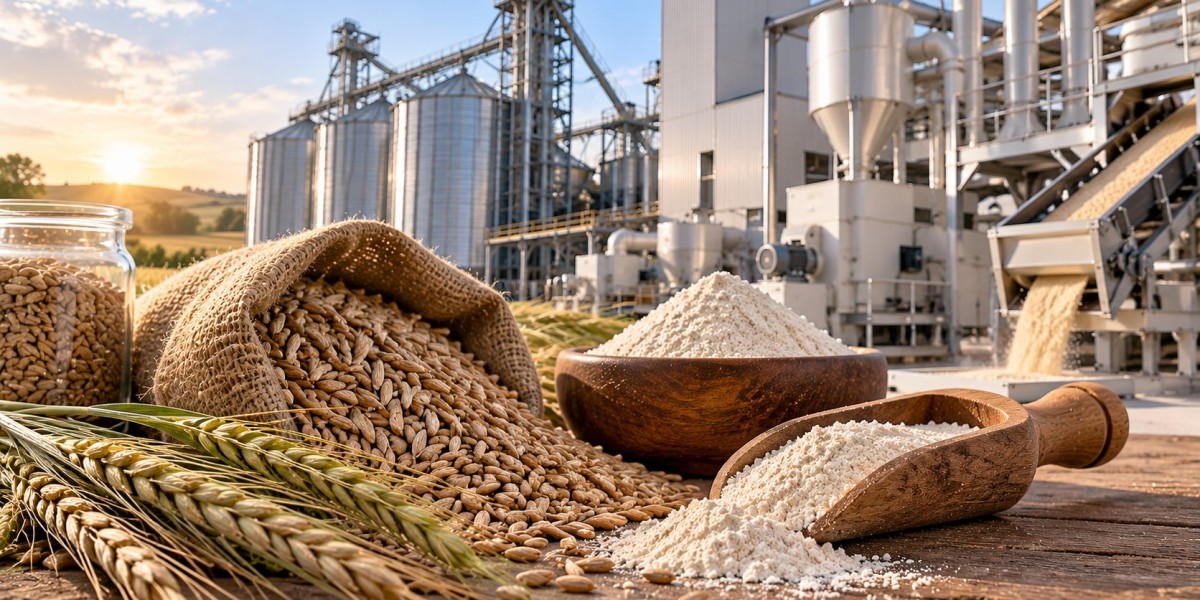

Milling rye sits at the processing end of a fairly steady agricultural grain category, converting raw rye grains into the flour and milled rye products that feed bakery, food manufacturing, and consumer retail channels. Rye flour has carved out a durable niche, particularly across bread-making traditions in Northern and Eastern Europe, and it continues to draw interest from consumers and food manufacturers looking for whole-grain and specialty flour alternatives beyond standard wheat products. For an investor or corporate adviser evaluating a milling operation, that combination of established, culturally embedded demand and a modest but real specialty flour growth trend gives milling rye a demand base that's neither explosive nor fragile, a genuinely steady category to build a processing business around.
Understanding the production economics here means starting with the raw grain itself and following it through a defined milling sequence, cleaning, tempering, and grinding, that determines both product yield and quality. Since milling rye is fundamentally a grain-processing business rather than a chemical synthesis operation, its cost structure ties closely to agricultural commodity dynamics on one side and mechanical processing efficiency on the other.
What a Production Cost Report Covers
A proper milling rye production cost report breaks a plant's economics into distinct, individually priced components rather than a single blended figure. It covers the manufacturing process, raw material requirements, utility needs, infrastructure, machinery and technology, manpower, packaging, and transportation, since each responds to different cost pressures in grain processing specifically.
Raw materials carry the dominant weight in this breakdown, given how directly milling rye's cost tracks rye grain pricing, itself an agricultural commodity subject to its own harvest and market cycles. Utilities matter too, since the milling process, particularly the roller mill operations that crush and separate grain components, consumes real mechanical energy across multiple processing stages. Infrastructure and machinery costs cover the cleaning and screening equipment needed to remove impurities from raw grain, tempering systems, and the roller mills themselves that perform the actual grinding and separation work. Manpower, packaging, and transportation round out the picture, and transportation deserves genuine attention given how much bulk grain and finished flour product typically moves between farm, mill, and downstream food manufacturing or retail destinations.
Raw Material Required for Milling Rye Production
The major raw material for milling rye production is rye grain itself, sourced from agricultural growers and grain markets. Rye's own composition matters directly here, with starch concentrations in the grain typically running between roughly 57 and 66 grams per 100 grams of dry matter, concentrated primarily in the endosperm, the specific grain component that milling processes are designed to isolate and refine into flour.
Because rye grain is a genuinely agricultural commodity, its availability and pricing tie directly to growing season conditions, regional harvest yields, and broader grain market dynamics that can shift based on weather, planting decisions, and competing demand from other rye end uses, including feed rye markets that draw on related grain supply. Milling-grade rye specifically needs to meet certain quality thresholds around starch content, moisture, and freedom from contamination or damage, meaning not all harvested rye automatically qualifies for milling use, and a plant's sourcing strategy needs to account for this quality-grade distinction rather than assuming any available rye grain will serve equally well.
The Industrial Production Process
Milling rye production follows a defined sequence: cleaning, tempering, and milling. The process begins with cleaning the raw rye grains, which involves screening and destoning to remove physical impurities like insects, sticks, and stones, followed by using a magnetic separator to remove any metallic contamination that might have entered the grain stream during harvest or transport.
Once cleaned, the grains undergo tempering, sometimes described as dampening, where controlled moisture gets introduced to prepare the grain structure for effective separation of its outer bran layer, germ, and endosperm during the subsequent milling stage. This tempering step matters considerably for milling efficiency, since properly conditioned grain separates more cleanly during grinding than grain that hasn't been adequately prepared. The tempered grain then proceeds to roller mills, where a series of breaking operations progressively crush the grain and separate the endosperm from the bran and germ, following what's often called a gradual reduction milling process. Rye passes through an initial "first break" set of rollers, followed by additional breaking stages, with the resulting flour stock sifted out at different points along the way to collect distinct product classes and grades.
This gradual reduction approach allows a mill to produce different flour grades from the same base grain stream, since sifting at various stages captures different particle sizes and compositions, ultimately giving a plant flexibility in what specific milled rye products it brings to market, whether that's fine flour for baking or coarser milled rye variants for other applications.
Capital Investment and Plant Setup Cost Factors
Capital costs for a milling rye plant center on cleaning and screening equipment needed to remove impurities from raw grain, magnetic separation systems, tempering infrastructure to properly condition grain ahead of milling, and the roller mill systems themselves that perform the core grinding and separation work across multiple breaking stages. This is well-established grain milling technology, which generally keeps core equipment costs more predictable than for a chemical or specialty manufacturing process with less standardized machinery.
Land and site costs follow regional agricultural infrastructure patterns, though proximity to reliable rye grain supply matters considerably given how directly grain freshness and quality affect both milling efficiency and finished product characteristics. Engineering and construction costs scale with the level of automation and process control built into the cleaning, tempering, and milling lines, along with storage infrastructure needed to manage both incoming grain and outgoing flour products across what can be seasonal harvest and steadier, year-round demand patterns. Working capital planning needs to account for rye grain's seasonal harvest cycle, meaning a mill often needs to secure and store sufficient grain supply during harvest periods to support processing through the remainder of the year.
Operating Cost Factors
Variable costs are dominated by rye grain procurement, which represents the largest single cost component in milling rye production given how directly the finished product's volume and quality depend on this agricultural input. Utilities represent the next major cost category, given the mechanical energy the cleaning, tempering, and multi-stage roller milling process consumes across a continuous production operation.
Fixed costs include labor, maintenance, and overhead, with maintenance requirements scaling with how continuously a mill operates its roller mill systems, since this mechanical equipment experiences real wear over sustained grinding operations and needs regular upkeep to maintain consistent output quality and processing efficiency. Quality control deserves real attention too, given how directly consistent grain cleaning, proper tempering, and controlled milling determine whether finished flour meets the specifications different downstream food manufacturing and retail customers require.
Financing costs and depreciation depend on the plant's overall capital intensity, and given how established grain milling technology is, depreciation schedules tend to follow fairly conventional food processing industry patterns rather than requiring highly specialized modeling.
What Pushes Milling Rye Production Costs Up or Down
Feedstock pricing sits clearly at the top of the list, and because rye grain is a genuinely agricultural commodity, weather conditions, regional harvest yields, and broader grain market dynamics all directly shape a mill's raw material cost in ways that can shift meaningfully from season to season. Notably, milling rye prices have reportedly eased through recent periods on ample grain supply, illustrating just how directly broader harvest conditions translate into feedstock cost movement for this category.
Technology and processing efficiency matter too, particularly around how effectively a mill's cleaning, tempering, and multi-stage roller milling process extracts usable flour from raw grain with minimal waste. A mill achieving better extraction rates and more efficient grading across its breaking and sifting stages captures more finished product value per unit of grain processed. Scale plays a real role as well, with larger, well-optimized milling operations generally achieving better per-unit economics on both equipment utilization and grain procurement, given the volume-based purchasing advantages larger operations typically command in agricultural commodity markets.
Regional factors round out the picture, with proximity to rye-growing regions mattering considerably given how directly grain freshness, transportation cost, and reliable seasonal supply access shape overall milling economics. Does that make major rye-growing regions automatically the best milling plant locations? Largely yes for grain access and cost efficiency, though proximity to bakery, food manufacturing, and retail distribution channels consuming the finished flour matters too for minimizing outbound transportation costs.
Frequently Asked Questions
Q: Why does rye grain pricing behave so differently from a standard industrial chemical feedstock?
A: Because it's a genuinely agricultural commodity, subject to weather, harvest yields, and broader grain market dynamics that shift seasonally and can vary considerably year to year, unlike a manufactured chemical input with more predictable, engineered supply.
Q: How does the gradual reduction milling process allow for different flour grades from the same grain? A: Because the process runs through multiple sequential breaking and sifting stages, capturing different particle sizes and compositions at each point along the way. That structure gives a mill flexibility to produce various flour grades and milled rye product types from one underlying grain stream.
Q: Does tempering really matter for milling efficiency, or is it a minor preparatory step?
A: It matters genuinely. Properly conditioning grain moisture ahead of milling allows cleaner separation of the endosperm from bran and germ during grinding, meaning inadequate tempering can reduce both extraction efficiency and finished product quality.
Q: How significant is seasonal grain storage for a milling rye operation's working capital needs?
A: Quite significant, since rye grain harvests occur at specific times of year while milling operations and downstream demand often run more continuously. A mill needs sufficient working capital and storage capacity to secure adequate grain supply during harvest periods to support processing through the rest of the year.
Q: What's the biggest oversight investors make when evaluating a milling rye operation?
A: Underestimating how directly agricultural harvest conditions and grain market cycles drive overall production cost. It's easy to model this like a standard manufacturing process with stable input costs, but rye grain pricing genuinely moves with broader agricultural supply and demand dynamics that deserve dedicated attention.
Why This Analysis Matters for Decision-Making
Milling rye's steady, culturally embedded demand across bakery and specialty flour markets gives it a genuinely durable production category to build around, but its economics are fundamentally shaped by agricultural grain commodity dynamics on one side and mechanical milling efficiency on the other. That combination means a generic food processing cost estimate could easily miss both the seasonal grain sourcing considerations and the process-specific efficiency factors that actually determine plant profitability.
A detailed Milling Rye Production Cost report gives investors, business brokers, corporate advisers, and finance companies the granular clarity needed to properly evaluate a milling operation, rather than assuming grain processing carries the same cost structure as a standard industrial manufacturing process. Before capital moves into a deal here, understanding both the agricultural feedstock dynamics and the specific cleaning, tempering, and milling process efficiency that shapes finished product yield isn't optional. It's what separates a well-underwritten investment from one priced without a full view of where this business's real economics actually concentrate.