
The television is no longer the only device competing for attention in the living room. Smartphones, tablets, smart speakers, streaming players, game consoles, and connected TVs now work together to create a much more flexible entertainment environment.
Someone might discover a new series on their phone, start watching it on a smart TV, use a tablet as a second screen, and later continue the same program from another room. Entertainment has become less tied to a particular device and more connected to personal routines.
This shift is changing not only what people watch but also how they organize their free time at home.
The Smart TV Has Become an Entertainment Hub
Smart TVs have turned the traditional television into a connected platform.
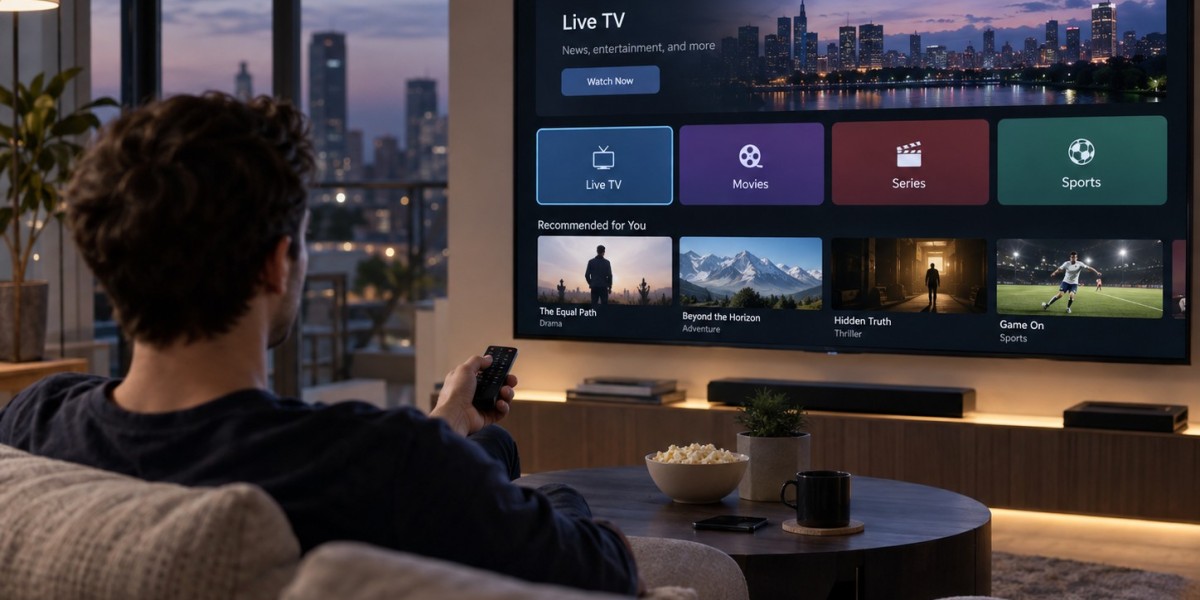
Instead of relying entirely on cable, satellite, or terrestrial broadcasts, viewers can open streaming applications directly from the television. Films, live television, music, video platforms, and other digital services can sit alongside traditional channels on the same screen.
For many households, this means fewer separate devices and simpler access to content.
A smart TV can also communicate with phones, speakers, and other devices on the same network. Screen casting, wireless audio, and mobile remote-control features make it easier to move content between screens.
The television is still at the center of many living rooms, but its role has changed from receiving broadcasts to managing several forms of digital entertainment.
Smartphones Have Become Part of the Viewing Experience
Phones are often used before the television is even switched on.
People discover films and television shows through social media, messaging groups, online recommendations, and video clips. They may then search for that content on a streaming platform or send it directly to a compatible television.
The phone can also act as a remote control, search tool, account manager, or second screen.
During live sports, for example, viewers may watch the match on the television while checking statistics or discussing the action with friends on their phones. Entertainment therefore becomes a more social and interactive experience rather than something happening only on one screen.
The challenge is distraction. Constant notifications can easily pull attention away from a film or television program, so some viewers use focus modes when they want a more immersive experience.
Streaming Players Can Give Older TVs New Life
A television does not necessarily need to be replaced simply because its built-in software has become slow.
Dedicated streaming players can add modern apps and internet-based features to displays that still have good picture quality. Android TV devices, Apple TV, Fire TV products, and other streaming hardware can handle much of the software independently from the television.
This can extend the useful life of a screen while also providing a faster interface.
The right choice depends on the applications and services a household actually uses. There is little benefit in buying advanced hardware if most viewing involves only a few basic apps.
A simple setup that works consistently is often more useful than one filled with features that rarely get touched.
Internet-Based Television Offers More Flexibility
Connected devices have also expanded the ways live television can reach viewers.
Traditional broadcasts now exist alongside broadcaster apps, online TV platforms, IPTV technology, and other internet-based services. This allows television to be accessed through smart TVs, mobile devices, computers, and compatible streaming players.
People researching options for their home entertainment setup may therefore consider internet connectivity, supported devices, live programming, on-demand viewing, and application compatibility as part of the same decision.
This flexibility can be particularly useful in households where different people want to watch different types of content.
Someone might watch live television on the main screen while another family member streams a film on a tablet. The entertainment system is no longer organized around a single receiver.
Smart Speakers Are Changing How People Control Media
Voice control has introduced another layer of convenience.
Compatible smart speakers and voice assistants can handle simple actions such as adjusting volume, playing music, controlling supported televisions, or finding entertainment without requiring a remote.
This can be useful when cooking, exercising, or doing other activities where reaching for a device is inconvenient.
Voice control is not essential, and many people still prefer traditional remotes. Its value comes from reducing small bits of friction rather than completely replacing other controls.
Smart speakers have also made audio entertainment more flexible. Music, podcasts, radio, and other content can follow people through different rooms when multiple compatible speakers are connected.
Entertainment Is Moving From One Screen to Many
One of the biggest changes created by smart devices is the decline of the single-screen household experience.
A family may still gather around the television for a movie or football match, but entertainment is increasingly individual at other times.
Children might use a tablet, one adult may watch television in the living room, and another could stream content on a laptop. Smartphones make it possible to continue viewing almost anywhere in the house.
This flexibility is convenient, but it also makes account and device management more important.
Households should understand how many devices their streaming subscriptions support, which profiles belong to each person, and what parental controls are available where needed.
Organizing accounts properly can make a multi-device setup much easier to manage.
A Strong Home Network Has Become Essential
Connected entertainment depends heavily on the home network.
Smart TVs, streaming players, phones, tablets, speakers, consoles, and other devices may all use Wi-Fi at the same time. If coverage is weak or the connection becomes congested, streaming quality can suffer.
Router placement is therefore surprisingly important.
A router hidden in a cabinet or positioned at one end of a large property may provide inconsistent coverage. Moving it to a more central and open location can sometimes improve performance without changing the broadband plan.
For a television or streaming player that remains in one place, Ethernet can provide a stable alternative to Wi-Fi.
Larger homes may benefit from mesh networking or additional access points if wireless coverage is inconsistent.
Smart Technology Is Making Entertainment More Personal
Connected devices do more than provide additional screens. They allow entertainment systems to adapt more closely to individual preferences.
Streaming profiles can keep separate watch histories. Personalized recommendations help viewers discover programs related to their interests. Watchlists make it easier to save something for later rather than searching again.
Different household members can therefore create very different experiences using the same services.
At the same time, personalization is most useful when users remain in control. Reviewing privacy settings, notification preferences, device permissions, and unused accounts occasionally is a sensible part of maintaining a connected home.
Simpler Setups Often Work Better
Smart technology can make entertainment more convenient, but adding devices does not automatically make the experience better.
Too many remotes, overlapping subscriptions, duplicate apps, and complicated connections can create unnecessary frustration.
It helps to periodically review the setup. Remove unused applications, cancel subscriptions that are no longer watched, update devices, organize frequently used services, and check whether every piece of hardware still serves a purpose.
The most effective connected home is not necessarily the one with the most technology.
It is the one where devices work together quietly and allow people to move easily between live TV, films, music, games, and other digital entertainment. As smart technology continues to become part of everyday life, convenience and flexibility are likely to matter just as much as the size of the screen itself.