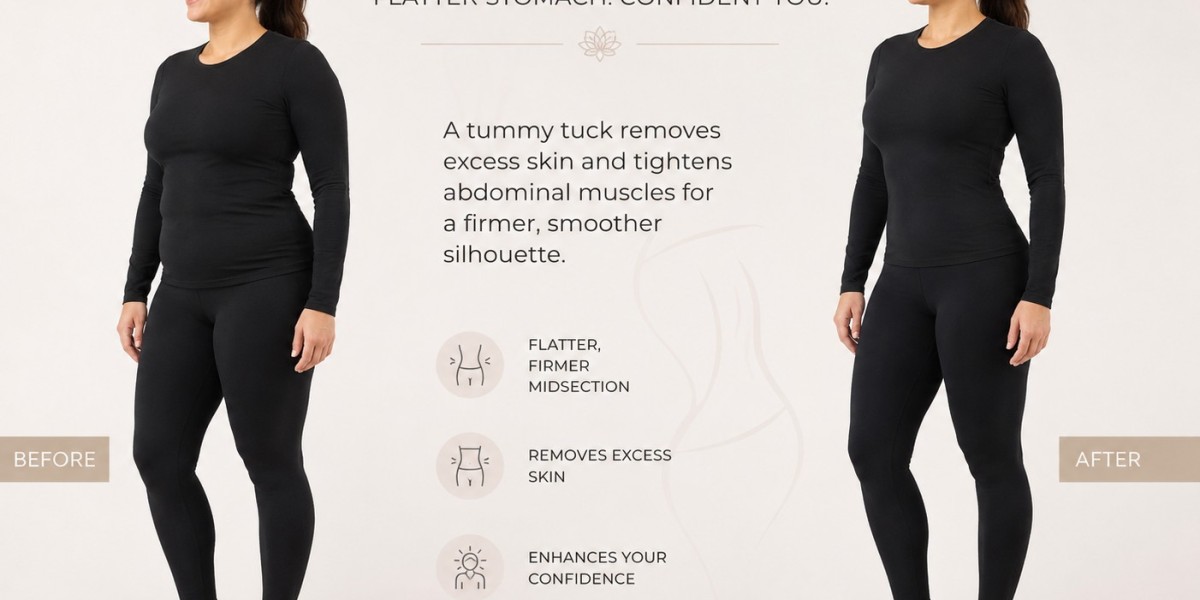

What Is a Tummy Tuck
A tummy tuck, medically known as abdominoplasty, is a cosmetic surgical procedure designed to improve the appearance and contour of the abdomen by removing excess skin and, when appropriate, tightening weakened or separated abdominal muscles. It is commonly considered by people who have experienced significant weight loss, pregnancy, or changes in skin elasticity.
- A tummy tuck primarily addresses excess skin and abdominal laxity
- The procedure can improve abdominal contour and firmness
- It is different from weight loss surgery and is not designed to treat obesity
- Abdominal muscle tightening may be included when clinically appropriate
Tummy Tuck in Islamabad has become an option for people looking for professional abdominal contouring following pregnancy, major weight loss, or other body changes. Understanding the procedure, eligibility requirements, preparation, recovery, potential risks, and expected results can help patients make informed decisions before considering surgery.
- A consultation is important before deciding on surgery
- Individual anatomy and goals affect the recommended technique
- A qualified surgeon should assess whether the procedure is appropriate
- Realistic expectations are an important part of treatment planning
Tummy Tuck Requirements for Abdominal Contouring
Not everyone with abdominal concerns needs or qualifies for a tummy tuck. During a consultation, the surgeon typically evaluates the amount of loose skin, abdominal fat, muscle condition, previous surgeries, overall health, and the patient's expectations.
Healthy General Condition
Patients should generally be in suitable overall health for elective surgery. Existing medical conditions may need to be evaluated and controlled before the procedure.
- Medical history should be reviewed before surgery
- Existing health conditions may require additional assessment
- Preoperative testing may be recommended
- Patients should disclose medications and previous surgeries
Stable Body Weight
A stable body weight is generally preferred before undergoing abdominoplasty. Significant weight fluctuations after surgery can affect the long term appearance of the abdomen.
- Patients should ideally maintain a relatively stable weight
- Major weight loss may be recommended before surgery
- A tummy tuck should not be considered a substitute for weight management
- Healthy lifestyle habits can support long term results
Excess or Loose Abdominal Skin
One of the main reasons people consider abdominoplasty is significant loose abdominal skin that does not respond adequately to exercise or weight loss.
- Loose skin may develop after pregnancy
- Major weight loss can leave excess abdominal tissue
- Aging can reduce skin elasticity
- A tummy tuck can remove selected excess skin surgically
Realistic Expectations
A tummy tuck can improve body contour, but it cannot guarantee a particular appearance or eliminate every abdominal concern. Patients should understand what surgery can and cannot accomplish.
- Results vary between individuals
- Scars are an expected part of the procedure
- The abdomen may continue to change with aging and weight fluctuations
- Individual results depend on anatomy, healing, and lifestyle
Who May Consider a Tummy Tuck
Abdominoplasty is commonly considered by adults who have excess abdominal skin or weakened abdominal tissues and are seeking improved contour.
After Pregnancy
Pregnancy can stretch the abdominal skin and muscles. Some women experience persistent loose skin or abdominal separation even after returning to a stable weight.
- Pregnancy may affect skin elasticity
- Abdominal muscles can become stretched or separated
- A tummy tuck may address selected post pregnancy concerns
- Future pregnancy can change the surgical results
After Significant Weight Loss
Major weight loss can produce substantial excess skin around the abdomen. In such cases, exercise may improve muscle tone but cannot remove large amounts of loose skin.
- Excess skin can remain after major weight reduction
- Body contouring may be considered after weight has stabilized
- Additional procedures may sometimes be discussed
- A surgeon can determine whether abdominoplasty is appropriate
Changes Related to Aging
Skin elasticity naturally changes with age. Some people may develop abdominal laxity despite maintaining a relatively stable weight.
- Reduced elasticity can contribute to loose skin
- Muscle laxity may also affect abdominal contour
- Overall health is more important than age alone when assessing suitability
- Individual evaluation is essential
Different Types of Tummy Tuck
The appropriate tummy tuck technique depends on the patient's anatomy, skin excess, muscle condition, and desired contour.
Full Tummy Tuck
A full abdominoplasty generally addresses the lower and central abdomen and may involve tightening the abdominal wall and repositioning the belly button.
- Suitable for certain patients with more extensive skin laxity
- Can address abdominal muscle separation when appropriate
- Removes a selected amount of excess skin
- Involves a longer incision than a mini tummy tuck
Mini Tummy Tuck
A mini tummy tuck generally focuses on excess skin and laxity below the belly button.
- May be suitable for selected patients with limited lower abdominal excess
- Usually involves a smaller surgical area
- The belly button may not require repositioning
- Suitability depends on individual anatomy
Extended Tummy Tuck
An extended abdominoplasty may be considered when excess skin extends beyond the central abdomen toward the sides.
- Addresses a broader area of excess skin
- May be considered following significant weight loss
- Creates a longer incision
- Requires individualized surgical planning
Tummy Tuck and Abdominal Muscle Repair
Loose skin is not the only concern that can affect abdominal appearance. Some patients have weakened or separated abdominal muscles, particularly following pregnancy or significant changes in body weight.
What Is Muscle Separation
Diastasis recti refers to separation of the abdominal muscles along the midline. It is different from excess skin and may require specific clinical assessment.
- Pregnancy can contribute to abdominal muscle separation
- Muscle separation can affect abdominal contour
- Not every patient with abdominal fullness has diastasis recti
- A surgeon should assess the abdominal wall before recommending treatment
How Muscle Tightening May Help
When appropriate, muscle repair can be incorporated into abdominoplasty to improve abdominal wall contour.
- The surgeon assesses muscle laxity during treatment planning
- Muscle repair is not necessary for every patient
- The technique depends on individual anatomy
- Recovery instructions may vary depending on the extent of repair
Tummy Tuck Versus Liposuction
Tummy tuck and liposuction address different concerns. Liposuction primarily removes localized fat, while abdominoplasty focuses mainly on excess skin and abdominal laxity.
When Liposuction May Be Considered
Liposuction may be discussed when localized fat deposits contribute to the abdominal contour and the skin has sufficient elasticity.
- Liposuction removes selected fat deposits
- It does not remove significant amounts of loose skin
- Skin quality influences the expected contour
- Some patients may benefit from a combination approach
Can Tummy Tuck and Liposuction Be Combined
In selected patients, surgeons may combine abdominal skin removal with liposuction to improve overall contour.
- The combination depends on individual health and anatomy
- Treatment should be planned by a qualified surgeon
- The additional procedure may affect recovery
- Safety considerations should guide treatment decisions
How to Prepare for Tummy Tuck Surgery
Good preparation can help patients understand the procedure and plan appropriately for recovery.
Before Surgery
The surgeon may recommend a medical evaluation and specific instructions based on the patient's circumstances.
- Discuss your complete medical history
- Provide a list of medications and supplements
- Follow instructions regarding smoking or nicotine use
- Complete recommended laboratory or medical assessments
- Arrange transportation and postoperative assistance
Planning Your Recovery
Patients should organize their home environment before surgery because movement may be restricted during the early recovery period.
- Prepare comfortable clothing
- Arrange help with household activities
- Keep necessary items within easy reach
- Plan adequate time away from work
- Follow all postoperative instructions
What Happens During a Tummy Tuck
The exact surgical approach varies according to the selected technique. Generally, the surgeon removes predetermined excess skin and may address abdominal muscle laxity when appropriate.
Surgical Planning
Before surgery, the surgeon marks the abdominal area and discusses the planned incision and expected changes.
- Incision location is planned carefully
- The amount of skin removal depends on anatomy
- Muscle repair may be performed when indicated
- The belly button may be repositioned during some procedures
The Surgical Procedure
During abdominoplasty, excess skin is removed and the remaining tissue is repositioned to create a smoother abdominal contour.
- The procedure is performed under appropriate anesthesia
- Surgical techniques vary between patients
- Incisions are closed carefully after the planned contouring
- A surgical dressing or compression garment may be recommended
Tummy Tuck Recovery Timeline
Recovery varies according to the surgical technique, extent of treatment, and individual healing.
First Few Days
The abdomen may feel tight, swollen, or uncomfortable immediately after surgery.
- Rest is important during the initial period
- Pain medication may be prescribed
- Walking may be encouraged according to the surgeon's instructions
- Wound care instructions should be followed carefully
First Few Weeks
Patients gradually return to everyday activities as healing progresses.
- Swelling may persist for several weeks
- Strenuous activity should generally be avoided until cleared
- Follow-up appointments help monitor healing
- Compression garments may be recommended
Long Term Healing
The final appearance develops progressively rather than immediately after surgery.
- Scars gradually mature over time
- Swelling can take time to resolve
- Abdominal contour becomes clearer as healing progresses
- Maintaining stable weight supports long term results
Possible Risks and Considerations
Like other surgical procedures, abdominoplasty carries potential risks. A consultation should include a discussion of the benefits, limitations, and possible complications.
- Infection can occur after surgery
- Bleeding or fluid collection may occur
- Wound healing problems are possible
- Changes in sensation can occur
- Scarring is expected
- Additional treatment may sometimes be required
Patients should follow postoperative instructions and contact their surgical team if they experience concerning symptoms such as increasing pain, significant swelling, fever, wound changes, or other unexpected problems.
How Long Do Tummy Tuck Results Last
Tummy tuck results can be long lasting, particularly when patients maintain a stable weight and healthy lifestyle. However, surgery does not stop the natural aging process.
- Significant weight gain can alter abdominal contour
- Pregnancy can change the abdomen again
- Aging may gradually affect skin elasticity
- Stable weight can help preserve the surgical contour
Tummy Tuck in Islamabad Cost Factors
The cost of abdominoplasty varies from patient to patient because there is no single procedure that is appropriate for everyone.
Factors That Can Affect Cost
Several elements may influence the overall treatment cost.
- Type of tummy tuck required
- Extent of excess skin
- Whether muscle repair is needed
- Whether liposuction is combined with surgery
- Surgeon and hospital or facility fees
- Anesthesia and postoperative care
- Required medical tests and follow up
Patients should request a complete treatment estimate during consultation rather than comparing prices based only on the advertised surgical fee.
Questions to Ask Before Tummy Tuck Surgery
A consultation is an opportunity to understand the proposed procedure and make an informed decision.
Important Questions
Patients may want to ask:
- Which tummy tuck technique is appropriate for me
- Do I have abdominal muscle separation
- Will liposuction be beneficial in my case
- Where will the incision be placed
- What type of scar should I expect
- How long will my recovery take
- When can I return to work and exercise
- What complications should I understand before surgery
- What follow up care will be provided
Final Thoughts on Abdominal Contouring
A tummy tuck can be an effective surgical option for selected patients who have persistent excess abdominal skin, abdominal laxity, or certain post pregnancy and post weight loss changes. The right approach depends on individual anatomy rather than a one size fits all treatment plan.
For patients researching Tummy Tuck in Islamabad, a professional consultation is the best way to determine eligibility, understand the appropriate surgical technique, discuss expected results, and learn about recovery and safety considerations. Choosing an experienced surgical team and following personalized postoperative guidance are important parts of the overall treatment journey.
At Slimthetics Clinic, patients can discuss their abdominal contouring goals with a professional medical team and receive individualized guidance based on their body concerns, medical history, and desired outcomes. The focus is on careful assessment, appropriate treatment planning, patient education, and supportive care throughout the surgical journey.