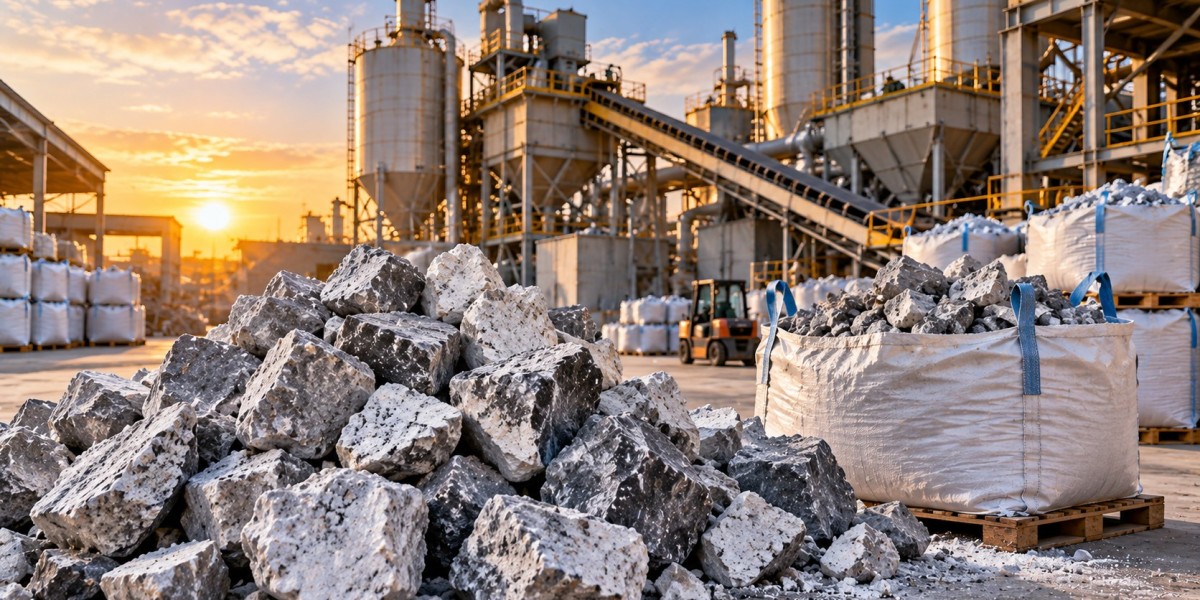

Calcium carbide isn't a name most people outside chemicals and metallurgy recognize. But if you're sourcing it, or tracking input costs for acetylene gas, PVC, or calcium cyanamide production, the calcium carbide price trend for Q3 2026 matters quite a bit. China's quoting USD 362.54/MT on an FOB basis as of August 2026. India's landed cost comes in at USD 453.33/MT CIF.
That's close to a USD 91 gap per ton. Big enough that it changes sourcing decisions for anyone buying in volume.
Why track this at all? Because calcium carbide sits upstream of several industrial processes. Steel mills use it for desulfurization. Welders rely on the acetylene it produces. Move the price here, and those downstream costs shift with it, usually within a month or two.
Calcium Carbide Prices: China vs India
| Product | Region | Incoterm Basis | Price | Last Updated |
|---|---|---|---|---|
| Calcium Carbide | China | FOB | USD 362.54/MT | August 2026 |
| Calcium Carbide | India | CIF | USD 453.33/MT | August 2026 |
A roughly USD 90.79 spread. On a single ton that's nothing. On a few hundred tons a month, it's real money, and procurement teams notice.
Quick context before anyone over-reads these figures:
- China's price is FOB, meaning it covers the product loaded onto the vessel at the port of origin. Freight and insurance from there are on the buyer.
- India's is CIF, so freight and insurance are already baked in. That alone explains a chunk of the gap.
- Both figures are August 2026 snapshots. Carbide pricing can move within weeks depending on power costs in China, since production is electricity-intensive.
So comparing FOB to CIF directly isn't really fair. Part of that USD 90.79 difference is just incoterm math. Still, it's a decent starting point for benchmarking.
What's Actually Driving These Prices
Few things worth unpacking here.
Power costs. Calcium carbide production is an electric arc furnace process. It eats electricity. China's regional power pricing, especially in provinces with carbide capacity like Ningxia or Inner Mongolia, has a direct and fairly immediate effect on how carbide is priced out of the country.
Limestone and coke availability. The two main raw inputs. When either gets tight, or logistics within China slow down, producers pass that along quickly. Margins in this industry don't leave much room to absorb cost spikes.
India's import reliance. India doesn't have the same scale of domestic carbide production as China. A good share of what's consumed domestically gets imported, which is a big reason the CIF price runs higher. Add freight from Chinese or other Asian ports, and the number climbs further.
Downstream demand. Steel production, acetylene welding demand, even PVC manufacturing (carbide-based PVC is still common in parts of Asia) all pull on carbide demand. When these sectors pick up, so does carbide pricing, sometimes with a short lag.
Quick Q&A: Buyers Ask This a Lot
Does the FOB vs CIF difference really explain the whole gap?
Not entirely. Incoterms account for part of it. The rest comes down to India's import dependency and China's domestic production scale, which keeps its base price lower even before freight gets added.
Is China's lower price always the better deal?
Depends. Landed cost is one factor. Lead times, minimum order quantities, and how reliable a given supplier has been in the past all matter just as much, sometimes more.
Will prices hold steady through Q3 2026?
Hard to say with full confidence. Power cost trends in China and import demand in India are the two variables to watch. Neither is fixed for the rest of the quarter.
What This Means for Buyers and Investors
Procurement teams sourcing carbide should treat China's FOB rate as a reference point, not a final landed cost. Freight, insurance, and import duties stack on top, and depending on the destination port, that can close the gap with India's CIF price more than expected.
Investors eyeing India's metallurgical or chemical sector might read the import dependency differently. A persistent reliance on imported carbide could mean room for domestic capacity investment, something a few Indian producers have quietly been exploring over the past couple of years.
Advisers working with steel, welding equipment, or PVC manufacturing clients should flag carbide pricing as an early input cost signal. It tends to move ahead of broader metallurgical cost changes, not after.
Looking Ahead: Q3 2026 Outlook
Where this goes depends mostly on two things. China's power costs, since carbide production is so electricity-heavy. And how fast India's industrial demand recovers or expands.
If China's power grid stays stable and coal/electricity costs don't spike, the FOB price likely holds close to current levels. India's CIF price will probably track that, plus whatever freight does.
One thing worth keeping in mind. Locking into long-term contracts based on August 2026 figures alone carries some risk. This market moves on inputs that shift fairly often. Treat these numbers as a reference, not a fixed forecast.
Conclusion
The calcium carbide price trend for Q3 2026 puts China at USD 362.54/MT FOB and India at USD 453.33/MT CIF, both as of August 2026. The gap reflects incoterm differences, power cost structures, and India's continued reliance on imports. For buyers, investors, and advisers in steel, chemicals, or welding supply chains, this is one input cost worth watching closely heading into the rest of the quarter.
FAQ Section
What is the current calcium carbide price trend in China and India?
As of August 2026, China's calcium carbide is priced at USD 362.54/MT FOB, while India's lands at USD 453.33/MT CIF. The gap reflects incoterm differences, China's larger domestic production base, and India's heavier reliance on imports.
Why is calcium carbide more expensive in India?
India imports a significant share of its carbide supply, and the CIF price already includes freight and insurance costs that China's FOB figure doesn't. Limited domestic production capacity in India adds further pressure, pushing the landed cost noticeably above China's base rate.
What factors influence calcium carbide prices the most?
Electricity costs top the list, since production runs through energy-intensive arc furnaces. Limestone and coke availability matter too, along with downstream demand from steel, welding, and PVC manufacturing. Any disruption to China's power supply tends to show up in pricing fairly fast.
How often does calcium carbide pricing change?
It can shift every few weeks depending on power costs and raw material availability in China. The August 2026 figures are a useful snapshot, but buyers finalizing contracts should check for more recent data rather than relying on a single monthly reference point.
What's the outlook for calcium carbide prices in Q3 2026?
Power cost stability in China and demand recovery in India's steel and welding sectors will largely决定 where prices head next. If China's energy costs stay flat, the current gap between the two markets probably holds through the rest of the quarter.