
Anyone planning an HVAC project in the UAE, whether a villa in Dubai, a warehouse in Sharjah or a commercial tower in Abu Dhabi, soon discovers that duct quotations can vary widely. Two suppliers may price the same building very differently, and the reason is rarely random. Ductwork costs are shaped by a combination of materials, design, labour, regulations and market conditions.
Understanding these factors helps contractors, consultants and property owners compare quotes accurately, set realistic budgets and avoid paying for the wrong things. This guide breaks down the seven main elements that influence HVAC duct manufacturing costs in the UAE.
1. Raw Material Type and Quality
Material is usually the largest single cost component in duct manufacturing, and the choice made here ripples through the whole budget.
Common materials include:
- Galvanised steel: The most widely used option. It is durable, affordable and suitable for most commercial and residential projects.
- Pre-insulated panels (PIR or phenolic): Lightweight with built-in insulation, which saves on separate insulation work but costs more per square metre.
- Stainless steel: Used in kitchen exhaust, laboratories and corrosive environments. It is considerably more expensive than galvanised steel.
- Aluminium: Light and corrosion-resistant, used in specialised applications.
- Flexible ducting: Economical for short final connections but unsuitable for main runs.
Beyond type, the gauge (thickness) and zinc coating weight of the sheet matter a great deal. Thicker gauge steel and higher-grade coatings cost more but last longer, particularly in the UAE's humid, coastal conditions. A quote that looks cheap may simply be using thinner metal.
Global steel and aluminium prices also fluctuate, and since most sheet metal is imported or tied to international markets, manufacturers adjust pricing accordingly. This is one reason quotations often have limited validity periods.
2. Duct Size, Shape and Design Complexity
The geometry of the ductwork affects both material consumption and labour hours.
- Rectangular ducts are common and easier to fit into ceiling voids, but they use more material for the same airflow than round ducts.
- Spiral round ducts are more material-efficient and have lower leakage, but require specialised machinery.
- Oval ducts offer a compromise where height is limited, at a higher fabrication cost.
Complexity pushes prices up quickly. Numerous bends, transitions, offsets, reducers and custom fittings take more time to design, cut and assemble than straight runs. A project with tight ceiling spaces or irregular layouts will almost always cost more per unit than a simple, repetitive layout.
3. Insulation and Acoustic Requirements
Insulation is essential in the UAE, where cooled air must be kept cold across long distances and in hot ceiling voids. The type and thickness of insulation directly affect cost.
Factors include:
- Insulation material: Fibreglass, closed-cell elastomeric foam, or rigid panels each have different price points.
- Thickness and density: Thicker, denser insulation improves performance but adds cost.
- Vapour barriers and cladding: Outdoor or exposed ducts may need aluminium or other protective cladding.
- Acoustic lining: Projects such as hotels, hospitals and offices often require sound attenuation, which adds both material and labour.
While higher-spec insulation raises the initial price, it can lower energy bills and prevent condensation damage over the life of the system.
4. Manufacturing Technology and Production Capability
How a duct is made influences both its cost and its quality. When comparing duct fabrication companies in UAE, it is worth noting that factory capability varies widely.
Well-equipped manufacturers typically invest in:
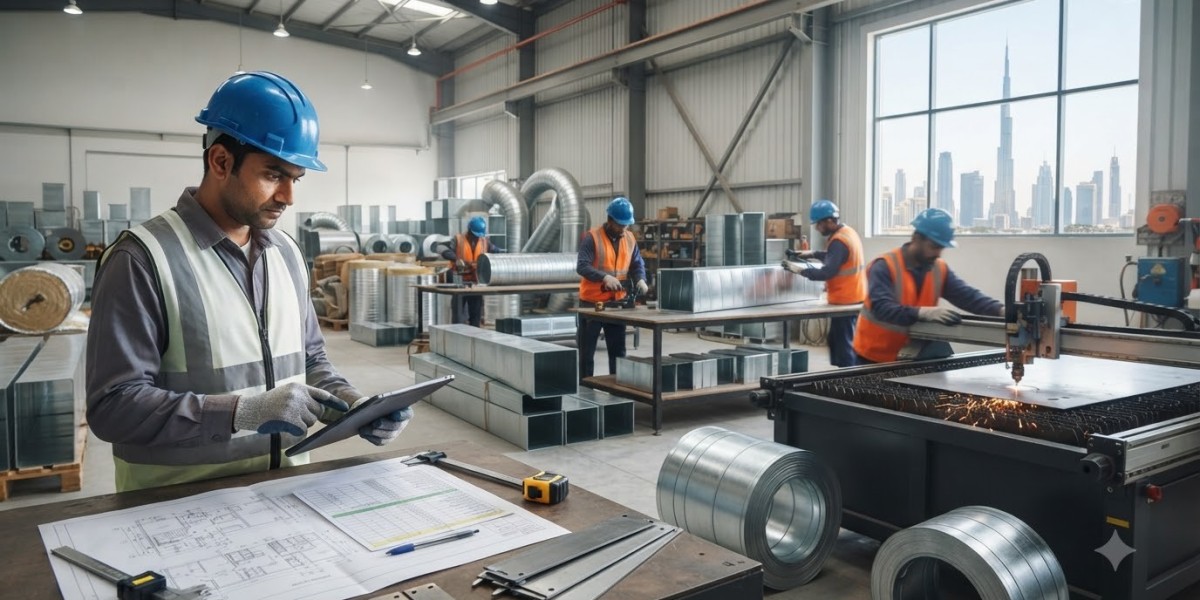
- CNC plasma and laser cutting
- Automated coil lines
- Machine-based folding and seaming
- Spiral duct forming machines
- Precision sealing and flange systems
This technology carries a higher capital cost, which is reflected in pricing. However, it also brings tighter tolerances, less material waste, faster output and fewer site corrections. Workshops relying on manual methods may quote lower prices, but inconsistent fabrication can lead to leakage, rework and installation delays that erase any savings.
Production scale matters too. Large orders often benefit from economies of scale, while small, custom batches usually cost more per unit.
5. Compliance, Standards and Testing
Regulatory requirements add real but necessary cost. UAE projects typically reference standards such as SMACNA and DW/144, along with local authority rules from bodies like Dubai Civil Defence and the Abu Dhabi Civil Defence for fire safety. Green building frameworks such as Estidama and Al Sa'fat may also apply.
Compliance affects cost through:
- Fire-rated materials and dampers where ducts pass through fire compartments
- Leakage testing to confirm that ducts meet specified air-tightness classes
- Material test certificates and traceability documentation
- Third-party inspections required by consultants or authorities
- Quality management systems such as ISO 9001, which require ongoing investment
Cutting corners here may lower the quote, but it risks failed inspections, delays and expensive corrections later.
6. Labour, Engineering and Project Management
Skilled labour is a significant part of the final price. Duct fabrication involves designers, CNC operators, fabricators, quality inspectors and installation teams. Costs here depend on:
- Engineering and shop drawings: Detailed, coordinated drawings take time but prevent clashes with other building services.
- Workforce skill level: Experienced technicians produce more accurate work with fewer errors.
- Project size and duration: Large or fast-track projects may need extra shifts or additional resources.
- Supervision and coordination: MEP coordination, approvals and revisions all require staff time.
Revisions are a common hidden cost. When drawings change midway through a project, duct sections may need to be re-cut or remade. Clear specifications early on reduce this risk considerably.
7. Logistics, Location and Market Conditions
Finally, external factors influence what you pay.
- Transportation: Moving bulky duct sections across emirates adds cost, especially for large dimensions or remote sites. A manufacturer closer to your project may offer better delivery pricing.
- Packaging and handling: Protecting finished ducts from dents and dust during transit adds a small but necessary cost.
- Lead time: Urgent orders may attract premium pricing because they disrupt production schedules.
- Market demand: During construction booms, demand for ductwork rises and prices can climb.
- Currency and import costs: Imported coils, insulation and accessories are affected by exchange rates, shipping and customs charges.
Seasonal and economic cycles also play a role, so timing your procurement can sometimes help.
How to Compare Quotes Accurately
With so many variables, a lower quote doesn't always mean better value. When evaluating offers from duct fabrication companies in UAE, make sure you compare like with like:
- Material specification: Confirm gauge, coating and grade.
- Insulation details: Check type, thickness and density.
- Scope of supply: Are fittings, supports, dampers and accessories included?
- Testing and certification: Are these included or charged separately?
- Delivery terms: Clarify transport, unloading and phasing.
- Warranty and support: Confirm coverage and after-sales service.
Asking for an itemised breakdown makes differences easy to spot and prevents surprises later.
Practical Tips to Manage Duct Costs
- Finalise designs early to avoid expensive revisions.
- Standardise sizes where possible to reduce waste and production time.
- Consider value engineering, such as switching to spiral ducts where suitable.
- Order in coordinated batches to benefit from volume efficiencies.
- Think lifecycle cost, not only upfront price, since efficient ducts reduce electricity use for years.
Final Thoughts
HVAC duct manufacturing costs in the UAE are shaped by far more than the price of sheet metal. Material quality, design complexity, insulation, manufacturing technology, compliance, labour and logistics all contribute to the final figure. By understanding these seven factors, project owners and contractors can read quotations more critically, ask better questions and choose suppliers that deliver genuine value rather than just a low number.
When you approach duct fabrication companies in UAE for pricing, provide clear drawings and specifications, request itemised quotes and weigh long-term performance alongside initial cost. A well-informed decision today leads to a more efficient, durable and cost-effective HVAC system for years to come.