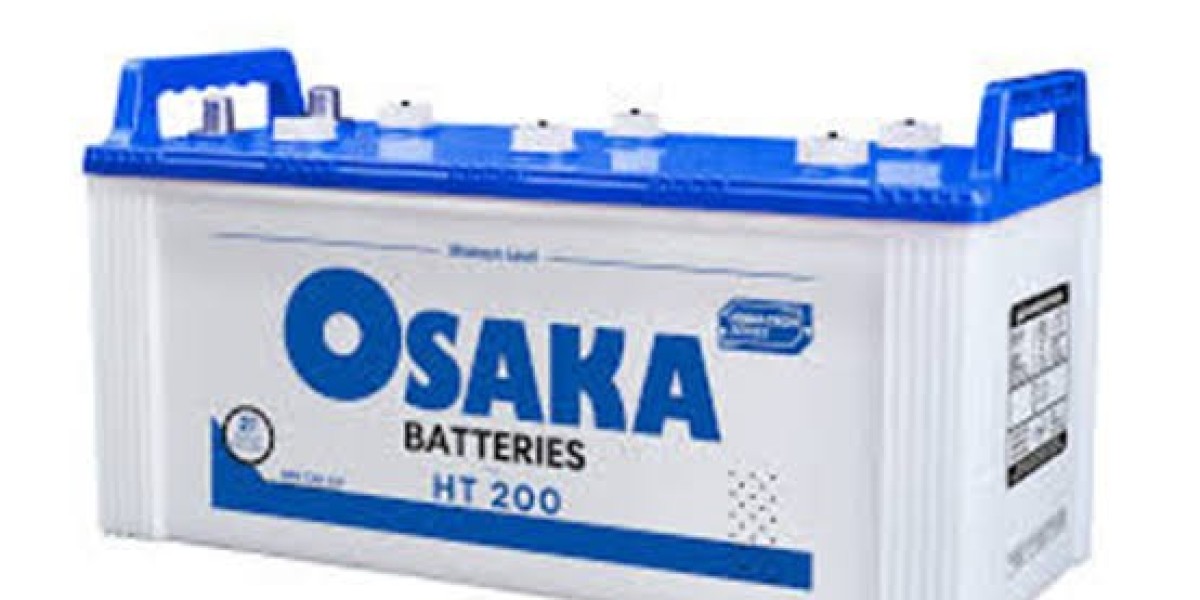

Osaka tubular battery is a popular choice for homes, offices, solar systems, and UPS setups where reliable backup power is required. These batteries are designed with tubular positive plates and are intended for deep-cycle applications, making them different from ordinary automotive batteries. Osaka tubular batteries are available in different capacities, allowing users to select a battery according to their backup requirements, inverter size, and available installation space.
Osaka tall tubular battery is another important category in the Osaka battery range. Tall tubular models are designed to provide higher capacity and longer backup performance for applications that require frequent charging and discharging. According to Osaka's published technical information, its tubular range includes 12-volt models with capacities varying across different designs and sizes. The tall tubular range includes models such as TA1800, TA2500, and TA3000 in the technical data sheet.
Osaka tubular battery specifications are important to understand before purchasing a battery because capacity, voltage, dimensions, weight, and expected backup time can vary significantly between models. Osaka's technical data shows that its tubular batteries include several 12V options, with capacities ranging from smaller models to high-capacity tall tubular batteries. For example, the published specifications list the TA1800 at 185Ah, TA2500 at 230Ah, and TA3000 at 260Ah under the stated 10-hour rating.
What Is an Osaka Tubular Battery?
A tubular battery is a type of flooded lead-acid deep-cycle battery designed to handle repeated charging and discharging. Instead of using the same construction found in conventional starter batteries, tubular batteries use tubular positive plates. This construction is intended to provide durability and make the battery suitable for applications where regular cycling is required.
Osaka manufactures tubular batteries for applications including UPS systems, inverters, solar energy systems, telecommunications, emergency lighting, and other backup-power requirements. The manufacturer's published information describes tubular positive plates and thick negative plates as important parts of the battery construction.
This makes tubular batteries particularly useful in areas where electricity interruptions are common. A properly selected battery can provide backup power for lights, fans, computers, televisions, networking equipment, and other appliances, depending on the inverter and total load.
Main Features of Osaka Tubular Batteries
One of the main advantages of an Osaka tubular battery is its deep-cycle design. Deep-cycle batteries are intended to deliver power over an extended period and then be recharged repeatedly. This makes them suitable for backup and solar applications.
Another important feature is the tubular positive plate construction. Osaka states that its tubular batteries use tubular positive plates and thick negative plates to support longer battery life. The company also lists PE separators and float indicators among the features of its tubular battery range.
The batteries are also available in different sizes and capacities. This gives consumers flexibility when designing a UPS or solar backup system. A small household setup may require a lower-capacity battery, while a larger solar installation may need several high-capacity batteries connected together.
Osaka Tall Tubular Battery Models
The tall tubular section is designed for users who need higher-capacity battery options. Osaka's published technical data lists several tall tubular models.
The TA1800 is a 12V tall tubular battery with a published 10-hour capacity of 185Ah. Its listed dimensions are approximately 502 mm in length, 190 mm in width, and 373 mm in body height, with a total height of about 416 mm. Its approximate weight is 54.9 kg.
The TA2500 is another tall tubular model. The technical sheet lists it as a 12V battery with a 10-hour capacity of 230Ah. It has approximately the same external dimensions as the TA1800 but weighs around 63.5 kg.
The TA3000 provides an even higher capacity. Osaka's technical data lists the TA3000 as a 12V tall tubular battery with a 10-hour capacity of 260Ah. Its approximate weight is 72.7 kg, making it a substantially heavier battery than the smaller models.
It is important to check the exact model number and rating method when comparing batteries because capacity figures can differ depending on the discharge-rate standard being used.
Osaka Tubular Battery Specifications
Specifications help buyers determine whether a particular battery will fit their system. Important specifications include nominal voltage, amp-hour capacity, physical dimensions, weight, and expected backup performance.
For example, Osaka's technical sheet lists the following tall tubular specifications:
| Model | Voltage | 10-Hour Capacity | Approx. Weight |
|---|---|---|---|
| TA1800 | 12V | 185Ah | 54.9 kg |
| TA2500 | 12V | 230Ah | 63.5 kg |
| TA3000 | 12V | 260Ah | 72.7 kg |
The listed dimensions for these tall tubular models are approximately 502 mm long, 190 mm wide, 373 mm body height, and 416 mm total height.
These specifications are useful when planning a battery bank. For example, a 24V inverter generally requires two compatible 12V batteries connected in series, while a 48V system may require four 12V batteries in a series configuration. The exact arrangement should always match the inverter manufacturer's requirements.
Osaka Tubular Battery for UPS Systems
UPS systems are one of the common applications for tubular batteries. During a power outage, the battery supplies DC power to the inverter, which converts it into usable AC electricity for connected appliances.
The required battery capacity depends on the total load and desired backup time. A system powering only a few lights and fans will have different requirements from a system operating computers, refrigerators, televisions, and other appliances.
For longer backup periods, users generally need batteries with greater amp-hour capacity or multiple batteries connected in an appropriate configuration. However, simply choosing the largest battery is not always necessary. The battery should be compatible with the inverter's charging capacity and the available physical space.
Osaka Tubular Battery for Solar Systems
Tubular batteries are also commonly used in solar energy systems. During daylight hours, solar panels generate electricity and the charging system can recharge the batteries. During the evening or during periods of insufficient solar generation, stored energy can be used to power appliances.
Osaka describes its deep-cycle tubular batteries as suitable for wind and solar energy systems as well as UPS and inverter applications.
For a solar installation, battery selection should consider daily electricity consumption, solar-panel capacity, inverter capacity, expected backup duration, and charging conditions. Proper sizing can help prevent excessive battery cycling and improve overall system performance.
Backup Time and Battery Capacity
Battery capacity is normally expressed in ampere-hours, or Ah. A higher Ah rating generally indicates a greater amount of stored electrical capacity, but actual backup time also depends on the power being consumed.
For example, a battery powering a few LED lights will normally provide considerably longer backup than the same battery powering several fans, a television, a refrigerator, and other appliances simultaneously.
Osaka's technical sheet provides example backup times for a 400-watt load. Under the stated test conditions, the TA1800 is listed at approximately three hours, the TA2500 at approximately four hours, and the TA3000 at approximately five hours. Actual household backup time can vary because inverter efficiency, battery condition, temperature, load characteristics, and discharge rate all affect performance.
Maintenance of Tubular Batteries
Many Osaka tubular batteries are flooded lead-acid batteries, meaning users need to pay attention to electrolyte levels and general battery condition. Regular maintenance can help maintain performance.
The battery should be installed in a suitable, ventilated location. Terminals should be kept clean and secure, and the battery should be protected from excessive heat, moisture, and physical damage.
Users should follow the manufacturer's instructions for checking electrolyte levels and topping up with the recommended water. Maintenance requirements can vary between different battery models, so the instructions supplied with the specific battery should be followed.
How to Choose the Right Osaka Tubular Battery
Choosing the right model starts with determining the power requirement. First, calculate the approximate wattage of the appliances that need backup. Then determine how many hours of backup are required.
The inverter's voltage is also important. If the inverter is designed for a 12V battery bank, a single 12V battery may be appropriate depending on the load. For 24V or 48V systems, multiple 12V batteries may be required.
Physical dimensions should also be checked before purchasing. Tall tubular batteries can be relatively large and heavy, so the battery cabinet or installation area must have sufficient space and weight capacity.
Finally, compare the battery's rated capacity, model number, manufacturing date, warranty conditions, and seller reputation before making a purchase.