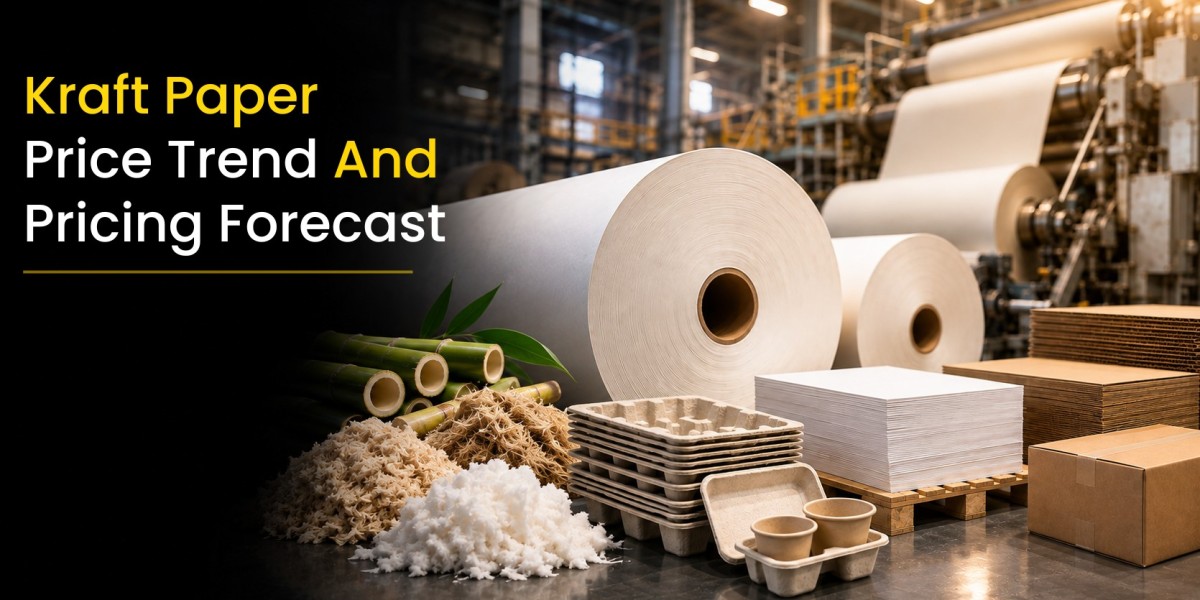

The Kraft Paper Price Trend in India during Q2 2026 showed a noticeable upward movement, with prices increasing as manufacturers faced higher costs for raw materials, energy, freight, and imported inputs.
Compared with the relatively modest movement seen in Q1 2026, the second quarter brought stronger price pressure to the market. One of the biggest reasons was the weakening of the Indian Rupee against the US Dollar.
Since the Indian kraft paper industry depends partly on imported recovered fiber and other papermaking materials, the weaker Rupee made these inputs more expensive. At the same time, demand from packaging industries remained steady, which allowed manufacturers to pass a larger part of their increased costs on to buyers.
? ? ? Please submit your query to get Kraft Paper price trend, forecast, and market price analysis: https://www.price-watch.ai/book-a-demo/
Kraft Paper Price Trend in Q2 2026
The Indian kraft paper market experienced stronger price growth during April, May, and June 2026. Overall, prices increased by around 2% across most regions during Q2, which was significantly higher than the modest gains seen during Q1 2026.
For buyers and converters, this change was visible in regular purchasing activity. Mills were dealing with increasing production expenses, while packaging manufacturers were also trying to control their own operating costs. When the cost of producing paper increases and supply remains relatively limited, manufacturers generally face pressure to revise selling prices.
This was the main situation in the Indian kraft paper market during Q2 2026.
The Indian Rupee was an important part of the story. During the quarter, the Rupee weakened by approximately 6–8% against the US Dollar. This had a direct effect on imported raw materials because many international purchases are priced in US Dollars. A weaker Rupee means Indian buyers have to spend more local currency for the same imported material.
As a result, mills faced higher costs across several areas rather than from just one source.
Why Kraft Paper Prices Increased
One of the main reasons behind the increase in Kraft Paper Prices was the rising cost of imported Old Corrugated Cardboard, commonly called OCC.
OCC is an important source of recovered fiber used in kraft paper production. Indian mills use domestic recovered paper, but imported OCC is also used to supplement local supplies. When imported OCC becomes more expensive, the cost of producing kraft paper also comes under pressure.
The weakening Rupee made this situation more difficult. International suppliers quote many raw materials in US Dollars, so currency depreciation directly increases the cost for Indian buyers.
The higher OCC cost was also accompanied by increases in other operating expenses. Mixed paper, electricity, fuel, domestic transportation, and other production-related costs all added pressure during the quarter.
For mills, managing these expenses became increasingly difficult. They needed to maintain production while protecting their margins. At the same time, buyers were looking for competitive prices. This created a situation where price revisions became necessary across different parts of the market.
Impact of Imported Fiber Costs
Imported fiber played an important role in the Q2 2026 kraft paper market.
The Indian industry uses recovered paper as a major fiber source. When international recovered-paper costs increase, the impact is felt by domestic manufacturers. If the Rupee also weakens at the same time, the final cost becomes even higher.
This was particularly important during Q2.
The cost of offshore OCC increased, while currency depreciation made dollar-denominated purchases more expensive in Rupee terms. Mills therefore had to spend more to secure the raw materials needed for production.
Higher raw-material costs also affect working capital. When the price of inputs increases, manufacturers and converters need more money to maintain the same level of inventory and production.
This can create additional pressure throughout the supply chain, particularly for businesses that operate with limited working-capital flexibility.
Demand From the Packaging Industry
While production costs were increasing, demand remained relatively stable.
Kraft paper continues to be used in many everyday packaging applications. Food packaging, paper bags, labels, e-commerce packaging, industrial wrapping, and other paper-based products continued to support demand during Q2 2026.
The continued development of e-commerce also supports the use of paper packaging because products need boxes, wrapping, and other protective materials during transportation.
Food and retail businesses also continue to use paper-based packaging for different applications. Because demand remained steady, converters continued regular procurement even when prices were higher.
This stable demand helped manufacturers pass increased production costs through to customers.
Natural Brown Kraft Paper Price Trend
A specific example of the Q2 movement can be seen in Natural Brown Ex-Ludhiana 100 GSM 25 BF (MG Finished) kraft paper.
During Q2 2026, this grade recorded a 3.53% increase compared with Q1 2026. The increase was supported by higher production costs and improving domestic packaging demand.
The market also recorded a 4.56% month-on-month increase during the quarter, according to the supplied market information.
The movement developed throughout the quarter. Prices strengthened during April after mills introduced cost-related revisions. May and June brought further increases as imported raw-material costs, freight expenses, and currency weakness continued to affect the market.
This shows that the Q2 price movement was not caused by a single factor. Instead, several cost and market conditions worked together.
April, May and June 2026 Price Movement
April, May, and June each contributed to the overall upward movement in kraft paper prices.
In April, prices started strengthening as mills responded to increasing production costs. The higher cost of imported raw materials and the weaker Rupee created additional pressure on manufacturers.
In May, the upward movement continued. Imported fiber costs remained high, while freight and logistics expenses added to the overall cost of production. Buyers continued purchasing because packaging demand remained stable.
In June, the market remained firm. Mills continued to face higher input costs, while supply conditions remained relatively tight. Because buyers still needed kraft paper for packaging production, manufacturers were able to maintain higher prices.
Looking at the quarter as a whole, the market therefore moved in a generally upward direction.
Kraft Paper Price Chart: Understanding the Q2 Movement
A Kraft Paper Price Chart for Q2 2026 would show a generally rising trend from the beginning of April toward the end of June. Rather than being driven by one sudden market event, the movement developed through a combination of higher raw-material costs, currency depreciation, freight expenses, and stable demand.
The beginning of the quarter showed the first signs of stronger pricing following mill revisions. As the quarter progressed, the continued pressure from imported fiber and logistics costs supported additional increases.
By the end of June, the market was operating at a firmer price level than it had during the previous quarter.
For buyers, the chart is useful because it gives a simple visual understanding of how prices changed over time. However, the reasons behind the movement are just as important as the price itself.
Kraft Paper Price Index and Market Direction
The Kraft Paper Price Index can be useful for tracking the broader direction of the market rather than focusing on one individual transaction.
Based on the Q2 2026 market information, the overall direction was clearly firmer compared with Q1. The increase was connected to several factors working together.
The most important factors included the depreciation of the Indian Rupee, higher imported OCC costs, rising recovered-fiber expenses, increased electricity and fuel costs, higher freight charges, limited domestic availability, and stable packaging demand.
When these factors occur together, manufacturers have greater pressure to adjust their selling prices.
For this reason, monitoring the Kraft Paper Price Index alongside raw-material and currency movements can give buyers a better understanding of the wider market environment.
Supply and Demand Conditions
Supply and demand also played an important role in Q2 2026.
Domestic supply conditions remained relatively constrained while demand from packaging manufacturers continued. Mills maintained disciplined production levels to balance supply with demand and protect their margins.
When buyers compete for limited spot volumes, producers generally have greater flexibility to implement price increases.
The market did not necessarily require exceptionally strong demand to support higher prices. Stable demand combined with limited availability and rising production costs was enough to create a firm pricing environment.
This balance between supply and demand was one of the reasons price increases could continue through the quarter.
Impact on Converters and Packaging Manufacturers
Higher kraft paper prices also affected converters and packaging manufacturers.
Converters purchase kraft paper and use it to produce different packaging products. When the cost of paper increases, they have to decide how much of the additional expense can be absorbed and how much needs to be passed on to customers.
For businesses working with tight margins, even a moderate increase in paper prices can have a meaningful effect on overall production costs.
The Q2 2026 increase therefore created additional cost pressure throughout the packaging supply chain. Businesses had to pay closer attention to procurement timing, inventory management, freight expenses, and customer pricing.
Kraft Paper Price Forecast
Looking ahead, the Kraft Paper Price Forecast will depend on several market factors.
The Indian Rupee will remain important because currency movements directly affect the cost of imported raw materials. If the Rupee remains weak, imported OCC and other dollar-denominated inputs could continue to put pressure on production costs.
International recovered-paper prices will also be important. Changes in OCC availability and global pricing can influence the cost structure of Indian kraft paper manufacturers.
Freight and shipping conditions are another factor to watch. Any disruption in international shipping routes or increase in ocean freight rates can raise the landed cost of imported materials.
Domestic packaging demand will also influence the market. If demand remains stable while supply continues to be relatively tight, prices may remain under pressure from the cost side. On the other hand, any major change in demand or supply conditions could alter the market balance.
Therefore, future kraft paper prices should be understood by looking at currency, fiber costs, freight, production expenses, and demand together.
? ? ? Please submit your query to get Kraft Paper price trend, forecast, and market price analysis: https://www.price-watch.ai/book-a-demo/
What Q2 2026 Means for Kraft Paper Buyers
The Q2 2026 market provides an important example of how quickly paper prices can respond when several cost factors change at the same time.
A weaker currency alone can increase import costs. Higher OCC prices can add another layer of pressure. When higher freight, electricity, fuel, and domestic transportation costs are added to the situation, the overall impact becomes much more significant.
For buyers, this makes regular market monitoring important.
Following changes in imported fiber costs, currency movements, logistics expenses, and domestic packaging demand can help businesses understand why prices are changing.
It is also important to look beyond the basic paper price. The final cost of packaging depends on several other expenses, including transportation, conversion, energy, labor, and inventory.
The Kraft Paper Price Trend in India during Q2 2026 showed a clear upward movement compared with Q1. Overall market prices increased by around 2% across most regions, while the Natural Brown Ex-Ludhiana 100 GSM 25 BF (MG Finished) grade recorded a 3.53% increase compared with Q1. The supplied market data also indicated a 4.56% month-on-month increase during the quarter.
The main reasons behind the increase were the depreciation of the Indian Rupee, higher imported OCC and recovered-fiber costs, increased freight expenses, rising electricity and fuel costs, and relatively limited supply. At the same time, demand from food packaging, e-commerce, paper bags, labels, and industrial wrapping remained stable.
Q2 2026 therefore highlights how closely the Indian kraft paper market is connected to both domestic and international cost factors. Currency movements, imported fiber prices, shipping expenses, production costs, and packaging demand can all influence the final market price.
For businesses involved in packaging and paper procurement, keeping track of Kraft Paper Prices, the Kraft Paper Price Chart, and the Kraft Paper Price Index can provide useful insight into market direction. The future Kraft Paper Price Forecast will depend on how these factors develop in the coming quarters.
About Price-Watch™
Price Watch™ is an India-based, independent raw material price reporting agency that provides real-time price forecasts and data-driven insights into global raw material markets. Price Watch™ specializes in tracking raw material prices, analyzing market trends, and delivering timely updates on plant shutdowns, supply disruptions, capacity expansions, and demand-supply dynamics. The Price Watch™ platform empowers manufacturers, traders, and procurement professionals to make faster, smarter decisions. Leveraging AI-powered forecasting and over a decade of historical data, Price Watch™ transforms market volatility into actionable opportunity.
Futura Tech Park,
C Block, 8th floor 334,
Old Mahabalipuram Road,
Sholinganallur, Chennai, Tamil Nadu, Pincode - 600119.
????????: https://www.linkedin.com/company/price-watch-ai/
????????: https://www.facebook.com/people/Price-Watch/61568490385598/
???????: https://x.com/pricewatchai
???????: https://www.price-watch.ai/