
Kitchen textiles play a surprisingly important role in keeping a home comfortable, organized, and visually appealing. While countertops, cabinets, and appliances often receive the most attention, small accessories such as kitchen towels are used just as frequently. From drying dishes to wiping spills and drying hands, the right towel can make everyday kitchen tasks easier.
However, not every kitchen towel serves the same purpose. Different materials, sizes, textures, and designs offer different benefits. Understanding these differences can help you build a collection that works for your cooking habits while complementing your interior style.
Why Quality Kitchen Towels Are Important
A kitchen towel needs to perform several jobs throughout the day. It may be used to dry freshly washed dishes, wipe water from a countertop, handle a quick spill, or dry hands after cooking.
Because towels are frequently exposed to moisture, food particles, and repeated washing, durability is important. A well-made towel should maintain its usefulness after regular laundering while remaining comfortable to handle.
Choosing several towels for specific purposes can also make kitchen routines more organized. Instead of using the same towel for every task, you can assign different towels to dishes, hands, and general kitchen use.
Understanding Cotton Kitchen Towels
Cotton Kitchen Towels remain a popular choice for everyday kitchens because cotton is soft, versatile, and naturally absorbent. Cotton towels can be used for a variety of household tasks without requiring complicated maintenance.
The weave of the fabric can influence how a cotton towel feels and performs. Some weaves are lightweight and quick to dry, while others provide a thicker texture and greater moisture absorption.
When selecting cotton towels, consider your kitchen routine. If towels are used continuously throughout the day, lightweight options that dry efficiently may be useful. If drying dishes is the primary purpose, a more absorbent towel may be preferable.
Selecting the Right Dish Towels
Dish Towels are especially useful after washing plates, bowls, cookware, and utensils. A good dish towel should absorb moisture effectively and feel comfortable during repeated use.
When shopping for dish towels, pay attention to the fabric surface. Towels with a suitable weave can help dry dishes efficiently while minimizing unwanted lint.
It is also useful to have several dish towels in rotation. Instead of waiting for one towel to dry before using it again, you can replace it with a clean towel and place the used one in the laundry.
This simple rotation system is particularly helpful in busy kitchens where dishes are washed multiple times each day.
Choosing Kitchen Hand Towels
Hands are washed frequently while cooking, which makes a dedicated hand towel an important kitchen accessory. Hand Towels Kitchen users choose should ideally be soft, absorbent, and easy to reach.
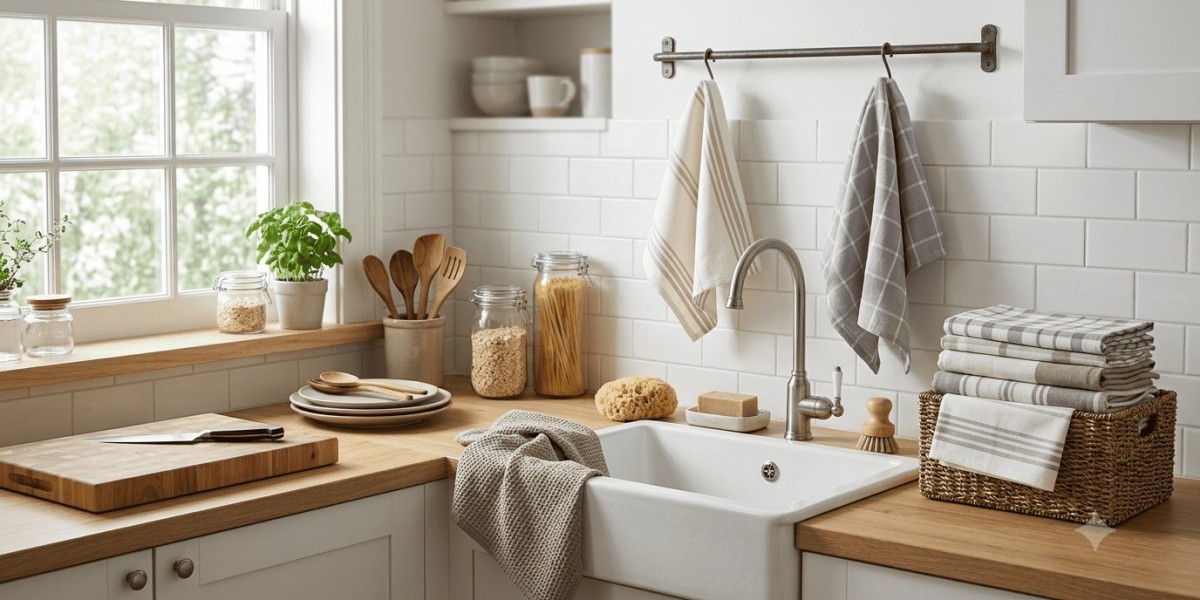
Placement matters almost as much as the towel itself. A towel hook or rail near the sink can keep the towel accessible without taking up counter space.
For kitchens with multiple users, having more than one hand towel can be practical. You can rotate them regularly and keep a fresh towel available while another is being washed.
Hand towels can also contribute to the room's appearance. Coordinating their color with other kitchen textiles creates a more intentional and finished look.
The Convenience of Kitchen Towels Sets
Buying individual towels can make it difficult to create a consistent collection. Kitchen Towels Sets provide a convenient alternative because multiple towels are often designed to complement one another.
Sets can be particularly useful when moving into a new home, updating a kitchen, or replacing older textiles. Having matching or coordinated towels creates visual consistency while providing enough pieces for everyday rotation.
Before selecting a set, check the number of towels included, their dimensions, materials, and intended uses. Some sets are designed primarily for decorative purposes, while others focus on practical kitchen tasks.
A versatile collection can include different sizes or textures so that each towel has a specific role.
Adding Style With Luxury Kitchen Towels
Function should always come first, but there is no reason kitchen textiles cannot also look sophisticated. Luxury Kitchen Towels can add an elevated touch to a kitchen while remaining useful for everyday activities.
Premium kitchen towels may feature refined textures, attractive patterns, carefully finished edges, and high-quality natural fabrics. Neutral shades can create an understated appearance, while subtle stripes or patterns can introduce visual interest.
These towels can be especially effective in kitchens with minimalist, modern, farmhouse, or classic décor. A well-designed towel hanging beside a sink or oven can become part of the room's decorative scheme.
Consider Size Before You Buy
Size is an often-overlooked factor when choosing kitchen towels. A towel that is too small may not provide enough coverage when drying large cookware, while an oversized towel can become inconvenient in a compact kitchen.
Think about where the towel will be used. Dish-drying towels may benefit from a generous surface area, while hand towels can be smaller and easier to hang.
If you are purchasing a set, different sizes can provide greater flexibility. Smaller towels can be used for hands or quick spills, while larger towels can handle dishes and larger surfaces.
Absorbency and Drying Speed
Absorbency is one of the most important characteristics of a kitchen towel. A towel that absorbs moisture efficiently can reduce the time needed to dry dishes and surfaces.
However, absorbency is only part of the equation. Towels should also be able to dry between uses. A very thick towel may absorb considerable moisture but can take longer to dry, especially in humid environments.
Choosing a balance between absorbency, thickness, and drying speed can make a significant difference in everyday use.
Think About Durability
Kitchen towels experience frequent washing, so durability should be part of the purchasing decision. Repeated laundering can affect low-quality fabrics, causing them to lose their texture or shape.
Look for well-constructed towels with secure edges and a fabric suited to regular washing. Proper care can also extend their useful life.
Rather than purchasing large quantities of inexpensive towels that need frequent replacement, investing in dependable textiles can be a more practical long-term approach.
Match Towels With Your Kitchen Décor
Kitchen towels do not have to look purely utilitarian. They can complement the room's overall design.
For a neutral kitchen, white, cream, beige, or gray towels can maintain a clean appearance. Stripes and checks can work well in traditional or farmhouse-inspired kitchens. More subtle textures can complement contemporary interiors.
If your kitchen already contains several patterns, solid-colored towels may create balance. If the space is mostly neutral, patterned towels can provide a small decorative accent.
How Many Towels Should You Keep?
The ideal number depends on how frequently you cook, how many people use the kitchen, and how often laundry is done.
A practical collection might include several towels for daily use, additional hand towels, and a few spare pieces. This allows towels to be rotated rather than reused continuously.
Keeping separate towels for different purposes is also useful. For example, dish towels can be reserved for drying dishes, while hand towels remain near the sink.
This organization makes it easier to maintain a clean and efficient kitchen.
Simple Care Tips for Kitchen Towels
Proper care can help kitchen towels remain useful for longer. Always follow the washing instructions provided for the particular fabric.
Wash kitchen towels regularly and allow them to dry completely between uses. Avoid leaving damp towels crumpled on counters or inside enclosed spaces.
Separating heavily soiled towels from lightly used ones can also make laundry management easier. Once clean, fold or hang towels neatly so they are ready for use.
Create a Functional Towel Station
A dedicated towel area can improve kitchen organization. Hooks, rails, baskets, and drawers can all be used depending on the available space.
Keep frequently used towels within easy reach of the sink or food preparation area. Extra towels can be stored in a nearby cabinet or drawer.
A simple towel station reduces clutter and ensures that clean towels are always easy to find.
Conclusion
The right kitchen towels can combine practicality, comfort, durability, and style. Cotton Kitchen Towels provide versatile everyday performance, while Dish Towels are essential for drying dishes and cookware. Dedicated Hand Towels Kitchen users can keep near the sink make hand drying convenient, while Kitchen Towels Sets provide an organized way to maintain a coordinated collection.
For those who want to add an elegant touch, Luxury Kitchen Towels can bring premium textures and attractive designs into everyday kitchen routines.
For a selection of thoughtfully designed cotton and linen home textiles, All Cotton and Linen is a natural option to explore when creating a practical and welcoming kitchen. With the right combination of towels, even simple daily tasks can become more organized, comfortable, and enjoyable.