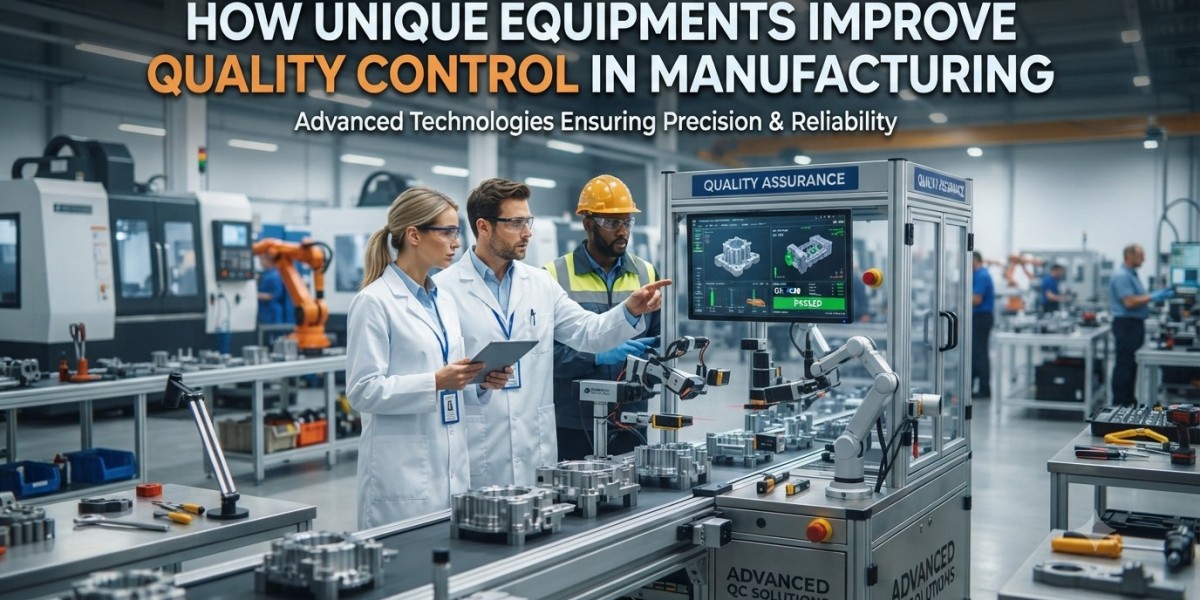

Modern manufacturing depends on accuracy, efficiency, safety, and consistent product quality. As industries become more competitive, manufacturers need reliable technologies that can improve production while reducing errors and operational delays. This is where Unique Equipments play an important role. Specialized machinery and inspection systems help businesses handle different production challenges while maintaining high standards throughout the manufacturing process.
Improving Production Efficiency
Manufacturing processes often involve multiple stages, including material handling, processing, inspection, packaging, and quality control. Using equipment designed for specific industrial requirements can make these stages faster and more efficient. Modern machinery can automate repetitive activities, reduce manual intervention, and support continuous production.
Specialized equipment also helps manufacturers maintain consistency. When production tasks are performed manually, the possibility of human error can increase. Automated systems can perform the same task repeatedly with greater accuracy, allowing businesses to achieve stable production results and improve overall productivity.
Enhancing Product Quality
Product quality is one of the most important factors in modern manufacturing. Even a small contamination or production error can affect customer satisfaction and increase waste. Inspection and detection equipment helps manufacturers identify unwanted materials and defects before products reach the market.
For industries handling pharmaceutical, food, chemical, and other sensitive products, reliable detection systems are especially important. Equipment such as a Gravity Feed Metal Detector can help identify metallic contamination in products moving through production lines. Early detection allows manufacturers to remove affected products and maintain better quality control.
Supporting Safer Manufacturing Operations
Safety is another major reason manufacturers invest in specialized equipment. Production environments can involve machinery, raw materials, chemicals, and high-speed processing systems. Properly designed equipment can help reduce risks and provide controlled production conditions.
Detection systems are particularly useful when products need to be checked for unwanted metal particles. By identifying contaminants during production, manufacturers can protect consumers and reduce the chances of product recalls. This also helps businesses maintain their reputation and comply with industry quality requirements.
Meeting Industry-Specific Requirements
Every manufacturing industry has different production needs. A pharmaceutical company may require highly accurate inspection systems, while a food manufacturer may need contamination detection and hygienic processing equipment. Similarly, businesses involved in tablet production may require specialized inspection technologies.
Tablet and Metal Detectors can be valuable in pharmaceutical manufacturing, where tablets need to be inspected for unwanted metallic contamination. Such systems can support quality assurance by helping manufacturers detect potentially harmful particles before products are packaged and distributed.
Reducing Waste and Production Costs
Manufacturing waste can significantly affect profitability. Defective products, contaminated batches, production mistakes, and unnecessary downtime can increase operating expenses. Specialized equipment can help identify problems earlier, reducing the amount of material and finished products that need to be discarded.
Automation can also reduce the amount of manual work required for repetitive production activities. Although investing in modern equipment requires an initial cost, the long-term benefits can include better productivity, reduced waste, improved accuracy, and lower maintenance-related disruptions.
Supporting Automation and Modernization
Manufacturing is increasingly moving toward automated and digitally connected production environments. Modern equipment can integrate with production lines and help businesses create more streamlined workflows. Automation allows manufacturers to monitor processes, identify problems, and maintain consistent operating conditions.
The use of Unique Equipments can therefore support manufacturers that want to modernize their facilities. Instead of depending entirely on traditional processes, companies can combine specialized machinery with automated inspection and quality-control systems to achieve better production performance.
Building Customer Confidence
Customers expect products to be safe, reliable, and consistent. Manufacturers that maintain strong quality-control practices are more likely to build long-term customer trust. Specialized inspection and detection equipment contributes to this goal by helping businesses identify potential issues before products reach customers.
Reliable manufacturing equipment can also support compliance with industry standards and internal quality policies. Consistent inspection provides manufacturers with greater confidence that their production processes are operating as intended.
Final Thoughts
Modern manufacturing requires more than high production speed. Businesses must also focus on accuracy, safety, quality, and operational efficiency. Unique Equipments help manufacturers address these requirements through specialized production and inspection solutions. Technologies such as Gravity Feed Metal Detector and Tablet and Metal Detectors can support contamination detection and quality assurance in demanding industries. By investing in suitable equipment, manufacturers can improve production performance, reduce waste, strengthen product quality, and remain competitive in an increasingly advanced manufacturing environment.