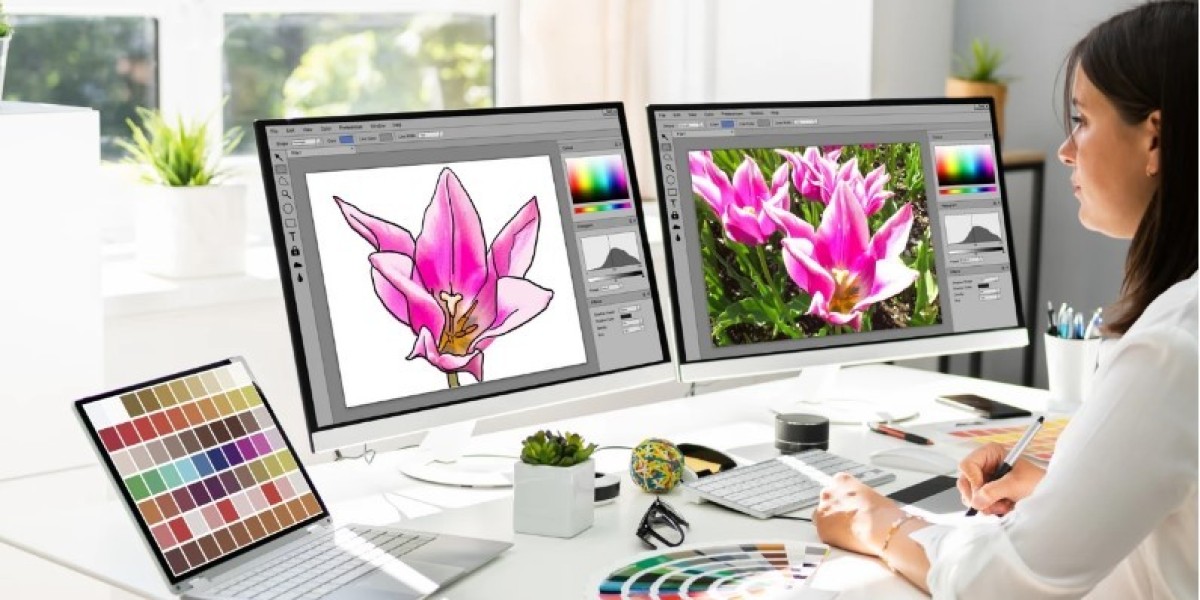

Good artwork is the foundation of every successful brand. Whether you print business cards, create banners, embroider uniforms, or make promotional products, your design should always look sharp and professional. Poor-quality images often become blurry when they are enlarged. They may also lose small details that make the artwork unique. That is why many businesses choose professional vector artwork instead of using regular image files.
Professional vector art conversion services help businesses recreate logos, artwork, and graphics as clean vector files that stay sharp at any size. Instead of simply enlarging an image, experienced designers manually rebuild every line, curve, shape, and letter. This careful process preserves every important detail while creating artwork that is ready for printing, embroidery, engraving, screen printing, signs, and many other applications.
What Is Vector Artwork?
Vector artwork is made with mathematical paths.
It is different from image files like JPG or PNG.
Because vectors use paths instead of pixels, they stay sharp at every size.
Common vector formats include:
AI
EPS
SVG
PDF
CDR
These files are widely used in professional printing and production.
Why Raster Images Lose Quality
Most photos and downloaded graphics are raster images.
Raster files are built from tiny pixels.
When they are enlarged:
Pixels become larger.
Edges become blurry.
Small details disappear.
Lines become rough.
This makes raster files less suitable for professional production.
What Is Vector Art Conversion?
Vector conversion is the process of rebuilding artwork as vector graphics.
It is not automatic image enlargement.
Professional designers redraw the artwork using vector paths.
They recreate:
Curves
Straight lines
Shapes
Text
Colors
The result is clean, scalable artwork.
Manual Conversion Produces Better Results
Many software programs offer automatic tracing.
These tools may work for simple graphics.
However, automatic conversion often creates:
Rough edges
Uneven curves
Broken shapes
Too many anchor points
Poor lettering
Professional designers carefully clean every part of the artwork.
Every Detail Matters
Small details often define a brand.
Thin borders, smooth curves, and balanced lettering all improve quality.
Professional vector artists preserve these important details.
Their goal is to recreate the original artwork with greater precision.
Step 1: Review the Original Artwork
Every project begins with careful inspection.
Designers examine:
Image quality
Colors
Shapes
Text
Fine details
This helps determine the best conversion method.
Step 2: Rebuild Every Shape
Professional designers redraw the artwork.
They create:
Smooth Curves
Clean curves improve logo appearance.
Straight Lines
Accurate lines create sharper graphics.
Balanced Corners
Sharp corners improve design accuracy.
Every section is adjusted carefully.
Step 3: Match Colors
Brand colors should remain consistent.
Professional designers compare colors carefully.
This helps maintain the original appearance across different products.
Step 4: Improve Lettering
Text is one of the hardest parts of vector conversion.
Professional designers recreate letters when needed.
This produces:
Cleaner edges
Better spacing
Easier readability
Good lettering improves the overall design.
Why Businesses Use Vector Artwork
Professional vector files provide many advantages.
They help businesses:
Maintain quality
Print larger graphics
Improve branding
Reduce production problems
One vector file works for many different applications.
Industries That Use Vector Files
Professional vector artwork is used every day by many businesses.
Printing Companies
Large banners require sharp artwork.
Embroidery Shops
Vector files create cleaner embroidery digitizing.
Sign Makers
Large outdoor signs require scalable graphics.
Promotional Product Companies
Pens, mugs, bags, and gifts need clean logos.
Clothing Brands
Vector artwork improves garment decoration quality.
Better Results During Printing
Vector artwork creates cleaner printed products.
Designs remain sharp on:
Business cards
Flyers
Brochures
Posters
Vehicle wraps
Billboards
Large printing becomes much easier.
Better Results During Embroidery
Embroidery digitizers often prefer vector artwork.
Clean vector files make digitizing faster and more accurate.
They help preserve:
Letter shapes
Logo outlines
Small design details
This creates cleaner embroidery.
Better Results for Screen Printing
Screen printing requires smooth artwork.
Vector files create:
Cleaner separations
Better color layers
Sharper outlines
Production becomes easier.
Better Results for Engraving
Laser engraving machines also benefit from vector artwork.
Clean vector paths create:
Smooth cuts
Accurate engraving
Better finished products
This improves production quality.
Easier Editing
Vector artwork is easy to edit.
Designers can quickly:
Change colors
Resize graphics
Adjust text
Modify shapes
There is no loss of quality.
Long-Term Value
One professionally created vector file can be used for years.
Businesses often use the same artwork for:
Printing
Embroidery
Packaging
Signs
Promotional products
Marketing materials
This saves both time and money.
Many businesses trust Absolute Digitizer because experienced designers manually rebuild artwork with clean vector paths that preserve every important detail while creating production-ready files for printing, embroidery, engraving, apparel decoration, and promotional products.