
Thermal Paper Rolls: Small Details Most Buyers Overlook Often Now
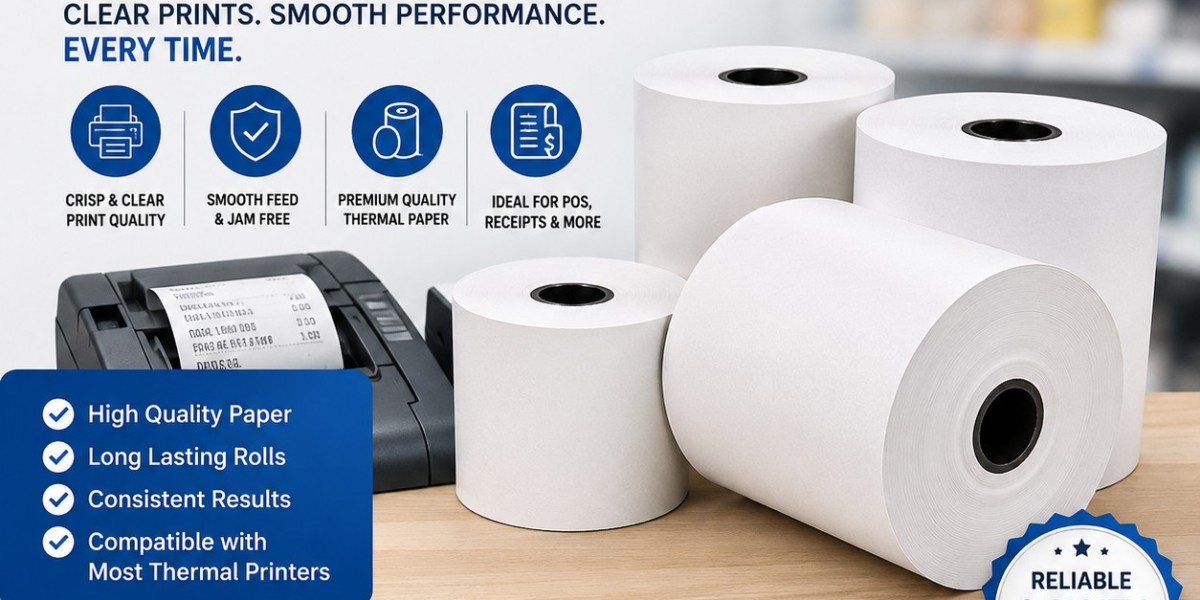
Most business owners don't think twice about the paper feeding through their receipt printer — until it starts jamming twice a day or the ink fades before a customer even leaves the store. That small, overlooked purchase is thermal paper rolls, and the difference between a reliable batch and a poor one shows up faster than most buyers expect. What starts as coated receipt thermal paper picked almost at random can end up costing far more in wasted time, printer repairs, and customer complaints than the few rupees saved at checkout.
The Real Cost of Buying on Price Alone
It's tempting to treat receipt paper as a commodity — grab whatever's cheapest, since it's "just paper" anyway. But businesses that print hundreds of receipts daily quickly learn that low-grade rolls come with hidden costs: more frequent jams that slow down the checkout line, faded prints that trigger customer disputes over pricing, and printheads that wear out faster from abrasive, inconsistent coatings. When you factor in the labor cost of staff dealing with printer issues repeatedly throughout the day, the "cheaper" roll often ends up being the more expensive choice by the end of the month.
How the Coating Actually Determines Performance
Every roll's real value lies beneath the surface, in a chemical coating that reacts to heat from the printhead. This layer is what turns blank paper into readable text within milliseconds, and its formulation quality directly affects three things buyers care about most: print clarity, fade resistance, and how gently it treats the printer mechanism itself. Rougher, lower-grade coatings tend to leave behind fine residue on the printhead over time, gradually degrading print quality even on a brand-new printer. Smoother, well-formulated coatings avoid this buildup almost entirely, which is part of why established brands hold their reputation over cheaper, unbranded alternatives.
Questions Worth Asking a Supplier
What coating grade is used, and is it rated for short-term or long-term legibility?
Is the paper BPA-free or phenol-free, in line with current compliance expectations?
What's the roll's expected fade resistance under normal indoor conditions?
Are sample rolls available before committing to a bulk order?
Getting the Sizing Right the First Time
A surprising number of returns and complaints trace back to something as basic as incorrect sizing. Roll width, core diameter, and total length all need to align precisely with a printer's specifications — a mismatch here isn't a minor inconvenience, it's often a complete deal-breaker that leaves an entire batch unusable. Most POS systems run on either 57mm or 80mm width standards, but core diameters can vary more than people expect between printer models. Checking the printer's manual, rather than assuming compatibility based on what worked with a previous supplier, avoids an entirely preventable headache.
Matching Roll Quality to Actual Business Needs
Not every business needs the same grade of paper, and buying more durability than necessary just adds unnecessary cost. A fast-food counter using standard thermal paper rolls for same-day receipts doesn't need archival-grade fade resistance, while a pharmacy printing prescription labels on high-quality thermal paper rolls absolutely does.
A practical way to think about it:
High-volume, short-lifespan use — standard-grade coatings are usually sufficient
Records needing months of legibility — top-coated or enhanced formulations make more sense
Health, legal, or compliance-related printing — archival-grade or BPA-free rolls are worth the extra cost
Outdoor or vehicle-based printing, like delivery receipts — moisture-resistant coatings reduce fading risk
Storage Habits That Quietly Protect Your Investment
Even premium paper degrades quickly under poor storage conditions, since the coating stays chemically active whether it's been printed on or not. Rolls left near windows, heaters, or inside a hot vehicle can fade or discolor before they're ever loaded into a printer, effectively wasting the purchase before it's even used. Simple habits make a measurable difference here: storing stock in a cool, shaded area, avoiding direct contact with PVC-based packaging materials, and rotating older rolls to the front so nothing sits unused for months at a time.
Signs a Supplier Is Worth Sticking With
Once a business finds a reliable source, consistency becomes just as valuable as the paper's initial quality. A dependable supplier delivers rolls that perform the same way batch after batch, communicates clearly about pricing and availability, and restocks quickly enough to prevent checkout downtime during busy periods. Switching suppliers frequently to chase marginally lower prices often introduces more inconsistency than it saves in cost, especially once the hidden expenses of jams, complaints, and printer wear are factored back in.
A Small Purchase That Deserves More Attention
It's easy to overlook something as routine as receipt paper, but for any business running a checkout counter, kitchen printer, or billing station, this small purchase has an outsized effect on daily operations. Taking the time to understand coating quality, correct sizing, and proper storage turns a routine reorder into a genuinely smart business decision.
Need a dependable source for thermal paper rolls that actually hold up to daily use? Browse the full selection here.