
Ask any theology student what the hardest part of a dissertation is, and most won't say the writing. They'll say the deciding. Theology stretches across biblical studies, church history, ethics, systematic thought, philosophy, and questions about how faith intersects with modern life and when a subject is that wide open, picking a lane can feel almost impossible.
The good news is that a strong dissertation was never about covering the whole field. It's about picking one question and following it somewhere specific.
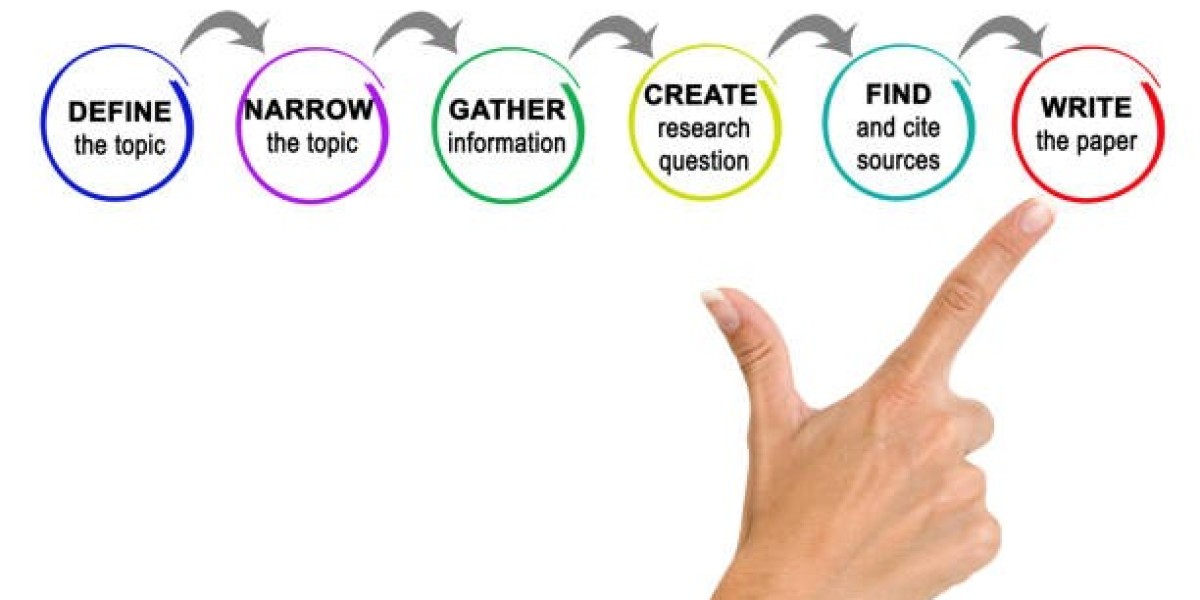
This guide walks through the practical stages: narrowing a topic, choosing a methodology that fits your subject, building a literature review that does more than summarise, and structuring the final document so it reads as one connected argument rather than several disconnected chapters.
What a Theology Dissertation Actually Is
At its core, a theology dissertation is a sustained piece of independent research built around a specific theological problem not a general survey of a topic you find interesting.
Your subject might centre on a biblical passage, a particular theologian, a historical controversy, a doctrine, an ethical dilemma, or the point where theology meets another discipline entirely. Requirements shift depending on your institution and level of study, but nearly every programme is looking for the same underlying skills: original research, careful engagement with existing scholarship, and an argument that holds together from the first page to the last.
Think of the difference between a dissertation that traces the emergence of Trinitarian doctrine in the patristic era, and one that simply summarises "what the early church believed about the Trinity." The first is investigating a question. The second is writing an extended encyclopaedia entry and examiners can usually tell the difference within the first few pages.
Choosing a Topic That Actually Works
Here's a trap a lot of students fall into: they pick a subject that genuinely interests them, then discover three months in that it's too big to say anything meaningful about in 10,000–15,000 words.
Compare these two starting points:
Too broad: "Christianity and poverty"
Workable: "How does liberation theology understand the relationship between Christian faith and economic injustice?"
The second version gives you an actual foothold a defined theological tradition, a specific relationship to examine, and a question you could plausibly answer in a single dissertation.
Some fruitful areas to draw from include:
- Biblical interpretation and hermeneutics
- Old and New Testament theology
- Patristic and medieval theology
- Reformation studies
- Christology and ecclesiology
- Christian ethics
- Philosophical theology
- Feminist, Black, liberation, and postcolonial theology
- Practical theology
- Theology's relationship with science, politics, or interfaith dialogue
When you're weighing options, three things matter more than raw interest: whether there's enough scholarly and primary material to work with, whether the question is genuinely debated (not just described) in the literature, and whether you can realistically cover it in the word count you've been given. A brilliant question with no accessible sources is still a dead end.
If you want a second opinion while you're still narrowing things down, working through options with an experienced reader or exploring Theology dissertation help can save you from committing to a topic that looks fine on paper but falls apart once the research starts.
Turning a Broad Interest Into a Real Research Question
Once you've got a general area, the next job is sharpening it into something you can actually answer.
Start broad and keep asking narrower questions:
- What specifically draws me to this subject?
- Which period, text, thinker, or community am I actually examining?
- Where do scholars disagree and why?
- What evidence exists that could settle, or at least illuminate, that disagreement?
- What's been under-explored or assumed rather than argued?
Take "Augustine and free will." Interesting, but still shapeless. Narrow it to how Augustine's position shifts across a specific set of writings say, his anti-Pelagian works versus his earlier treatises or set his view against a rival tradition and ask where the real disagreement lies. Now you've got something you can defend.
A quick test before you commit: try writing a one- or two-sentence provisional answer to your question. If nothing comes to mind, the question probably isn't specific enough yet. You should also be able to name, roughly, which primary texts, which secondary scholars, and which method you'd use to investigate it. If you can't sketch that out in a paragraph, keep narrowing.
Picking a Methodology That Fits Your Subject
There's no single "correct" method in theology the right approach depends entirely on what kind of question you're asking.
Biblical studies. Depending on the project, you might lean on historical-critical analysis, narrative criticism, textual criticism, or reception history. Some projects require direct engagement with Biblical Hebrew, Koine Greek, or Aramaic. The SBL Handbook of Style, published by the Society of Biblical Literature, remains the standard reference for citation conventions, transliteration, and scholarly formatting in this area.
Historical theology. If you're working on a figure like Augustine, Aquinas, Luther, Calvin, or Barth, resist the temptation to lean entirely on secondary commentary. Read the primary texts directly wherever possible, and pay close attention to the historical moment those texts were written in a theological claim can be badly misread once it's stripped of its political, ecclesiastical, or cultural context.
Systematic and philosophical theology. This kind of work usually means comparing competing positions on a concept divine simplicity, human freedom, revelation, salvation. The single most common mistake here is assuming a term means the same thing across every tradition you're citing. Define your terms early, and define them precisely.
Practical theology. If your question involves lived religious practice rather than purely textual analysis, you may be working with interviews, case studies, or documentary research. If human participants are involved at any stage, check your institution's ethics and consent requirements before you start collecting data, not after.
Writing a Literature Review That Argues, Not Just Lists
A literature review isn't a book report. Its job is to map the actual conversation happening around your question where scholars agree, where they clash, and where your dissertation is going to add something.
As you read, keep asking:
- Where's the consensus, and where's the real fault line?
- What assumptions are baked into each side's argument?
- Which sources do different scholars lean on, and why?
- What's missing a period, a text, a perspective nobody's addressed?
For sourcing, the Atla Religion Database is purpose-built for research in religion and theology and is usually the fastest way into peer-reviewed material in the field. For UK-based research specifically, the British Library's EThOS service is worth checking for doctoral theses that have already tackled adjacent questions useful both for gap-spotting and for seeing how other researchers structured similar arguments. Prioritise peer-reviewed journals, critical editions, and primary texts over general websites, though that doesn't mean every online source is automatically unreliable check who wrote it, why, and what evidence backs it up.
A Dissertation Structure That Actually Holds Together
Check your department's handbook first, since requirements vary, but most theology dissertations follow some version of this shape.
Introduction. Set out your research question, why it matters, and how you plan to approach it. Give just enough background for the reader to follow this isn't the place to summarise the entire history of the topic.
Literature review. Organise around debates and themes, not a chronological list of authors. "Scholar A said X, then Scholar B said Y" is not analysis; it's a summary.
Methodology. Explain your approach and justify why it suits this particular question. Be upfront about its limitations too examiners notice when a student pretends their method has none.
Main chapters. Every chapter should be doing a specific job in answering your central question. If a chapter exists mainly because you had a lot of notes on that subject, it probably needs cutting or reworking.
Conclusion. Return to your original question directly. Summarise what your research actually shows, note its significance, and be honest about its limits. This is not the place to introduce a new argument you haven't built up to.
Where Theology Dissertations Tend to Go Wrong
A few recurring issues show up again and again, and most of them trace back to the planning stage rather than the writing itself.
The topic stayed too broad. Trying to cover the full sweep of a doctrine or movement almost always produces shallow analysis. Cut the timeframe, the sources, or the specific debate down further than feels comfortable.
Description standing in for analysis. Explaining what a theologian believed isn't the same as evaluating why the argument holds up, what evidence it rests on, or how it compares to a rival view. Examiners are grading the second thing, not the first.
Leaning too hard on secondary sources. Commentary on a text is useful, but it can't replace direct engagement with the primary material your question is actually about.
The literature review turns into a list. If your review reads like "A argues this, B argues that, C argues something else," go back and connect the dots explain what the disagreement between them actually reveals.
The question keeps shifting. A bit of drift during research is normal. A complete change of direction three chapters in usually signals the original question wasn't tested carefully enough before the writing started.
A Practical Workflow for Getting It Done
Breaking the project into stages makes it far less overwhelming than treating it as one giant task.
- Nail down the question. Write it out and keep it visible while you work.
- Locate your core sources the primary texts and key scholarly works everything else will build on.
- Map the debate. Note the major positions, the disagreements, and the gaps.
- Sketch a provisional argument. You don't need a final answer yet, just a working direction.
- Plan chapters around function, not just content each one should answer part of the central question.
- Write the full draft before polishing sentences. A rough complete draft is easier to fix than a perfect first paragraph.
- Revise for argument and structure, checking whether the evidence actually supports each claim.
- Do a final pass on citations, quotations, and formatting against your university's requirements.
Frequently Asked Questions
What makes a good theology dissertation? A focused research question, credible sources, a methodology suited to the subject, genuine engagement with existing scholarship, and an argument that holds together from start to finish. Originality doesn't require a brand-new theory a fresh angle on an existing debate is enough.
How many sources does a theology dissertation need? There's no fixed number. It depends on your subject, degree level, and word count. A shorter list of directly relevant sources beats a long list padded out to hit a target.
Can theology dissertations be interdisciplinary? Yes, and often should be. Theology regularly overlaps with philosophy, history, sociology, and politics, particularly for questions about religion's role in wider culture or public life.
Can I write about my own religious convictions? Sometimes, depending on your course and method. Personal belief can be what draws you to a question in the first place, but the dissertation itself needs to be built on evidence and scholarly argument rather than personal conviction alone.
Final Thoughts
The dissertations that go smoothly almost always share one thing: the student knew exactly what question they were trying to answer before they started writing. Everything else the reading, the methodology, the chapter structure follows from that.
You don't need to have theology figured out before you begin. You need one clear question and a plan for chasing down the answer. Once that's in place, the rest of the project has somewhere to go.