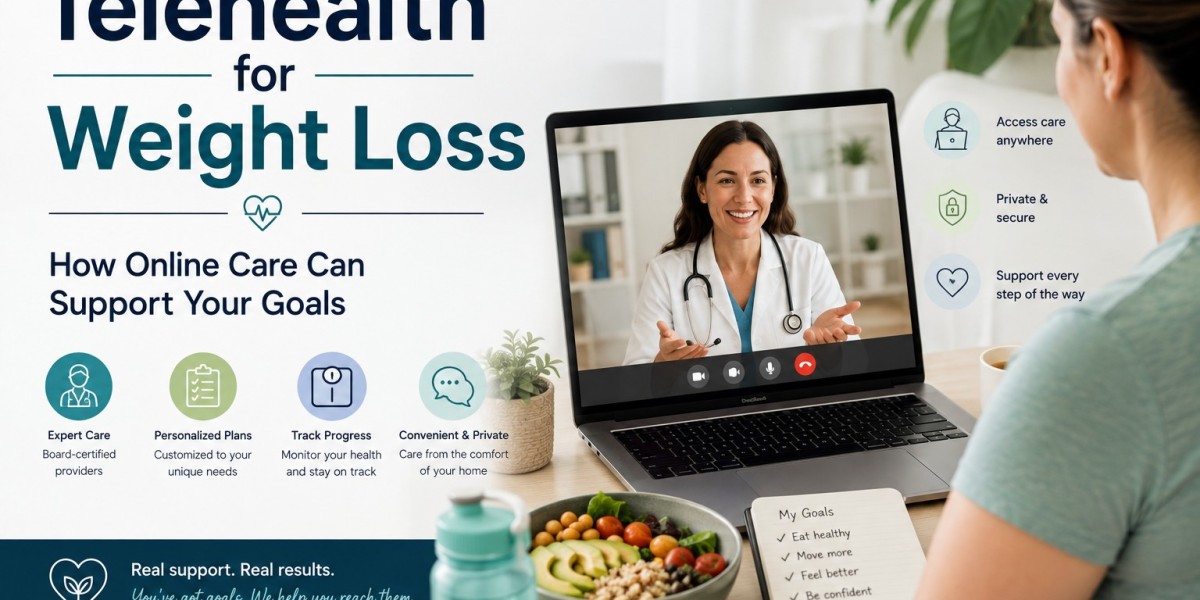

Weight management can be challenging, especially when factors such as metabolism, hormones, medications, sleep, stress, and underlying health conditions may affect your progress. For many people, telehealth for weight loss provides a convenient way to connect with qualified healthcare professionals without needing to visit a traditional clinic for every appointment.
Online healthcare can make weight-management support more accessible while allowing patients to discuss their goals, review their health history, complete appropriate testing, and develop personalized plans. However, effective telehealth care should involve more than simply receiving a prescription. It should include appropriate medical evaluation, individualized recommendations, and ongoing support.
What Is Telehealth for Weight Loss?
Telehealth for weight management uses virtual healthcare technology to connect patients with qualified medical professionals. Depending on the provider and the patient's needs, online appointments may include health assessments, discussions about weight-management goals, medication reviews, laboratory testing recommendations, and follow-up visits.
The exact services available vary between providers. Some programs may focus primarily on medication, while others take a more comprehensive approach that includes metabolic health, nutrition, lifestyle changes, and ongoing monitoring.
The goal should be to make healthcare more convenient without compromising appropriate medical oversight.
How Online Weight Management Works
A telehealth weight-management program may follow several steps.
1. Initial Virtual Consultation
The process often begins with an online consultation. During this appointment, you may discuss your health history, current medications, lifestyle, previous weight-management efforts, and personal goals.
Your healthcare professional can use this information to determine whether additional evaluation or testing may be appropriate.
2. Health and Metabolic Assessment
Depending on your individual circumstances, your provider may recommend laboratory testing or other assessments.
Testing may provide information about areas such as blood glucose, cholesterol, thyroid function, or other relevant biomarkers. Not everyone requires the same tests, so testing should be based on your medical history and clinical needs.
3. Personalized Weight-Management Plan
After reviewing your health information, your provider can develop recommendations based on your individual needs.
A plan may include nutrition guidance, physical activity recommendations, sleep and stress-management strategies, and prescription treatment when medically appropriate.
4. Ongoing Follow-Up
Weight management is an ongoing process. Follow-up appointments can give you an opportunity to discuss your progress, concerns, medication effects, lifestyle changes, and any challenges you are experiencing.
Your healthcare professional can determine whether adjustments to your plan are appropriate.
Benefits of Online Weight-Management Care
Telehealth offers several potential advantages for people seeking professional support with weight management.
Convenience
One of the biggest advantages is the ability to communicate with a healthcare professional from home. This can reduce travel time and make appointments easier to fit into a busy schedule.
Greater Accessibility
Virtual care may make it easier for people who live far from a clinic or have transportation, mobility, or scheduling challenges to access healthcare services.
Personalized Support
A quality telehealth program can provide individualized recommendations rather than relying entirely on generic diet or exercise plans.
Easier Follow-Up
Regular virtual appointments can make ongoing communication with your healthcare team more convenient. This can be particularly helpful when monitoring progress or discussing treatment changes.
Integration With At-Home Testing
Some healthcare providers offer at-home laboratory services or mobile phlebotomy, which can make the overall healthcare experience more convenient.
Can Telehealth Include Prescription Weight-Loss Medication?
For some patients, prescription medication may be considered as part of a comprehensive weight-management plan.
Certain medications, including some GLP-1 medications, are approved for specific medical indications and may be appropriate for eligible patients. However, they are not suitable for everyone.
A qualified healthcare professional should evaluate your health history and determine whether a medication is appropriate. Patients should also understand potential side effects, contraindications, medication interactions, and monitoring requirements.
Be cautious of online services that make unrealistic promises about guaranteed weight loss or present medication as a solution for everyone. Responsible medical care should focus on individualized treatment and patient safety.
Why Medical Evaluation Matters
Weight gain or difficulty losing weight can have many possible causes. Factors such as nutrition and activity are important, but they are not the only considerations.
A healthcare professional may consider:
- Metabolic health
- Blood sugar regulation
- Thyroid function
- Hormonal changes
- Current medications
- Sleep patterns
- Stress
- Nutrition
- Physical activity
- Medical history
- Family health history
Understanding these factors can help create a more complete picture of your health.
What to Look for in a Telehealth Weight-Loss Provider
When comparing online programs, don't choose a provider based only on price or the promise of fast results.
Look for a program that offers:
Qualified medical oversight: Make sure appropriately qualified healthcare professionals are responsible for evaluating patients and making treatment decisions.
Individualized assessments: Your health history, medications, goals, and lifestyle should be considered.
Appropriate testing: If laboratory testing is needed, it should be selected based on your individual health circumstances.
Ongoing monitoring: Look for providers that offer follow-up appointments and opportunities to discuss your progress.
Lifestyle support: Nutrition, physical activity, sleep, and other healthy habits should remain part of a comprehensive approach.
Transparent communication: The provider should clearly explain treatment options, potential risks, costs, and what is included in the program.
Telehealth for Weight Loss and Personalized Care
One of the biggest advantages of telehealth for weight loss is that it can bring medical guidance into a patient's normal environment.
Instead of treating weight management as a short-term diet, online care can support a broader approach that considers your medical history, metabolic health, lifestyle, and individual goals.
For some patients, this may include laboratory testing to better understand relevant biomarkers. For others, it may involve lifestyle recommendations or prescription treatment when clinically appropriate.
The specific approach should always be determined by a qualified healthcare professional.
The Role of Nutrition and Lifestyle
Telehealth does not mean that medication or virtual appointments replace healthy lifestyle habits. Nutrition and physical activity remain important components of long-term health.
A personalized nutrition plan may emphasize balanced meals, adequate protein, fiber-rich foods, vegetables, fruits, whole grains, and appropriate sources of healthy fats.
Regular physical activity can also support cardiovascular health, strength, mobility, and metabolic health. Depending on your abilities and goals, this may include walking, cycling, swimming, resistance training, or other forms of exercise.
Sleep and stress management are also worth considering. Poor sleep and chronic stress can affect energy, appetite, eating patterns, and overall well-being.
At-Home Laboratory Testing and Weight Management
Laboratory testing can sometimes provide valuable information when evaluating metabolic and overall health.
Depending on your symptoms and medical history, a healthcare professional may determine whether tests related to blood sugar, cholesterol, thyroid function, or other biomarkers are appropriate.
At-home or mobile laboratory services can make testing more convenient for some patients. However, testing should always be medically appropriate, and results should be interpreted by a qualified healthcare professional in the context of your overall health.
Thryve Clinic's Telehealth and Wellness Services
Thryve Clinic provides physician-guided wellness services designed to make personalized healthcare more convenient. Through telemedicine consultations, advanced biomarker testing, at-home laboratory testing, mobile phlebotomy, and personalized wellness plans, Thryve Clinic helps patients better understand their individual health and work toward their wellness goals. The approach combines convenient virtual care with health data and professional guidance rather than relying on a one-size-fits-all approach. Learn more about the clinic and its services at Thryve Clinic.
Questions to Ask Before Starting an Online Program
Before choosing a telehealth weight-management provider, consider asking:
- Who will evaluate my health?
- Are the healthcare professionals appropriately qualified and licensed?
- Will my medications and medical history be reviewed?
- What happens during the initial consultation?
- Are laboratory tests available if medically appropriate?
- What treatment options may be considered?
- How often will follow-up appointments occur?
- How will my progress be monitored?
- What lifestyle support is provided?
- What costs are included in the program?
Getting clear answers can help you determine whether a program offers the level of medical support you are looking for.
Is Online Weight Management Right for Everyone?
Telehealth can be a convenient option for many people, but it is not appropriate for every situation.
Some health concerns require an in-person physical examination, urgent evaluation, or other forms of care that cannot be provided virtually. Your healthcare professional can determine whether telehealth is appropriate based on your circumstances.
If you experience severe or concerning symptoms, seek appropriate medical attention rather than relying solely on a virtual weight-management appointment.
Final Thoughts
Telehealth has changed the way many people access healthcare, and online weight-management services can make professional support more convenient and accessible. A well-designed program can combine virtual consultations, appropriate health assessments, laboratory testing, personalized lifestyle recommendations, and ongoing follow-up.
For people considering telehealth for weight loss, the most important factor is not simply convenience. Look for a provider that offers qualified medical oversight, individualized care, transparent communication, and a comprehensive approach to your health.
Weight management is highly individual. With the right professional guidance and sustainable lifestyle strategies, telehealth can be one useful component of a broader approach to improving health and well-being.