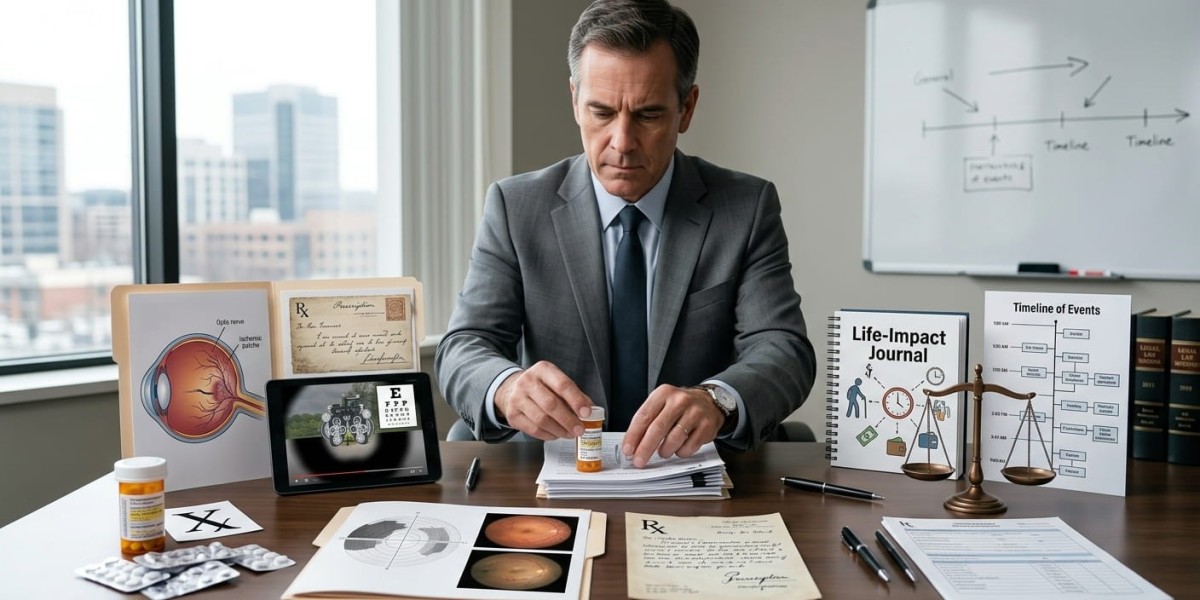

If you suffered serious vision problems after taking a prescription medication, you may be wondering, “What evidence do you need for a medication vision loss lawsuit?” These cases can involve medical, pharmaceutical, and legal questions, particularly when the injury involves nonarteritic anterior ischemic optic neuropathy (NAION) or another serious vision condition. If you believe a medication contributed to your injury, Vision Loss Lawyer provides information about potential pharmaceutical injury claims involving medication-related vision loss.
What Is a Medication Vision Loss Lawsuit?
A medication vision loss lawsuit is a potential legal claim brought by someone who believes a medication caused or contributed to serious vision problems or an eye-related injury.
The evidence in these cases generally needs to help establish several important facts:
What medication you took
When you took it
What vision problem developed
When your symptoms started
Whether a medical professional diagnosed the condition
Whether other factors could have caused the injury
What financial and personal losses resulted
A vision problem that occurs after taking a medication does not automatically prove that the medication caused the injury. Medical records, expert evaluation, medication history, and other documentation may be needed to investigate a potential claim.
1. Medical Records and Diagnosis
One of the most important types of evidence is documentation of your vision injury.
Your medical records may show:
Your symptoms
Date of onset
Medical examinations
Eye-care visits
Diagnosis
Treatment recommendations
Follow-up appointments
Changes in visual function
If you were diagnosed with NAION, your ophthalmology records may be particularly relevant. NAION can cause sudden, usually painless vision loss and involves damage to the optic nerve.
Your medical records may also help rule out other possible causes of vision loss. This can be important because conditions such as diabetes, vascular disease, retinal disorders, and other optic nerve problems can affect vision.
2. Your Medication History
A complete medication history can help establish what drug you were taking before the vision injury occurred.
Save information showing:
Medication name
Prescribed dosage
Date treatment started
Dosage changes
Prescription dates
Pharmacy information
Duration of treatment
Other medications taken at the same time
For cases involving semaglutide, this could include medications such as Ozempic or Wegovy.
The FDA has identified NAION as a potential serious-risk signal associated with semaglutide-containing products, including Ozempic, Rybelsus, and Wegovy, and has stated that it was evaluating whether regulatory action was needed.
This regulatory information is relevant background, but it does not by itself prove that a particular person's medication caused their vision loss.
3. The Timeline Between Medication Use and Vision Loss
Another important piece of evidence is the timeline.
Consider documenting:
When did you start the medication?
When did your dosage change?
When did you first notice vision problems?
Was the vision loss sudden or gradual?
Which eye was affected?
When were you diagnosed?
A clear timeline can help medical professionals and attorneys understand the relationship between medication exposure and the onset of symptoms.
Timing alone does not establish causation, but it can be an important part of the overall evidence.
4. Ophthalmology and Diagnostic Test Results
Eye examinations and diagnostic testing can provide objective evidence of your condition.
Depending on the suspected diagnosis, records may include:
Visual acuity testing
Visual field testing
Dilated eye examinations
Optical coherence tomography (OCT)
Retinal imaging
Optic nerve evaluations
Neurological testing
Other diagnostic imaging
If you were diagnosed with NAION, documentation of optic nerve changes and visual-field defects may help demonstrate the nature and severity of the injury.
Keep copies of your reports rather than relying only on a summary of the diagnosis.
5. Evidence of Other Health Conditions
Your medical history can also be relevant.
A doctor or attorney may need to consider other factors that could contribute to vision loss, including:
Diabetes
High blood pressure
High cholesterol
Sleep apnea
Cardiovascular conditions
Previous eye problems
Other medications
Previous optic nerve conditions
This does not mean that having another health condition prevents you from having a potential claim. Instead, a complete medical history can help professionals evaluate all possible causes of your injury.
6. Prescription and Pharmacy Records
Prescription records can help confirm that you were actually prescribed and used a particular medication.
Useful documents may include:
Prescription receipts
Pharmacy statements
Medication lists
Prescription labels
Refill records
Electronic pharmacy records
Medication packaging
If you still have the medication packaging, keep it in a safe place. It may contain information about the drug, dosage, manufacturer, lot number, or prescription.
For compounded medications, documentation can be especially important. The FDA has warned that unapproved compounded versions of GLP-1 drugs, including semaglutide, do not undergo the same FDA review for safety, effectiveness, and quality as approved drugs.
7. Evidence of Medical Expenses
Vision loss can result in substantial medical expenses.
Keep documentation of:
Emergency room visits
Ophthalmologist appointments
Diagnostic testing
Hospitalization
Prescription costs
Follow-up care
Rehabilitation
Assistive devices
Transportation related to medical treatment
Bills and receipts can help demonstrate the financial impact of the injury.
8. Evidence of Lost Income
Serious vision loss can affect your ability to work.
You may want to preserve:
Pay stubs
Tax records
Employment records
Leave documentation
Disability records
Employer correspondence
Records of reduced working hours
If your vision impairment prevents you from performing the same job, documentation of reduced earning capacity may also be relevant.
The exact damages available depend on the circumstances of the claim and applicable law.
9. Documentation of Quality-of-Life Changes
Not every consequence of vision loss appears on a medical bill.
A serious visual impairment can affect:
Driving
Reading
Working
Cooking
Shopping
Using computers
Recognizing people
Hobbies
Exercise
Mobility
Independence
Consider keeping a written record of how your vision loss affects your daily routine.
For example, you might document when you need assistance with tasks that you previously handled independently. This information can help demonstrate the broader impact of the injury.
Vision Loss Lawyer discusses potential damages in pharmaceutical injury cases that may include medical expenses, ongoing treatment costs, lost income, diminished earning capacity, pain and suffering, and loss of quality of life.
10. Statements From Healthcare Providers
Your doctors' records and professional opinions may be important when evaluating causation.
An ophthalmologist may diagnose NAION or another condition and document your symptoms and medical history. Other healthcare providers may provide information about your medication use, underlying conditions, and treatment timeline.
In some pharmaceutical injury cases, expert testimony may also be necessary to address complicated medical or scientific questions.
Patients should not try to establish medical causation on their own. The relationship between a drug and a particular injury can involve complex medical evidence.
What If You Think Ozempic or Semaglutide Caused Your Vision Loss?
If you experienced vision loss after using Ozempic, Wegovy, or another semaglutide medication, preserve your complete medical and medication records.
The FDA has identified NAION as a potential safety signal associated with semaglutide-containing medications.
Research into the relationship between semaglutide and NAION continues to develop. Therefore, it is important to distinguish between evidence showing an association and evidence establishing that a medication caused an individual's injury.
If you have sudden vision loss, seek prompt medical attention rather than waiting for a potential legal evaluation.
How Can a Lawyer Evaluate the Evidence?
A pharmaceutical injury attorney may review the available evidence to determine whether your circumstances could support a claim.
The review may include:
Medication exposure
Medical diagnosis
Timing of symptoms
Medical and ophthalmology records
Alternative causes
Financial losses
Quality-of-life effects
Applicable legal deadlines
A lawyer may also determine whether additional medical records, expert opinions, or other documentation are needed.
What Should You Do If You Are Considering a Claim?
Start by obtaining appropriate medical care and following your healthcare provider's recommendations.
Then organize your documentation in one place. Keep copies of prescriptions, medical records, test results, bills, employment documents, and notes about how your vision has changed.
Avoid deleting messages, throwing away prescription information, or relying solely on memory for important dates.
Finally, consider speaking with a qualified pharmaceutical injury lawyer who can review the specific facts of your situation.
Final Thoughts
So, what evidence do you need for a medication vision loss lawsuit? There is no single document that proves a case. Instead, a potential claim may depend on a combination of medical records, medication history, diagnostic testing, timing of symptoms, evidence of other health conditions, financial losses, and documentation of how vision loss affects your life.
For people taking semaglutide medications, NAION has received regulatory attention as a potential safety signal. However, the existence of a safety signal does not automatically establish causation or guarantee that an individual has a successful legal claim.
If you have experienced sudden or serious vision loss after taking a medication, seek appropriate medical care and preserve your records. A qualified pharmaceutical injury attorney can then evaluate the available evidence and explain whether you may have legal options.
FAQs
1. What evidence is most important in a medication vision loss lawsuit?
Medical records, a documented diagnosis, medication history, prescription records, the timeline between medication use and vision loss, diagnostic test results, and evidence of financial and personal losses can all be important.
2. Do I need an NAION diagnosis to have a medication vision loss claim?
Not necessarily. A potential pharmaceutical injury claim depends on the specific injury and circumstances. However, a clear medical diagnosis can be important when determining what caused the vision problem and documenting its severity.
3. Can my medical history affect a vision loss drug injury claim?
Yes. Conditions such as diabetes, hypertension, cardiovascular problems, previous eye conditions, and other medications may be considered when evaluating possible causes of vision loss. A complete medical history helps professionals assess the circumstances accurately.
4. What if I lost income because of my vision problems?
Keep pay stubs, tax records, employer correspondence, disability documentation, and other evidence showing how your vision impairment affected your ability to work. These records may help document financial losses associated with the injury.
5. Should I speak with a lawyer if I believe a medication caused my vision loss?
If you experienced serious vision loss and believe a medication may have contributed, consulting a pharmaceutical injury lawyer can help you understand your potential options. An attorney can review your medical records, medication history, diagnosis, damages, and other evidence before advising you about a potential claim.