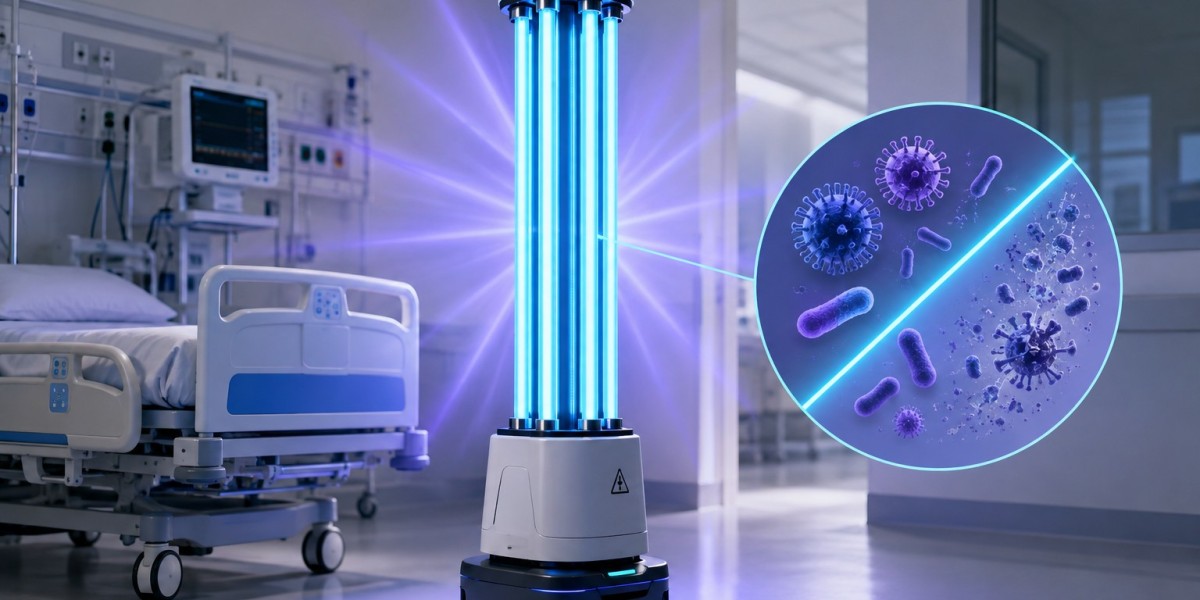

UV disinfection in infection prevention can provide an additional layer of microbial reduction for healthcare facilities working to limit pathogen transmission. Hospitals can explore Xenex UV disinfection solutions as part of a broader environmental cleaning strategy. Xenex's LightStrike technology uses Pulsed Xenon UV light to reduce microorganisms on exposed surfaces after routine cleaning and is designed to complement, rather than replace, established environmental services practices.
Hospitals face ongoing challenges from healthcare-associated infections (HAIs), multidrug-resistant organisms, and pathogens that can remain on frequently touched environmental surfaces. This makes infection prevention a process that requires multiple strategies working together. UV disinfection can serve as one of those additional strategies.
Why Is Infection Prevention Important in Healthcare?
Hospitals contain many surfaces that are frequently touched by patients, visitors, nurses, physicians, and environmental services staff. Patient beds, door handles, bedside tables, call buttons, medical equipment, and bathroom fixtures can all become contaminated.
Routine cleaning and chemical disinfection are essential, but achieving consistent coverage across every surface can be challenging. Xenex cites research indicating that 48% of hospital room surfaces were not properly disinfected during liquid chemical cleaning in the referenced study.
This does not mean manual cleaning is ineffective or unnecessary. Instead, it highlights why healthcare organizations may consider additional technologies that can strengthen their environmental disinfection programs.
How Does UV Disinfection Support Infection Prevention?
UV disinfection uses ultraviolet energy to deactivate microorganisms. UVC wavelengths can affect the genetic material of microorganisms, interfering with their ability to reproduce. The effectiveness of UV treatment depends on factors such as wavelength, intensity, exposure time, distance, surface characteristics, and the microorganism being targeted.
Xenex's LightStrike technology uses Pulsed Xenon UV, producing broad-spectrum germicidal UV rather than relying on a single narrow wavelength. Xenex states that LightStrike produces UV across a broad range and is designed to deactivate pathogens on exposed surfaces.
This makes UV technology particularly relevant as a supplemental step in hospital environmental cleaning.
UV Disinfection Adds Another Layer After Manual Cleaning
One of the most important roles of UV disinfection is to complement routine cleaning.
A typical enhanced workflow may look like:
Patient discharge → manual cleaning → chemical disinfection → UV microbial reduction → room ready for appropriate occupancy
Manual cleaning physically removes dirt and organic material and prepares surfaces for disinfection. UV technology can then provide additional microbial reduction on exposed surfaces.
Xenex specifically describes LightStrike as a validated means of reducing pathogens that survive liquid chemical cleaning.
This layered approach can help hospitals avoid relying on a single disinfection method.
Can UV Disinfection Help Address Healthcare Pathogens?
UV disinfection has been studied against a range of microorganisms relevant to healthcare environments.
Xenex's published LightStrike6 studies include research involving C. difficile, MRSA, Candida auris, A. baumannii, SARS-CoV-2, and other microorganisms. The company's studies page includes laboratory, environmental, and hospital-use research.
Pathogens do not all respond to UV exposure in exactly the same way. Spore-forming organisms, for example, can require different exposure conditions than vegetative bacteria. Therefore, healthcare facilities should follow validated protocols rather than assuming identical results for every organism.
UV Technology Can Focus on High-Priority Areas
Hospitals may not need to use supplemental UV disinfection in every room in exactly the same way.
Infection prevention teams can identify areas where microbial reduction is particularly important, such as:
Intensive care units
Isolation rooms
Patient rooms
Surgical areas
Operating rooms
High-acuity treatment areas
Rooms associated with specific infection-control concerns
Xenex states that it works with healthcare facilities and infection-control teams to identify high-priority areas and develop implementation processes around existing disinfection programs.
A targeted approach can help facilities integrate UV technology into existing workflows without treating it as a standalone solution.
Why Is UV Disinfection Useful for Environmental Services?
Environmental Services (EVS) teams play a major role in infection prevention. Their work includes cleaning and disinfecting patient rooms, high-touch surfaces, and other healthcare environments.
UV technology can support EVS teams by adding an automated, no-touch microbial reduction step after manual cleaning.
Xenex reports that its LightStrike devices include customizable room positions, motion sensors, and cloud-based reporting capabilities. These features are intended to support safe operation and provide information about disinfection activity.
The technology therefore has both a microbial-reduction role and a workflow-support role.
Why Does UV Positioning Matter?
UV light does not automatically reach every surface in a room. Furniture, equipment, beds, curtains, and other objects can create shadows that prevent direct UV exposure.
Xenex recommends validated positioning practices, including using positions on either side of a patient bed and repositioning high-touch items when necessary.
This is important because having a UV device in a room is not the same as ensuring every relevant surface receives adequate exposure.
Hospitals should follow the manufacturer's instructions for device positioning, exposure times, room preparation, and safety procedures.
Can UV Disinfection Improve Hospital Cleaning Programs?
UV disinfection can help hospitals move toward a more structured and measurable environmental hygiene program.
An effective program may combine:
Manual environmental cleaning
Chemical disinfection
UV microbial reduction
Staff education
Infection prevention protocols
Equipment cleaning
Cleaning-event tracking
Compliance monitoring
Data analysis
Xenex describes implementation support, training, workflow consulting, and monitoring as components of its broader approach to microbial reduction.
This demonstrates an important principle: successful UV disinfection depends on more than the device itself. People, protocols, room selection, training, and workflow all matter.
Does UV Disinfection Replace Chemical Disinfection?
No. UV disinfection should not be viewed as a replacement for routine manual cleaning or chemical disinfection.
Instead, it can serve as a supplemental technology. Manual cleaning remains necessary for removing physical contamination, while chemical disinfectants continue to play an important role in healthcare environmental hygiene.
Xenex positions LightStrike as an additional step designed to reduce pathogens that remain after liquid chemical cleaning.
The strongest infection prevention strategy is therefore a layered one.
What Are the Main Benefits of UV Disinfection?
When appropriately integrated into a healthcare facility's infection prevention program, UV technology may offer several benefits:
Additional microbial reduction after manual cleaning
No-touch treatment of exposed surfaces
Support for environmental services teams
Targeted treatment of high-priority areas
Rapid disinfection cycles for applicable applications
Measurable workflow and utilization data
Support for a comprehensive infection prevention strategy
Xenex reports that its LightStrike technology has been evaluated in more than 45 peer-reviewed studies and has been integrated into healthcare facilities worldwide.
Final Thoughts
So, what role does UV disinfection play in infection prevention? Its primary role is to provide an additional layer of microbial reduction within a comprehensive healthcare cleaning and disinfection program.
UV technology cannot replace hand hygiene, environmental cleaning, chemical disinfection, appropriate PPE, isolation precautions, or other infection prevention practices. Instead, technologies such as LightStrike can complement these measures by targeting microorganisms that may remain on exposed surfaces after routine cleaning.
For hospitals evaluating UV disinfection, the key is to consider the complete program—including technology, staff training, room selection, positioning, safety, workflow, and monitoring—rather than viewing UV as a standalone solution.
FAQs
1. What role does UV disinfection play in infection prevention?
UV disinfection provides an additional microbial-reduction step that can complement manual cleaning and chemical disinfection in healthcare environments.
2. Can UV disinfection replace hospital cleaning?
No. UV disinfection is generally used as a supplemental technology. Manual cleaning and appropriate chemical disinfection remain important parts of environmental hygiene.
3. What pathogens can UV disinfection target?
UV technologies have been studied against various healthcare-associated microorganisms, including C. difficile, MRSA, Candida auris, A. baumannii, and SARS-CoV-2. Effectiveness depends on the organism and exposure conditions.
4. Why does UV disinfection require proper positioning?
UV light is affected by distance and obstructions. Furniture and equipment can create shadows, so proper positioning and exposure are important for effective treatment.
5. Where can hospitals use UV disinfection?
Hospitals may incorporate UV technology into patient rooms, isolation areas, surgical environments, intensive care areas, and other high-priority spaces according to their infection prevention protocols and the device's intended use.