
Modern aerial surveillance requires more than simply placing a camera on an aircraft. Organizations increasingly look for platforms that combine dependable flight performance, clear aerial visibility, portability, responsiveness, and suitability for demanding environments. The Advik FPV Drone represents one approach to professional FPV drone development, with a focus on surveillance and other demanding aerial applications.
The importance of choosing an appropriate drone becomes particularly clear when operations involve difficult terrain, changing weather, limited preparation time, or the need for timely aerial information. A professional platform must therefore be assessed according to its complete set of capabilities rather than a single specification.
What Makes A Professional FPV Drone Different?
Professional FPV drones are designed with specific operational requirements in mind. Unlike recreational aircraft, they may need to provide reliable communication, stable flight, suitable imaging, controlled maneuverability, and consistent performance in outdoor environments.
Several factors contribute to a professional platform:
- Flight stability
- Responsive control
- Reliable video transmission
- Appropriate camera capability
- Practical endurance
- Durable construction
- Portable equipment
- Operator support
- Suitable environmental performance
These characteristics can make a significant difference when aerial information is required for professional purposes.
Understanding The Advik FPV Drone
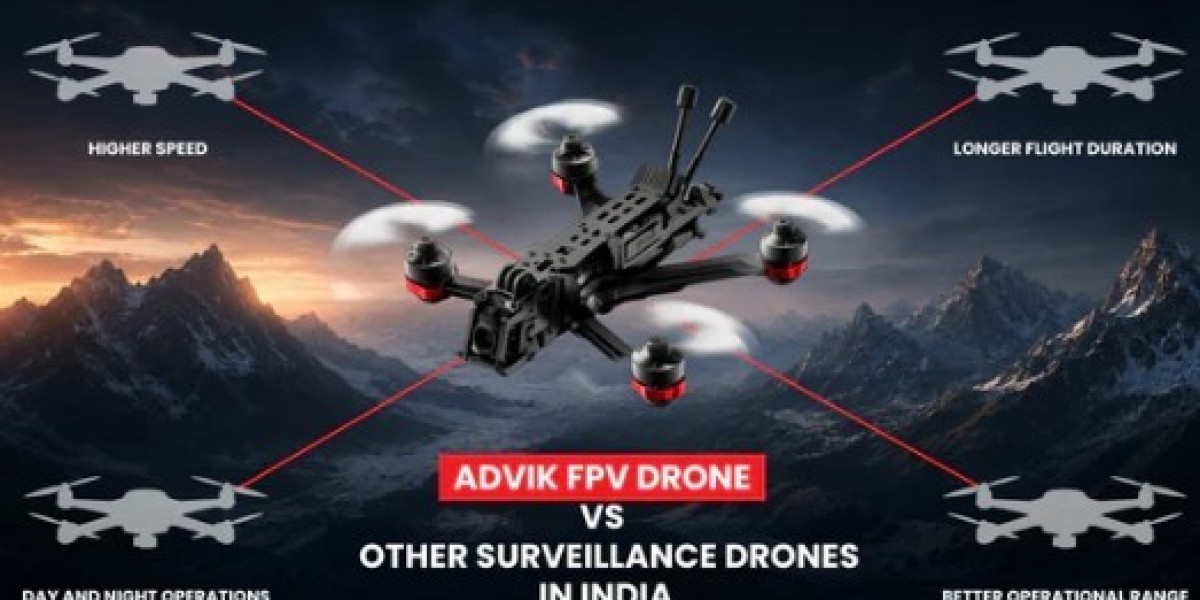
InsideFPV describes Advik as a professional FPV surveillance platform intended for demanding applications. According to the company's published information, the platform combines high-speed flight, FPV visibility, endurance, and rugged design.
The published specifications include performance figures such as speeds above 200 km/h, a stated range of up to 15 km, more than 22 minutes of flight time, and a 4K camera. These figures should be evaluated alongside the actual operating conditions, payload, regulatory requirements, and manufacturer guidance rather than considered independently.
The platform is positioned for applications including surveillance, reconnaissance, rescue, disaster response, and training.
Why FPV Technology Matters For Surveillance
First-person-view technology provides an immersive visual perspective from the aircraft. This can help operators understand what the drone is seeing while it is in flight.
For legitimate surveillance and inspection applications, FPV technology can support:
- Immediate visual awareness
- Precise aircraft positioning
- Detailed observation
- Faster assessment of an area
- Improved operator understanding of surroundings
FPV should not be viewed simply as a speed feature. Its practical value comes from combining direct visual information with appropriate aircraft control and reliable communication.
Speed And Aerial Response
Speed can be useful when an organisation needs to move an aircraft between defined observation points efficiently.
A faster aircraft may reduce the time required to reach a designated area, but speed should always be considered together with safety, visibility, airspace restrictions, flight conditions, and operator capability.
For professional applications, the most useful performance balance may involve adequate speed combined with stable control and dependable imaging rather than maximum speed alone.
Flight Range And Coverage
Range is another important factor when selecting a professional drone.
A platform with greater operating range may support broader observation and reduce the need to reposition ground teams frequently. However, practical range can vary according to terrain, communication conditions, weather, payload, battery capacity, and applicable operating requirements.
InsideFPV's published Advik material describes long-range capability as one of the platform's characteristics. Organisations should verify current specifications and operating limitations directly with the manufacturer before making procurement or operational decisions.
Endurance And Battery Considerations
Flight endurance determines how long a drone can remain available for aerial observation.
A platform with adequate endurance can be useful for:
- Infrastructure inspection
- Environmental observation
- Search support
- Facility monitoring
- Disaster assessment
- Survey documentation
Actual flight time can differ from published maximum figures. Payload weight, wind, temperature, battery condition, flight behaviour, and other factors can affect performance.
Responsible operators should follow manufacturer instructions for battery inspection, charging, storage, and replacement.
Durability For Indian Operating Conditions
India presents a wide range of geographical and environmental conditions. Drone systems may be required to operate in mountainous regions, dry environments, humid areas, forests, or locations experiencing significant temperature variation.
InsideFPV states that Advik has undergone testing involving heat, cold, humidity, dust, water resistance, vibration, wind, and crash resistance. Such claims should be assessed against the specific requirements of an organisation and supported by current manufacturer documentation.
Environmental suitability is particularly important for professional users because equipment reliability can directly affect the continuity of an aerial program.
Camera And Imaging Capability
A surveillance drone is only as useful as the information it can collect.
Camera quality can influence the ability to observe structures, terrain, infrastructure, vehicles, or other permitted subjects from the air.
Depending on the application, organisations may need to evaluate:
- Resolution
- Image stability
- Field of view
- Low-light performance
- Video transmission quality
- Recording capability
- Compatibility with other sensors
InsideFPV's published Advik information identifies a 4K camera as part of the platform's listed capabilities.
Quick Deployment And Operational Readiness
Professional drone users may also value how quickly an aircraft can be prepared for use.
A portable platform can be useful when teams need to move between locations or respond to changing requirements. However, quick deployment should never mean skipping equipment checks, airspace assessment, weather evaluation, or other safety procedures.
A properly designed rapid-deployment system combines portability with an organised process for:
- Equipment inspection
- Battery preparation
- Communication checks
- Camera verification
- Flight planning
- Regulatory confirmation
This approach helps maintain both efficiency and safety.
Applications Of Professional FPV Drones
Professional FPV platforms can support a range of non-weaponised applications.
Infrastructure Inspection
Drones can provide aerial imagery of buildings, towers, bridges, industrial facilities, solar installations, and other infrastructure.
Disaster Assessment
After floods, storms, fires, or other incidents, aerial imagery can help teams assess visible damage and determine where further inspection may be required.
Search And Rescue Support
Aerial observation can provide another perspective when teams are searching large or difficult-to-access areas.
Environmental Observation
Drones can support observation of forests, agricultural areas, coastlines, and other environments where aerial imagery can improve understanding of conditions.
Professional Training
FPV platforms can also be used for operator training and simulation, provided that activities comply with applicable regulations and safety requirements.
Comparing Professional And General-Purpose Drones
General-purpose consumer drones can be highly effective for photography, recreational flying, and basic inspection.
Professional platforms may place greater emphasis on durability, communication, flight performance, field readiness, and specialised applications.
The appropriate choice depends on the intended task.
A consumer platform may be sufficient for occasional photography, while a professional organisation conducting regular infrastructure assessments may require more specialised capabilities.
Importance Of Operator Training
Advanced aircraft still require skilled operators.
Training should cover:
- Aircraft controls
- FPV equipment
- Battery management
- Weather awareness
- Emergency procedures
- Pre-flight inspection
- Applicable aviation regulations
- Responsible data handling
Operator competence is an important part of the overall system. Even a technically advanced drone cannot compensate for inadequate preparation or poor operating practices.
Regulatory Compliance In India
Drone operations in India are subject to applicable aviation rules and requirements. Operators should confirm current requirements before conducting professional flights.
Depending on the operation, considerations may include:
- Aircraft classification
- Airspace restrictions
- Registration requirements
- Permissions
- Pilot qualifications
- Operational limitations
- Privacy considerations
Regulations can change, so professional organisations should consult current official requirements rather than relying on outdated information.
Choosing A Drone For Professional Surveillance
Organisations evaluating a professional drone should begin with the intended application.
Important questions include:
- How large is the area?
- How long must the aircraft remain airborne?
- What type of imagery is required?
- Is portability important?
- What environmental conditions are expected?
- What communication capability is needed?
- What training is available?
- What regulatory requirements apply?
- What maintenance support is required?
This process helps ensure that the selected platform addresses actual operational needs.
The Role Of Quick-Deploy Drone Systems
A Quick-Deploy Drone can be particularly valuable when timely aerial observation is required. Rapid deployment can support emergency assessment, inspection, search operations, and other situations where teams need aerial information without extensive preparation.
However, deployment speed should always be balanced with safe operating procedures. Equipment checks, weather assessment, communication verification, and regulatory compliance remain essential.
InsideFPV's material on quick-deploy systems highlights portability and rapid readiness as important characteristics for aerial surveillance applications.
Advik FPV Drone And Professional Requirements
The Advik FPV Drone should be evaluated as part of a complete aerial system rather than as an isolated aircraft.
Its suitability for a particular organisation depends on factors such as:
- Required flight performance
- Imaging needs
- Endurance
- Operating environment
- Transport requirements
- Operator training
- Maintenance support
- Regulatory compliance
The published capabilities provide useful reference points, but organisations should confirm current specifications and conduct appropriate technical evaluation before selecting a platform.
Why Platform Selection Requires A Balanced Approach
No single drone is ideal for every application.
A platform designed for high-speed FPV operation may have different strengths from a compact inspection multirotor or a long-endurance fixed-wing aircraft.
The best selection depends on the relationship between:
Mission requirement → aircraft capability → operating environment → operator skill → regulatory conditions
This approach prevents organisations from choosing equipment based only on impressive specifications.
Future Of Professional FPV Surveillance
Professional drone technology is continuing to develop.
Future platforms are likely to focus on improvements in:
- Imaging
- Flight efficiency
- Communication
- Battery performance
- Portability
- Environmental resistance
- Operator assistance
- Data collection
As these capabilities improve, professional drone users will have more options for inspection, emergency response, environmental monitoring, mapping, and other legitimate aerial applications.
Conclusion
The Advik FPV Drone demonstrates how modern FPV platforms can be developed around professional aerial requirements rather than recreational flying alone. Its published specifications highlight speed, range, endurance, imaging, and environmental testing, while its intended applications include surveillance, inspection-related observation, rescue, disaster response, and training.
For organisations that need rapid aerial readiness, a Quick-Deploy Drone can offer another useful approach to portable aerial operations. The right choice ultimately depends on the specific application, operating environment, required information, trained personnel, and regulatory framework.
A professional drone should therefore be selected not because it has the largest specification, but because its complete capabilities match the work it is expected to perform.
Frequently Asked Questions
What is the Advik FPV Drone?
Advik is a professional FPV drone platform developed by InsideFPV and presented for surveillance, reconnaissance, rescue, disaster response, and training applications.
What capabilities does Advik offer?
InsideFPV's published information lists high-speed performance, long-range capability, more than 22 minutes of flight time, FPV operation, and a 4K camera. Actual performance depends on operating conditions and configuration.
Is Advik suitable for professional applications?
The platform is presented by InsideFPV for professional surveillance and other demanding outdoor applications. Organizations should assess current specifications and suitability against their own requirements before procurement.
Why is FPV useful for aerial surveillance?
FPV provides the operator with a direct visual perspective from the aircraft, which can support precise positioning and immediate visual awareness during permitted surveillance or inspection activities.
What should organizations consider before purchasing a surveillance drone?
They should consider flight performance, endurance, imaging, communication, portability, environmental conditions, maintenance, training, cost, and applicable regulations.
Are quick-deploy drones useful for emergency response?
They can be useful for rapid aerial assessment, provided they are operated by trained personnel and in accordance with applicable regulations and safety procedures. InsideFPV describes rapid deployment as a key feature of its quick-deploy drone concept.
Does maximum flight time guarantee the same real-world performance?
No. Weather, payload, battery condition, flight behavior, temperature, and other factors can affect actual flight duration.
Are professional FPV drones suitable for inspection?
They can be suitable for certain inspection applications when their camera, flight characteristics, endurance, and operating environment match the requirements of the inspection.
Why is operator training important?
Training helps operators understand aircraft controls, batteries, communication equipment, safety procedures, emergency responses, and applicable aviation requirements.
What makes a professional drone different from a consumer drone?
Professional systems may place greater emphasis on reliability, durability, specialized imaging, communication, field readiness, and consistent performance for defined professional applications.