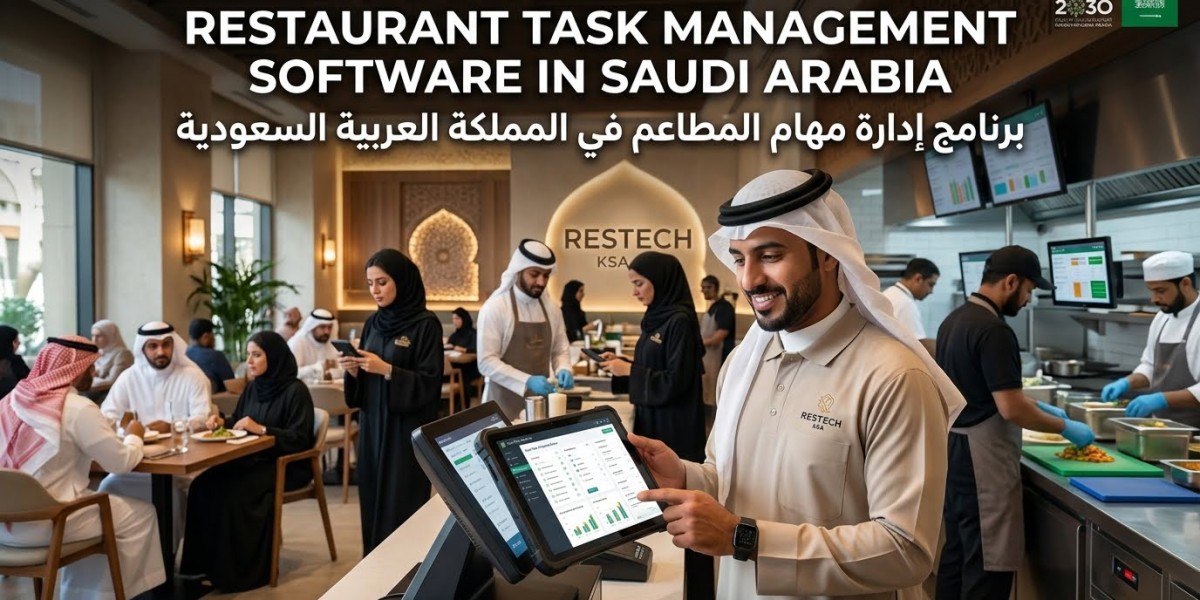

Restaurant operations involve many activities that must happen at the right time and in the right order. Kitchen preparation, table management, cleaning, inventory checks, equipment inspections, staff coordination, opening procedures, and closing duties all depend on consistent task execution. When these activities are managed through verbal instructions, paper checklists, or disconnected communication channels, important tasks can easily be delayed or forgotten.
Restaurant task management software in Saudi Arabia provides a structured way to organize these operational activities. Instead of relying entirely on manual follow ups, restaurants can create tasks, assign responsibilities, set deadlines, monitor progress, and maintain records in a centralized system. This approach can be particularly useful for restaurants managing multiple shifts, large teams, or several branches.
What Restaurant Task Management Means
Restaurant task management refers to the process of creating, assigning, monitoring, and completing operational tasks within a restaurant environment. These tasks can range from simple daily activities to complex workflows involving several employees or departments.
Common restaurant tasks include
• Opening the restaurant before the first shift
• Checking kitchen equipment
• Preparing ingredients
• Inspecting food storage areas
• Cleaning dining areas
• Checking restrooms
• Restocking supplies
• Reviewing inventory levels
• Completing food safety checks
• Preparing tables
• Closing kitchen operations
• Recording maintenance issues
• Checking refrigeration temperatures
• Completing end of shift reports
A digital task management system organizes these activities into defined workflows. Employees can see their responsibilities, while supervisors can monitor whether required activities have been completed.
Why Operational Coordination Matters in Restaurants
Restaurant operations are highly dependent on coordination. One delayed activity can affect several other activities later in the workflow.
For example, if kitchen preparation is delayed, food service can slow down. If inventory checks are skipped, ingredients may become unavailable during busy periods. If cleaning tasks are not completed, hygiene standards can be affected.
Operational coordination helps restaurants maintain consistency across different areas.
A coordinated task structure can help teams
• Know which activities must be completed
• Understand who is responsible for each task
• Follow defined deadlines
• Identify incomplete work
• Respond to urgent issues
• Maintain operational records
• Reduce unnecessary communication
• Improve visibility for supervisors
This becomes more important when restaurants operate several shifts or locations.
Centralized Task Management for Restaurant Teams
A centralized task management system brings operational responsibilities into one digital environment. Instead of maintaining separate paper lists, spreadsheets, messaging conversations, and verbal instructions, managers can organize tasks in a common workspace.
Restaurant task management software in Saudi Arabia can be configured around different operational areas such as kitchens, dining rooms, inventory, maintenance, cleaning, administration, and management.
A centralized system can provide information about
• Active tasks
• Completed tasks
• Overdue activities
• Assigned employees
• Task priorities
• Deadlines
• Recurring responsibilities
• Department specific workflows
This gives managers a clearer view of daily operations without requiring employees to repeatedly report the same information.
Department Based Task Assignment
Restaurants contain several departments with different responsibilities. Assigning every task to a general employee list can create confusion.
Department based task management allows responsibilities to be organized according to operational roles.
Kitchen Tasks
Kitchen teams may receive tasks related to
• Ingredient preparation
• Food storage
• Equipment inspection
• Temperature checks
• Cleaning
• Food preparation schedules
• Waste management
• Stock verification
Front of House Tasks
Front of house employees may manage
• Table preparation
• Dining area inspection
• Customer service activities
• Menu availability checks
• Cleaning
• Restocking
• Shift handover activities
Management Tasks
Managers may receive tasks involving
• Staff schedules
• Inventory reviews
• Performance reports
• Maintenance follow ups
• Supplier coordination
• Compliance checks
• Branch inspections
Organizing tasks by department makes responsibilities easier to understand.
Opening and Closing Task Management
Opening and closing procedures contain many repetitive activities. Employees may need to complete several tasks before a restaurant begins serving customers or before the location can be closed.
Digital task management allows managers to create standardized opening and closing checklists.
Opening tasks may include
• Turning on required equipment
• Inspecting food storage
• Checking refrigeration units
• Preparing dining areas
• Checking restrooms
• Reviewing inventory
• Preparing cash handling areas
Closing tasks may include
• Cleaning kitchen equipment
• Securing food storage
• Checking refrigeration
• Cleaning dining areas
• Removing waste
• Turning off selected equipment
• Reviewing unfinished tasks
Recurring checklists reduce the need to recreate the same tasks every day.
Real Time Task Tracking
Managers need visibility into what is happening during a shift. Traditional paper checklists usually provide information only after someone reviews them.
Digital task tracking can show the current status of operational activities.
A task can be categorized as
• Not started
• In progress
• Completed
• Overdue
• Blocked
This status information helps managers identify problems while the shift is still active.
For example, if a required kitchen inspection remains incomplete near a scheduled deadline, the supervisor can address the issue before it affects other operations.
Priority and Deadline Management
Not every restaurant task has the same level of urgency.
Some tasks must be completed immediately, while others can be handled later during the shift. A task management system can organize activities according to priority.
High priority tasks may include
• Equipment failures
• Food safety checks
• Urgent cleaning
• Customer service issues
• Inventory shortages
• Maintenance problems
Lower priority activities may include routine administrative updates or non urgent inspections.
Priority levels help employees understand which responsibilities require immediate attention.
Recurring Tasks for Daily Restaurant Operations
Many restaurant responsibilities occur repeatedly. Creating each task manually can consume unnecessary administrative time.
Recurring task features allow restaurants to define schedules for routine activities.
Examples include
• Daily cleaning inspections
• Weekly equipment checks
• Monthly maintenance reviews
• Daily inventory verification
• Shift based temperature checks
• Weekly storage inspections
• Periodic safety reviews
Once recurring tasks are configured, the system can generate them according to the defined schedule.
Digital Restaurant Checklists
Checklists are widely used in restaurant operations because they provide a structured way to confirm that required activities have been completed.
Digital checklists can replace paper based forms while providing additional tracking capabilities.
A digital checklist may include
• Task descriptions
• Assigned employee
• Completion status
• Required time
• Notes
• Attachments
• Supervisor approval
• Completion history
This information can be stored for future reference instead of being lost after a paper form is discarded.
Coordination Between Employees
Restaurant employees often depend on one another. A kitchen employee may complete a preparation task before another employee begins the next stage. Similarly, front of house employees may need information from kitchen or management teams.
Task management can make these dependencies more visible.
For example
Ingredient preparation can be completed before cooking tasks begin.
Inventory verification can happen before purchasing decisions.
Equipment inspection can happen before a kitchen shift starts.
Cleaning can be completed before opening procedures finish.
When tasks are connected, employees can understand how their responsibilities affect other activities.
Task Dependencies and Operational Workflows
Some restaurant tasks cannot begin until another task is completed. These relationships are known as task dependencies.
A workflow could involve several connected steps.
For example
Inspect food storage
Verify ingredient availability
Prepare ingredients
Complete kitchen preparation
Begin service
A task management system can help managers organize these workflows so employees understand the sequence of activities.
This can reduce situations where employees begin tasks prematurely or wait without knowing what needs to happen next.
Notifications and Task Reminders
Employees can overlook tasks when they are busy with customers, kitchen activities, or other operational responsibilities.
Automated notifications can remind employees about upcoming or overdue activities.
Notifications may be triggered when
• A task is assigned
• A deadline approaches
• A task becomes overdue
• A dependent task is completed
• A manager adds a comment
• A priority changes
These reminders can reduce the need for supervisors to repeatedly communicate the same instructions.
Mobile Task Management
Restaurant employees are rarely working from desks. Kitchen staff, supervisors, cleaners, service employees, and maintenance teams often move throughout the facility.
Mobile task management allows employees to access their responsibilities from phones or tablets.
Mobile functionality can allow employees to
• View assigned tasks
• Update task status
• Add notes
• Upload images
• Review instructions
• Complete checklists
• Receive notifications
• Report operational issues
This makes digital task management more suitable for environments where employees are continuously moving between work areas.
Food Safety and Hygiene Tasks
Food safety requires consistent operational procedures. Task management systems can help organize routine activities related to hygiene and food handling.
Tasks may include
• Temperature monitoring
• Food storage inspections
• Cleaning schedules
• Equipment sanitation
• Handwashing station checks
• Waste management
• Storage area inspections
• Expiry date reviews
Task records can also provide evidence that specific procedures were completed.
However, digital task management does not replace food safety regulations, employee training, professional inspections, or management responsibility. It provides an organizational layer for managing required activities.
Inventory Related Tasks
Inventory management involves more than counting products. Restaurant employees may need to inspect storage areas, identify shortages, check expiry dates, and report damaged products.
Task management can organize these responsibilities into recurring workflows.
Inventory tasks may include
• Daily stock checks
• Weekly inventory counts
• Expiry inspections
• Storage organization
• Damaged item reporting
• Reorder notifications
• Supplier follow ups
Connecting inventory responsibilities with task management can provide better visibility into whether these activities are actually being completed.
Maintenance Task Management
Restaurant equipment operates continuously and can require regular inspection and maintenance.
Maintenance tasks may involve
• Refrigerators
• Freezers
• Ovens
• Cooking equipment
• Ventilation systems
• Dishwashers
• Electrical systems
• Plumbing
When an employee reports an equipment problem, the issue can be converted into a task and assigned to the appropriate person.
Managers can then track the issue from reporting through resolution.
Shift Based Task Management
Different shifts often have different responsibilities.
Morning teams may focus on preparation and opening activities. Afternoon teams may handle high service volumes. Evening teams may focus on closing procedures.
Task management allows responsibilities to be organized around shift schedules.
For example, a system can create separate task groups for
• Morning shift
• Afternoon shift
• Evening shift
• Closing shift
This structure can reduce confusion when employees change during the day.
Workload Visibility for Restaurant Managers
Managers need to understand how tasks are distributed among employees. If too many responsibilities are assigned to one person, tasks may remain incomplete.
Workload visibility can help managers identify
• Employees with excessive assignments
• Employees with limited responsibilities
• Departments with high task volumes
• Overdue work
• Repeated bottlenecks
• Tasks requiring reassignment
This information can support better operational decisions during busy periods.
Multi Branch Restaurant Task Management
Restaurants with multiple branches face an additional coordination challenge. Each location may have different employees, managers, schedules, and operational conditions.
A centralized task management system can help create standardized workflows across branches.
For example, headquarters can define common procedures for
• Opening
• Closing
• Cleaning
• Inventory
• Food safety
• Equipment inspection
• Maintenance
• Branch reporting
Individual branches can then follow the same general framework while adapting tasks to local requirements.
This can make it easier to compare operational completion across locations.
Standardizing Restaurant Operations
Standardization is important when restaurants want consistent operational procedures.
Without defined workflows, employees may complete the same responsibility in different ways.
Standardized task structures can specify
• What needs to be done
• Who should complete it
• When it should be completed
• What information should be recorded
• Whether approval is required
• What happens if the task is not completed
This creates a repeatable operational process.
Manager Dashboards and Reporting
Task dashboards can provide managers with summarized operational information.
A dashboard may show
• Completed tasks
• Pending tasks
• Overdue tasks
• Tasks by department
• Tasks by employee
• Branch level activity
• Recurring task completion
• Maintenance issues
• Inspection records
Historical reports can also help managers identify recurring operational problems.
For example, if a particular type of task is frequently overdue, management can investigate whether the deadline, staffing level, workflow, or responsibility needs adjustment.
Task Comments and Collaboration
Some tasks require additional information before they can be completed.
Employees may need to explain why a task was delayed, report an issue, or provide information to another employee.
Task comments create a record of this communication.
For example, an employee could report that
• Equipment requires repair
• A required ingredient is unavailable
• A cleaning task could not be completed because the area was occupied
• An inventory discrepancy was identified
This information stays connected to the relevant task instead of being separated across different conversations.
Images and Documents in Restaurant Tasks
Some operational issues are easier to explain with images.
For example, employees can use photographs to document
• Equipment damage
• Cleaning issues
• Storage conditions
• Maintenance problems
• Inventory discrepancies
• Facility conditions
Documents can also be attached to tasks when employees need access to procedures, inspection forms, manuals, or other operational information.
Automated Escalation of Overdue Tasks
An overdue task may require attention from a supervisor. Automated escalation can help ensure that incomplete work does not remain unnoticed.
A workflow could notify the assigned employee first. If the task remains incomplete, the system could notify a supervisor.
Further escalation may be appropriate for tasks involving
• Food safety
• Equipment failure
• Security
• Maintenance
• Critical operational procedures
This creates a structured response when tasks are not completed within their expected timeframe.
Role Based Access
Different restaurant employees should not necessarily have access to the same information.
Role based access can separate responsibilities according to organizational positions.
For example
Employees may access their assigned tasks.
Supervisors may monitor department activities.
Branch managers may access branch level reports.
Regional managers may review several locations.
Administrators may manage system settings and permissions.
This structure can help keep operational information organized.
Artificial Intelligence in Restaurant Task Management
Artificial intelligence can add another layer to restaurant task management by analyzing operational data and identifying patterns.
AI capabilities may support
• Task prioritization
• Workload analysis
• Deadline prediction
• Automated task summaries
• Recurring task recommendations
• Bottleneck detection
• Operational forecasting
For example, if historical data shows that certain tasks regularly become overdue during specific shifts, an AI system could identify the pattern for management review.
AI should support human decision making rather than independently making critical operational decisions without appropriate oversight.
Integrating Task Management With Other Restaurant Systems
Restaurant task management can become more useful when connected with other business systems.
Possible integrations include
• POS systems
• Inventory platforms
• Accounting software
• Employee scheduling systems
• Human resources systems
• Customer relationship systems
• Maintenance platforms
• Reporting tools
For example, an inventory system may identify a shortage while a task management system creates an assignment for the relevant employee to verify the stock.
Such connections can reduce duplicate data entry and improve operational visibility.
Security and Access Control
Restaurant task systems can contain employee information, operational records, internal procedures, and business data. Security therefore needs to be considered during system selection and implementation.
Important areas include
• User authentication
• Role based permissions
• Data encryption
• Secure backups
• Access monitoring
• Audit records
• Session management
• Data retention policies
Restaurants should also establish internal rules for who can access, modify, or export operational information.
Measuring Restaurant Task Performance
Task completion data can be used to evaluate operational processes.
Useful measurements may include
• Task completion rate
• Overdue task percentage
• Average completion time
• Repeated task delays
• Department workload
• Employee workload
• Checklist completion
• Maintenance resolution time
• Branch compliance
These measurements should be interpreted carefully. A high completion rate does not automatically mean that tasks are being performed correctly. Quality, accuracy, and operational outcomes should also be considered.
Common Challenges in Restaurant Task Management
Implementing a task management process can create challenges if workflows are poorly designed.
Common problems include
Too Many Tasks
Creating tasks for every minor activity can overwhelm employees. Tasks should focus on responsibilities that benefit from tracking.
Unclear Ownership
Every important task should have a clearly defined responsible person or role.
Unrealistic Deadlines
Deadlines should reflect actual restaurant operations and staffing conditions.
Poor Workflow Design
If tasks do not reflect how work happens in the restaurant, employees may ignore the system.
Limited Training
Employees need to understand how tasks should be created, updated, and completed.
Excessive Notifications
Too many alerts can cause notification fatigue. Notifications should be relevant and prioritized.
Improving Restaurant Task Coordination
Restaurants can improve task coordination by establishing clear operational rules.
Useful practices include
• Define responsibilities by role
• Create standard opening and closing checklists
• Use recurring tasks for routine activities
• Set realistic deadlines
• Separate urgent and routine work
• Review overdue tasks regularly
• Monitor workload distribution
• Standardize branch procedures
• Maintain task history
• Review operational reports
• Train employees on workflows
• Adjust processes based on operational data
The objective should be to make task management part of normal restaurant operations rather than another administrative burden.
Restaurant Task Management Software in Saudi Arabia
Restaurants in Saudi Arabia operate across different formats, including independent restaurants, local chains, international brands, cafes, food service businesses, and multi branch restaurant groups.
This variety creates different operational requirements.
A small restaurant may mainly need digital checklists, employee assignments, and daily task tracking. A larger restaurant group may require branch level workflows, reporting, role based access, integrations, and centralized management.
Restaurant task management software in Saudi Arabia can therefore be structured around the size and operational complexity of the business.
For multi branch organizations, centralized task visibility can help management compare operational activities across locations. For individual restaurants, simpler task workflows may be sufficient.
The system should reflect actual restaurant processes rather than forcing employees to follow unnecessary administrative steps.
Future of Restaurant Task Management
Restaurant operations are becoming increasingly data driven. Task management is moving beyond simple digital checklists toward systems capable of connecting tasks with operational information.
Future systems are likely to place greater emphasis on
• AI assisted task planning
• Predictive workload management
• Automated workflow creation
• Real time operational analytics
• Connected restaurant systems
• Mobile first task execution
• Intelligent notifications
• Automated escalation
• Cross branch reporting
• Data driven staffing decisions
The combination of task data with inventory, scheduling, maintenance, and other operational information can provide a more complete view of restaurant performance.
Final Thoughts
Restaurant operations depend on hundreds of small activities being completed consistently. When these responsibilities are difficult to track, delays and communication gaps can affect employees, managers, customers, and overall operational efficiency.
Restaurant task management software in Saudi Arabia provides a structured approach for organizing these responsibilities. Task assignment, digital checklists, recurring workflows, real time tracking, mobile access, notifications, reporting, and workload visibility can help restaurants create clearer operational processes.
The most effective task management approach is not necessarily the one with the largest number of features. It is the one that matches the restaurant's actual workflows, employee responsibilities, operational priorities, and reporting requirements.
As restaurant operations become more connected and data driven, task management can increasingly serve as a central layer for coordinating daily activities and maintaining consistency across teams and locations.