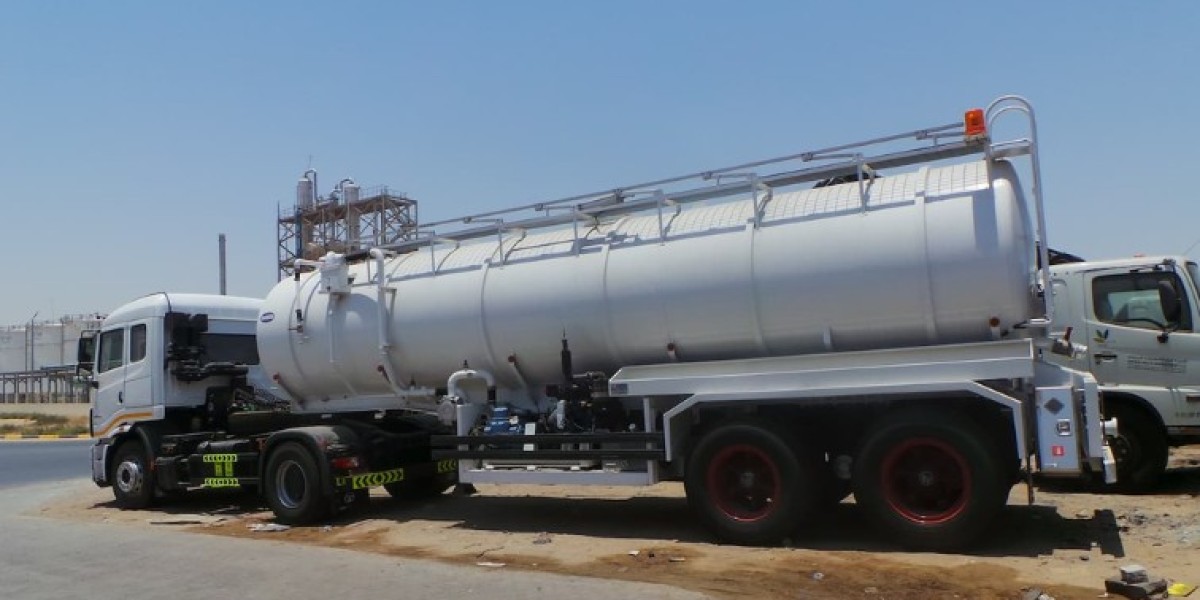

Managing liquid waste efficiently is an important requirement for construction sites, industrial facilities, commercial properties, and remote locations across the UAE. Businesses may need specialized equipment to collect wastewater, transport liquid waste, and maintain sanitation systems where conventional sewer connections are unavailable. Selecting the right Vacuum Tanker UAE solution can help organizations manage these requirements more efficiently while considering capacity, equipment configuration, operating conditions, and maintenance.
Understanding Vacuum Tankers
Vacuum tankers are specialized vehicles designed to collect and transport liquids and waste materials using vacuum-based systems. They can be useful where liquid materials need to be extracted from tanks, pits, septic systems, or other collection points.
The appropriate tanker depends on the nature and volume of the material being handled.
Businesses should consider:
Required tank capacity
Type of liquid or waste
Vacuum requirements
Collection method
Discharge arrangements
Transportation distance
Operating environment
Maintenance requirements
Understanding these factors can help businesses choose equipment suited to their daily operations.
Applications Across Different Industries
Vacuum tankers can support several industries and operational environments.
Potential applications include:
Construction projects
Wastewater management
Industrial facilities
Commercial properties
Remote locations
Infrastructure projects
Maintenance operations
The equipment can provide a practical method for collecting liquid waste where fixed waste-management infrastructure is limited.
Selecting the Appropriate Capacity
Tank capacity is one of the main factors businesses should evaluate.
A facility with high-volume waste collection requirements may benefit from a larger tanker, while operations involving smaller quantities may require a more compact solution.
Capacity should also be considered alongside transportation routes and collection frequency.
The goal is to select equipment that provides sufficient capacity without creating unnecessary operational limitations.
Understanding Vacuum Systems
The vacuum system is a central component of this type of tanker. It allows liquids and waste materials to be extracted from collection points and transferred into the tank.
The required vacuum performance can depend on the application, distance between the tanker and collection point, material characteristics, and operating conditions.
Businesses should discuss these requirements with the manufacturer before selecting the equipment.
Tank Construction
The tank itself needs to be suitable for the material being collected and transported.
Manufacturing considerations can include:
Tank material
Wall thickness
Structural design
Connections
Valves
Access points
Internal configuration
Appropriate engineering and fabrication can contribute to the durability and reliability of the tanker.
Manufacturing Quality
Quality control is important when producing specialized transportation equipment.
A typical manufacturing process may involve engineering design, material preparation, cutting, forming, welding, assembly, inspection, and finishing.
Each stage should be managed carefully to maintain the required quality of the finished equipment.
Manufacturers with suitable fabrication facilities can also provide greater flexibility for customized requirements.
Custom Vacuum Tankers
Different businesses can have different collection and transportation requirements. A standard tanker may not always provide the ideal configuration.
Custom manufacturing can allow businesses to specify requirements related to:
Tank capacity
Dimensions
Vacuum system
Chassis configuration
Axle arrangement
Connections
Discharge system
Providing detailed information about the intended application can help the manufacturer develop a more suitable design.
Sewage Collection Applications
Sewage collection is one of the common applications for specialized vacuum and tanker equipment.
Construction sites, temporary facilities, commercial locations, and remote areas may require regular wastewater collection.
Businesses can use suitable tanker equipment to transport collected wastewater to designated treatment or disposal facilities in accordance with applicable requirements.
Difference Between Vacuum and Sewage Tankers
Although vacuum tankers and sewage tankers can overlap in their applications, their configurations may differ depending on the intended use.
A sewage tanker may be designed primarily around wastewater collection and transportation, while a vacuum tanker can incorporate a vacuum system for extracting liquid materials.
The appropriate solution depends on the specific operational requirement.
Transportation Considerations
The tanker needs to be practical for the routes on which it will operate.
Businesses should consider:
Road conditions
Transportation distance
Site access
Loading location
Discharge location
Turning requirements
Frequency of trips
These factors can influence the appropriate chassis, tank size, and overall configuration.
Industrial Applications
Industrial facilities may generate wastewater or other liquid materials that require regular collection.
Vacuum tankers can provide a mobile solution for collecting liquids from tanks, pits, and other areas.
The tanker specification should be based on the material being collected and the operating environment.
Construction Site Applications
Construction projects can operate in locations where permanent wastewater infrastructure is not yet available.
Temporary sanitation facilities, wastewater collection points, and site drainage systems may require regular liquid-waste removal.
A suitable vacuum tanker can help support these site requirements while construction activities continue.
Maintenance Requirements
Regular maintenance is essential for keeping tanker equipment in suitable operating condition.
Inspection programs can cover:
Tank structure
Vacuum equipment
Valves
Connections
Chassis
Axles
Braking components
Supporting systems
Maintenance requirements can vary according to usage frequency and operating conditions.
Inspecting the Vacuum System
Because the vacuum system is central to the equipment's operation, it should be inspected regularly.
Businesses can monitor the system for signs of wear, leaks, unusual performance, or other issues.
Addressing problems early can help reduce the possibility of unexpected equipment downtime.
Tank and Structural Inspection
The tank and supporting structure should also be inspected periodically.
Welded areas, connections, supports, valves, and other components can experience wear through repeated operation and transportation.
Maintaining inspection records can help businesses monitor the condition of the equipment over time.
UAE Operating Conditions
Equipment operating in the UAE may experience high temperatures, dust, frequent transportation, and demanding industrial schedules.
These conditions should be considered during equipment selection and maintenance planning.
A tanker designed for its intended operating environment can provide more reliable performance throughout its working life.
Combining Waste Collection and Transportation
Efficient waste management requires coordination between collection and transportation.
Businesses should consider where waste is collected, how often the tanker needs to visit the site, where material is transported, and how discharge operations are managed.
A suitable tanker capacity can help reduce unnecessary trips and improve operational planning.
Choosing an Experienced Manufacturer
Businesses should evaluate manufacturers based on several factors rather than focusing solely on price.
Important considerations can include:
Manufacturing experience
Engineering capabilities
Fabrication facilities
Customization options
Quality procedures
Previous projects
Maintenance support
After-sales service
Experience with similar tanker applications can also be useful when evaluating potential suppliers.
Supporting Broader Transportation Requirements
A business that requires vacuum tankers may also need other specialized transportation equipment.
Depending on its operations, it may require sewage tankers, fuel tankers, draw bar trailers, or other industrial trailers.
Working with a manufacturer that offers multiple equipment categories can make it easier to coordinate different transportation requirements.
Storage and Waste Management
Waste collection is often connected to broader storage and handling systems.
Facilities may have temporary or permanent collection tanks, pipelines, treatment systems, and discharge infrastructure.
The tanker should be compatible with the overall waste-management process to ensure efficient collection and transportation.
Planning Future Requirements
Waste volumes can increase as a business expands or as construction projects progress.
Companies can consider potential future requirements when selecting tanker capacity.
Planning ahead may help avoid the need for immediate equipment changes when operational demands increase.
Importance of After-Sales Support
After-sales service can become important during the working life of specialized equipment.
Businesses may require maintenance, repairs, technical support, replacement components, or inspections.
When comparing manufacturers, companies should therefore consider the support available after the tanker has been delivered.
Conclusion
Vacuum tankers can provide an effective mobile solution for collecting and transporting wastewater and other liquid materials from construction sites, industrial facilities, commercial properties, and remote locations. Selecting suitable capacity, vacuum performance, tank construction, chassis configuration, and maintenance support can help businesses manage their liquid-waste operations more effectively.
For operations that require specialized equipment for transporting fuel, wastewater, or other industrial liquids, Sewage Tanker UAE solutions can complement vacuum tanker applications. Choosing equipment according to the specific collection and transportation requirements can help businesses maintain more organized and reliable waste-management operations.